Products
 Bars
Bars
 Beads & Spheres
 Bolts & Nuts
 Crucibles
 Discs
Discs
 Fibers & Fabrics
 Films
Films
 Flake
Flake
 Foams
Foams
 Foil
Foil
 Granules
 Honeycombs
 Ink
Ink
 Laminate
 Lumps
Lumps
 Meshes
 Metallised Film
 Plate
Plate
 Powders
 Rod
Rod
 Single Crystals
 Sputtering Target
 Tubes
Tubes
 Washer
 Wires
Wires
 Converters & Calculators
 Write for Us



Everything You Should Know About Electronic Materials

Description
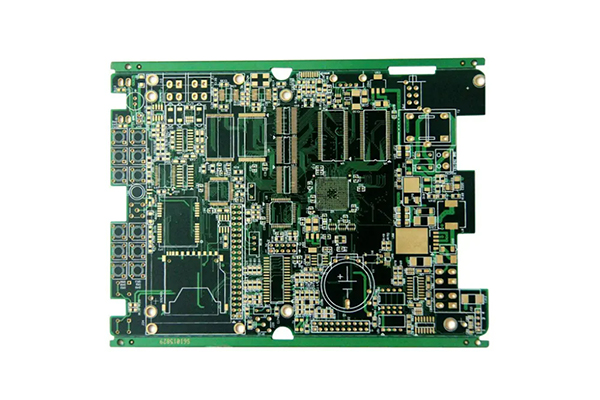
The spectrum of electronic materials spans semiconductors, conductors, dielectrics, magnetic materials, and superconductors. Each class of material offers different electrical and physical properties, hence finding its application in a particular electronic device. Knowledge of the characteristics enables their proper selection and utilization in order to achieve high device efficiency and reliability.
Common Types of Electronic Materials
Semiconductors include silicon, germanium, gallium arsenide, and silicon carbide, among others; all of these materials are very important in microelectronics and computing. Silicon is the most widely used due to its abundant availability and excellent semiconductor properties at lower costs. Gallium arsenide, despite being highly expensive, provides advanced performances in high-speed communication gadgets and photovoltaics due to efficient electron mobility with a direct bandgap.
Conductors-primarily metals such as copper, aluminum, silver, and gold-facilitate the efficient transfer of electricity within devices. Copper is the metal used most frequently because it is an outstanding electrical conductor and relatively inexpensive. Aluminum, while lighter and cheaper than copper, is used for overhead power lines and many component parts of devices. Gold and silver are highly conductive but expensive and thus are used for special purposes, such as contacts, connections, and other critical components.
The dielectric materials (insulators) involve ceramics, glass, polymers, and composite materials, which are basic in electric capacitors, electronic circuit boards, and insulating layers within integrated circuits. They prevent unwanted electrical conduction, protecting device integrity. Ceramics, like alumina and barium titanate, possess excellent thermal stability coupled with high dielectric constants, and find use as capacitors and insulators in high-frequency applications.
Inductors, transformers, and data storage are all based on magnetic materials. Ferrites, being inexpensive and efficient at high frequencies, dominate in transformers and inductors. Magnetic alloys, particularly permalloy (a nickel-iron alloy), provide high permeability necessary in electronic sensors and magnetic shielding applications.
Superconducting materials (such as niobium-titanium alloys and yttrium-barium-copper oxide, YBCO) are used in more advanced electronic applications, such as superconducting magnets and quantum computing circuits. Their zero electrical resistance below critical temperatures gives minimized energy loss in MRI and particle accelerator applications.
Materials Comparison Table for the Electronic Industry
|
Material Type |
Examples |
Primary Advantages |
Common Applications |
Limitations |
|
Semiconductors |
Silicon, GaAs, SiC |
Controlled conductivity, versatility |
Transistors, integrated circuits |
Heat sensitivity, cost |
|
Conductors |
Copper, Aluminum, Gold, Silver |
Excellent conductivity |
Wiring, connectors, circuitry |
Cost (gold, silver), weight |
|
Dielectrics |
Ceramics, Glass, Polymers |
High insulation, thermal stability |
Capacitors, insulators |
Mechanical fragility |
|
Magnetic Materials |
Ferrites, Permalloy |
Efficient magnetic response |
Transformers, inductors |
Frequency-dependent losses |
|
Superconductors |
Niobium-Titanium, YBCO |
Zero electrical resistance |
MRI machines, quantum circuits |
Extreme cooling requirement |
For more details, please refer to Stanford Advanced Materials (SAM)
Frequently Asked Questions
What are electronic materials?
Electronic materials refer to special kinds of substances utilized in the production of electronic elements based on their electrical, thermal, magnetic, or mechanical characteristics.
Why is silicon commonly used in electronics?
Silicon is plentiful and inexpensive, and its semiconductor properties are stable enough to make it very useful for transistors, microchips, and solar cells.
Which material has the highest electrical conductivity?
The value of electrical conductivity is highest for silver, followed by copper and gold, but the higher cost of silver restricts its wide application.
For what purpose are dielectric materials used?
Dielectric materials are electrical insulators that prevent unwanted electrical conduction and allow capacitors to store electrical charge.
Why do superconductors need low temperatures?
Superconductors are materials that have zero electrical resistance under low temperatures, thus enabling the flow of electrical current within them indefinitely without energy loss.
 Chin Trento