Products
 Bars
Bars
 Beads & Spheres
 Bolts & Nuts
 Crucibles
 Discs
Discs
 Fibers & Fabrics
 Films
Films
 Flake
Flake
 Foams
Foams
 Foil
Foil
 Granules
 Honeycombs
 Ink
Ink
 Laminate
 Lumps
Lumps
 Meshes
 Metallised Film
 Plate
Plate
 Powders
 Rod
Rod
 Single Crystals
 Sputtering Target
 Tubes
Tubes
 Washer
 Wires
Wires
 Converters & Calculators
 Write for Us



Additive Manufacturing: What You Need to Know

Additive manufacturing, known as 3D printing, constructs complex components layer-by-layer, offering precision, efficiency, and versatile materials usage.
Content
Additive manufacturing, also referred to as 3D printing, is revolutionizing industries from aerospace and the automobile industry to the healthcare sector. Additive manufacturing provides the capability to produce intricate parts directly from digital models in successive layers of material. Contrary to the traditional manufacturing process, which removes material from the larger blocks or molds, additive manufacturing creates more intricate designs with less material loss and much shorter production time.
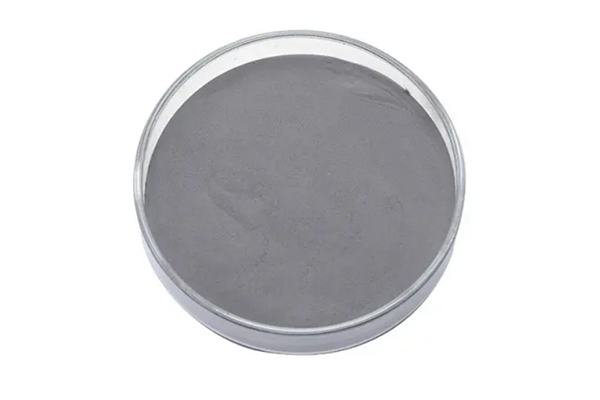
Significant techniques under additive manufacturing are powder bed fusion, direct energy deposition, material extrusion, binder jetting, and stereolithography. Powder bed fusion, particularly more applicable in the industry of businesses requiring high-performance metal components, relies most on spherical metal powders. The very specific characteristics of the powders, such as particle size distribution, flowability, and purity, directly influence the quality and performance of the final printed item.
Spherical Metal Powders
Spherical metal powders are necessary in additive manufacturing processes such as selective laser melting (SLM) and electron beam melting (EBM). Their spherical shape yields unhampered flow and uniform layer deposition required to achieve uniform and defect-free parts. Gas atomization, plasma atomization, or plasma rotating electrode process primarily generates these powders. All these processes generate powders with different characteristics to be employed in certain applications.
Titanium alloys, aluminum alloys, stainless steels, cobalt-chrome alloys, and nickel-based superalloys are commonly used materials in additive manufacturing. Titanium and cobalt-chrome alloys find extensive applications in medical implants due to their biocompatibility and strength, while nickel-based superalloys find extensive applications in aerospace parts due to their high heat resistance.
Materials Comparison Table for Additive Manufacturing
Choosing the right material is essential for successful additive manufacturing. Below is a comparison table highlighting the key properties and typical applications of commonly used additive manufacturing metals:
|
Material Type |
Strength |
Corrosion Resistance |
Weight |
Applications |
|
Titanium Alloys |
High |
Excellent |
Light |
Aerospace, Medical Implants |
|
Aluminum Alloys |
Moderate |
Good |
Very Light |
Automotive, Aerospace |
|
Stainless Steels |
High |
Excellent |
Heavy |
Tools, Automotive, Industrial |
|
Cobalt-Chrome Alloys |
Very High |
Excellent |
Heavy |
Medical, Dental Implants |
|
Nickel-based Superalloys |
Very High |
Good |
Heavy |
Aerospace, Gas Turbines |
This table assists engineers and designers in selecting materials aligned with specific application requirements, balancing properties such as strength, corrosion resistance, weight, and industry-specific needs. For more information, please check Stanford Advanced Materials (SAM).
Additive manufacturing offers significant advantages, including rapid prototyping, mass customization, and reduced time-to-market. Industries increasingly rely on these technologies to produce parts that were previously impossible or economically unviable through conventional means.
Frequently Asked Questions
Frequently Asked Questions
Which sectors are most advantaged by additive manufacturing?
Aerospace, automotive, medical, dental, and defense sectors are most advantaged by additive manufacturing due to its ability to easily create complex and customized parts.
Why are spherical metal powders utilized instead of others in additive manufacturing?
Spherical metal powders have better flowability and packing density, ensuring uniform layering and better mechanical properties in end products.
What are common problems encountered by additive manufacturing?
Typical challenges are selection of materials, uniform print quality, post-processing requirements, and reproducibility of intricate designs.
Is additive manufacturing economically sound compared to traditional methods?
Additive manufacturing is likely to be more economically favorable for low-volume production, custom parts, and intricate geometries, but potentially less economic for mass production of stock parts.
Can additive manufacturing be used for high-volume production?
Whereas additive manufacturing is strong in prototyping and small to medium-scale production, recent innovations have pushed its frontiers to enable larger-scale production, subject to part complexity and material selection.
 Chin Trento