Products
 Bars
Bars
 Beads & Spheres
 Bolts & Nuts
 Crucibles
 Discs
Discs
 Fibers & Fabrics
 Films
Films
 Flake
Flake
 Foams
Foams
 Foil
Foil
 Granules
 Honeycombs
 Ink
Ink
 Laminate
 Lumps
Lumps
 Meshes
 Metallised Film
 Plate
Plate
 Powders
 Rod
Rod
 Single Crystals
 Sputtering Target
 Tubes
Tubes
 Washer
 Wires
Wires
 Converters & Calculators
 Write for Us



The Strongest, Lightest, and Most Expensive Metals You Didn't Know About

Description
Metals are essential in various industries, from aerospace to medical implants. While common metals like steel, aluminum, and gold dominate the market, some lesser-known metals stand out due to their extraordinary strength, lightweight properties, or extreme cost. Here’s a look at some of the most remarkable metals you may not have heard of.
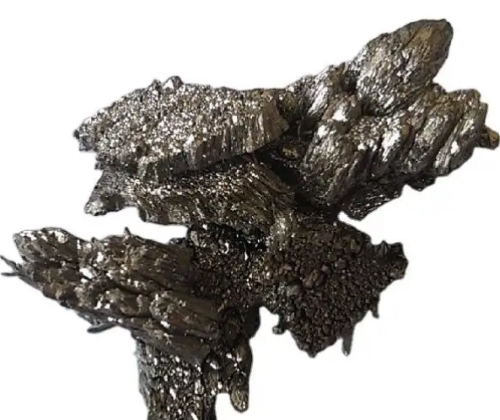
--The Strongest Metals
1. Tungsten (W)
- Tungsten has the highest tensile strength of any naturally occurring metal, with a melting point of 3,422°C (6,192°F).
- Uses: Military applications, industrial tools, and aerospace engineering.
- Drawback: It is brittle in its pure form, but tungsten alloys improve its usability.
2. Titanium (Ti)
- Titanium has an excellent strength-to-weight ratio and is highly corrosion-resistant.
- Uses: Aerospace, medical implants, and high-performance vehicles.
- Drawback: Difficult to machine, making it expensive to work with.
3. Chromium (Cr)
- Chromium is extremely hard and resistant to wear, making it an essential component in stainless steel.
- Uses: Plating, stainless steel production, and corrosion-resistant coatings.
- Drawback: Brittle when pure, requiring alloying for better performance.
--The Lightest Metals
1. Lithium (Li)
- Lithium is the least dense metal, weighing about half as much as water.
- Uses: Batteries, aerospace, and pharmaceutical applications.
- Drawback: Highly reactive and requires special handling.
2. Magnesium (Mg)
- Magnesium is 33% lighter than aluminum while maintaining good strength.
- Uses: Automotive and aerospace industries, where weight reduction improves fuel efficiency.
- Drawback: Highly flammable in fine powder form.
3. Beryllium (Be)
- Beryllium is lighter than aluminum but significantly stronger.
- Uses: Spacecraft, satellites, and advanced optics.
- Drawback: Toxic when inhaled, requiring strict handling precautions.
--The Most Expensive Metals
1. Rhodium (Rh) – ~$10,000 per ounce
- Rare and highly resistant to corrosion, rhodium is a critical component in catalytic converters.
- Uses: Automotive industry, jewelry, and electrical contacts.
2. Platinum (Pt) – ~$1,000 per ounce
- Platinum is rarer than gold and highly resistant to tarnishing and corrosion.
- Uses: Jewelry, medical implants, and catalytic converters.
3. Osmium (Os) – ~$1,200 per ounce
- The densest naturally occurring metal, osmium is incredibly rare.
- Uses: Fountain pen tips, electrical contacts, and specialized scientific equipment.
Precious Metals
Precious metals are characterized by rarity, aesthetic appeal, corrosion resistance, and significant economic value. The most notable examples include gold, platinum, palladium, and rhodium. While gold is extensively used in jewelry, electronics, and dentistry, platinum and palladium play critical roles in catalytic converters and electronics manufacturing. Rhodium, the rarest precious metal, is primarily used to coat optical instruments, jewelry, and catalytic converters due to its exceptional reflective qualities and resistance to corrosion.
Despite their beauty, precious metals are extremely functional, valued highly for industrial applications due to their thermal stability and electrical conductivity. Their high economic value stems from scarcity and the significant energy required for extraction and refinement.
Refractory Metals
Refractory metals are distinguished by their high melting points, hardness, and resistance to wear and corrosion. Common refractory metals include tungsten, molybdenum, tantalum, niobium, and rhenium. Tungsten, renowned for having the highest melting point of any metal (3422°C), is commonly used in filaments for electric bulbs, X-ray tubes, and aerospace technology.
Tantalum and niobium exhibit excellent chemical resistance, making them suitable for capacitors and electronic devices. Molybdenum, with superior strength at high temperatures, is utilized in alloys for aerospace engines and structural parts. Rhenium, rare and extremely resistant to heat, enhances the durability of turbine blades in jet engines.
Super Alloys
Super alloys are high-performance metals specifically engineered to withstand extreme mechanical stress, high temperatures, and corrosion. Commonly comprising nickel, cobalt, and iron-based alloys, super alloys are critical for aerospace, power generation, and medical implants. Nickel-based super alloys, such as Inconel, offer exceptional thermal resistance, strength, and oxidation resistance, ideal for gas turbine engines and exhaust systems.
Cobalt-based alloys, including Stellite, exhibit superior wear resistance, making them invaluable for surgical implants and cutting tools. Iron-based super alloys, though slightly heavier, provide excellent strength-to-weight ratios and find usage in automotive, aerospace, and industrial sectors.
Frequently Asked Questions
Which metal has the highest strength-to-weight ratio?
Titanium has the highest strength-to-weight ratio among metals. It is ideal for aerospace, medical implants, and high-performance vehicles.
What is the lightest metal used in industries?
Lithium is the lightest metal, widely used in batteries, aerospace, and pharmaceuticals due to its low density and high energy storage capacity.
Why is rhodium so expensive?
Rhodium is one of the rarest metals on Earth, primarily extracted as a byproduct of platinum mining. Its high demand in catalytic converters makes it extremely valuable.
Are lightweight metals as strong as heavier metals?
Some lightweight metals, such as titanium and beryllium, offer exceptional strength despite their low density. They are suitable for high-performance applications in aerospace and defense.

 Chin Trento