Products
 Bars
Bars
 Beads & Spheres
 Bolts & Nuts
 Crucibles
 Discs
Discs
 Fibers & Fabrics
 Films
Films
 Flake
Flake
 Foams
Foams
 Foil
Foil
 Granules
 Honeycombs
 Ink
Ink
 Laminate
 Lumps
Lumps
 Meshes
 Metallised Film
 Plate
Plate
 Powders
 Rod
Rod
 Single Crystals
 Sputtering Target
 Tubes
Tubes
 Washer
 Wires
Wires
 Converters & Calculators
 Write for Us



STEM Experiments and Optical Materials

Introduction
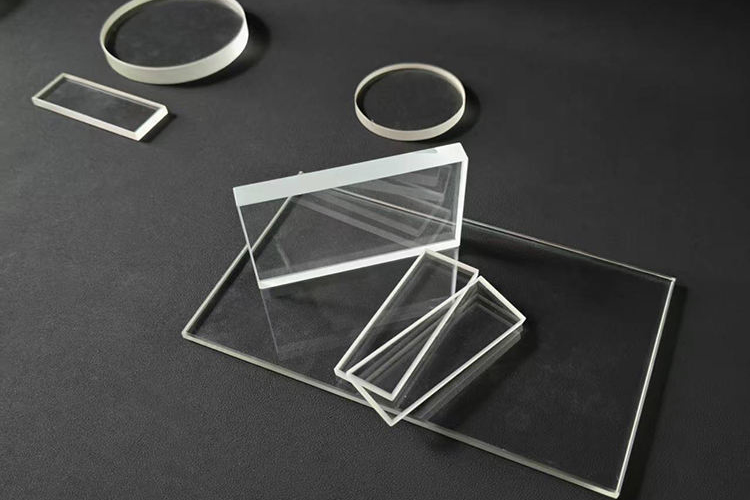
In this section we share several experiments that involve optical materials. These experiments are designed to be simple and engaging while providing a solid foundation on how light interacts with materials. You might like to try experiments such as building a small spectroscope, experimenting with diffraction patterns, or investigating the bending of light using transparent materials. Each experiment serves as an opportunity to witness the basic principles of light, color, and optics.
STEM Experiments and Optical Materials
Let us now look at a popular experiment where we create a simple spectroscope to view the spectrum of light.
Background:
Optical instruments have a long tradition in science. The phenomenon of light splitting into a spectrum was observed by many early scientists. Today, the simple spectroscope illustrates these principles in a tangible way.
Objects:
For this project, you will need a cardboard tube (from a paper towel roll), a compact disc with the reflective layer removed or a flexible diffraction grating, black paper, and a small cutting tool. You may also require tape, a ruler, and scissors.
Materials Needed:
• Cardboard tube (paper towel roll)
• Diffraction grating or a prepared compact disc
• Black paper
• Cutting tool (scissors)
• Tape and glue
• A source of white light (such as a flashlight or sunlight)
Step-by-Step Instructions:
1. Prepare the cardboard tube. Cut a rectangular opening along its length. This slot will allow light to enter. The approximate width of the slot should be 1 centimeter.
2. Cover the inner walls of the slot with black paper. This minimizes unwanted light and enhances color contrast.
3. Attach the diffraction grating. Position the compact disc piece or diffraction grating at the opposite end of the tube. Ensure the reflecting side faces inward. Secure the piece with tape or glue.
4. Seal the remaining ends of the tube with black paper. This action is to ensure maximum control of light that reaches the grating.
5. Position the tube. Direct the slit toward a natural light source or a controlled white light source.
6. Look through the other end of the tube. Adjust the angle until you see a clear spread of colors forming a spectrum. Allow your eyes to adjust, and make note of the color patterns.
This experiment brings together simple household materials. The practical steps are easy to follow and require only basic tools. The goal is to visualize how light splits when it interacts with optical components.
Physics Concepts and Mechanisms
The experiment is built on straightforward physical principles. When light enters the narrow slit, it is restricted in its path. The light then meets the diffraction grating. A diffraction grating consists of many closely spaced lines that cause the light waves to interfere with each other.
Light travels as a wave and expands when passing through narrow openings. The bending of light at the edges of the slot is termed diffraction. When the light waves pass by the grating, they overlap and create patterns of constructive and destructive interference. This separation is what forms a visible spectrum of colors.
The process also illustrates refraction. Even if we are not using a typical refracting lens here, the principle is akin to light bending as it moves from one medium to another. A similar mechanism is observed when you see a straw word in a glass of water appearing bent. The gradual change in the light’s wavelength as it spreads out is also what splits white light into its various colors.
Over the years, scientists have measured and recorded the specific angles at which particular colors emerge. These measurements give rise to wavelengths: red light typically measures around 700 nanometers, whereas violet light is near 400 nanometers. Instruments built on these concepts have had profound impacts on fields like spectroscopy and analytical science.
Understanding the physics behind these experiments strengthens our grasp of optics. The experiment serves as a small model of larger optical devices used in laboratories and industries.
Related Materials
In addition to the items used in the experiment, other related materials can broaden your observation of light and optics. Basic prisms are frequently found in school laboratories. They separate light based on the same principles as diffraction gratings. Modern optical fibers also use these principles to carry light over long distances.
Glasses and lenses made of various forms of glass and plastics are common examples. They are used in devices such as cameras, smartphones, and telescopes. Optical coatings applied on lenses can reduce glare. They also help in directing or spreading light appropriately.
Other experimental materials include LED light sources with known wavelengths. By comparing these with the spectrum you see in the experiment, you might notice slight differences. In classrooms, teachers often use mirrors to reflect light beams, allowing vivid demonstrations of the laws of reflection and refraction.
Even everyday items like water droplets can show how white light splits into many colors. The extensive use of optical materials in daily life signifies the importance of these fundamental principles.
Real World Applications
The principles behind these experiments are not only theoretical; they find true applications in the real world. The most common use is in optical communications. Optical fibers depend on total internal reflection, an effect closely related to the experiments discussed here.
Medical devices, such as endoscopes, also rely on proper light manipulation using optical materials. Camera lenses use combinations of refraction and diffraction to capture clear images. Engineers use these optical principles in creating sensors that transfer light signals into electrical signals.
In architectural lighting design, understanding how light interacts with various materials can result in better room lighting. Modern devices, including projectors and display screens, rely on structured light from advanced optical materials for enhanced image quality.
Even in the field of astronomy, optical materials in telescopes help in viewing distant celestial bodies with greater precision. Optical components in these telescopes are polished and structured based on principles similar to those demonstrated in our small experiment. The study of wavelengths helps scientists determine the chemical composition of stars.
These applications are practical examples of how small experiments using optical materials can lead to significant technological advancements. The knowledge gained in seemingly simple experiments opens the door to innovations used in advanced science and engineering projects.
Conclusion
The journey through optical materials using science, technology, engineering, and mathematics experiments is both rewarding and enlightening. The role of optical materials cannot be overstated. They not only serve in educational demonstrations but also assist in critical communication systems, medical devices, and imaging enhancements. For more advanced optical materials, please check Stanford Advanced Materials (SAM).
Frequently Asked Questions
F: Why do we use a diffraction grating in these experiments?
Q: It separates the light into a spectrum by causing interference among light waves.
F: How long does it take to see the full spectrum?
Q: With proper adjustment, the spectrum appears immediately once the light enters the tube.
F: Are these experiments suitable for a young audience?
Q: Yes, they are simple, safe, and ideal for introducing optical materials to beginners.
 Chin Trento