
 Products
 Bars
Bars
 Beads & Spheres
 Bolts & Nuts
 Crucibles
 Discs
Discs
 Fibers & Fabrics
 Films
Films
 Flake
Flake
 Foams
Foams
 Foil
Foil
 Granules
 Honeycombs
 Ink
Ink
 Laminate
 Lumps
Lumps
 Meshes
 Metallised Film
 Plate
Plate
 Powders
 Rod
Rod
 Single Crystals
 Sputtering Target
 Tubes
Tubes
 Washer
 Wires
Wires
 Converters & Calculators
 Write for Us



Germanium: Element Properties and Uses

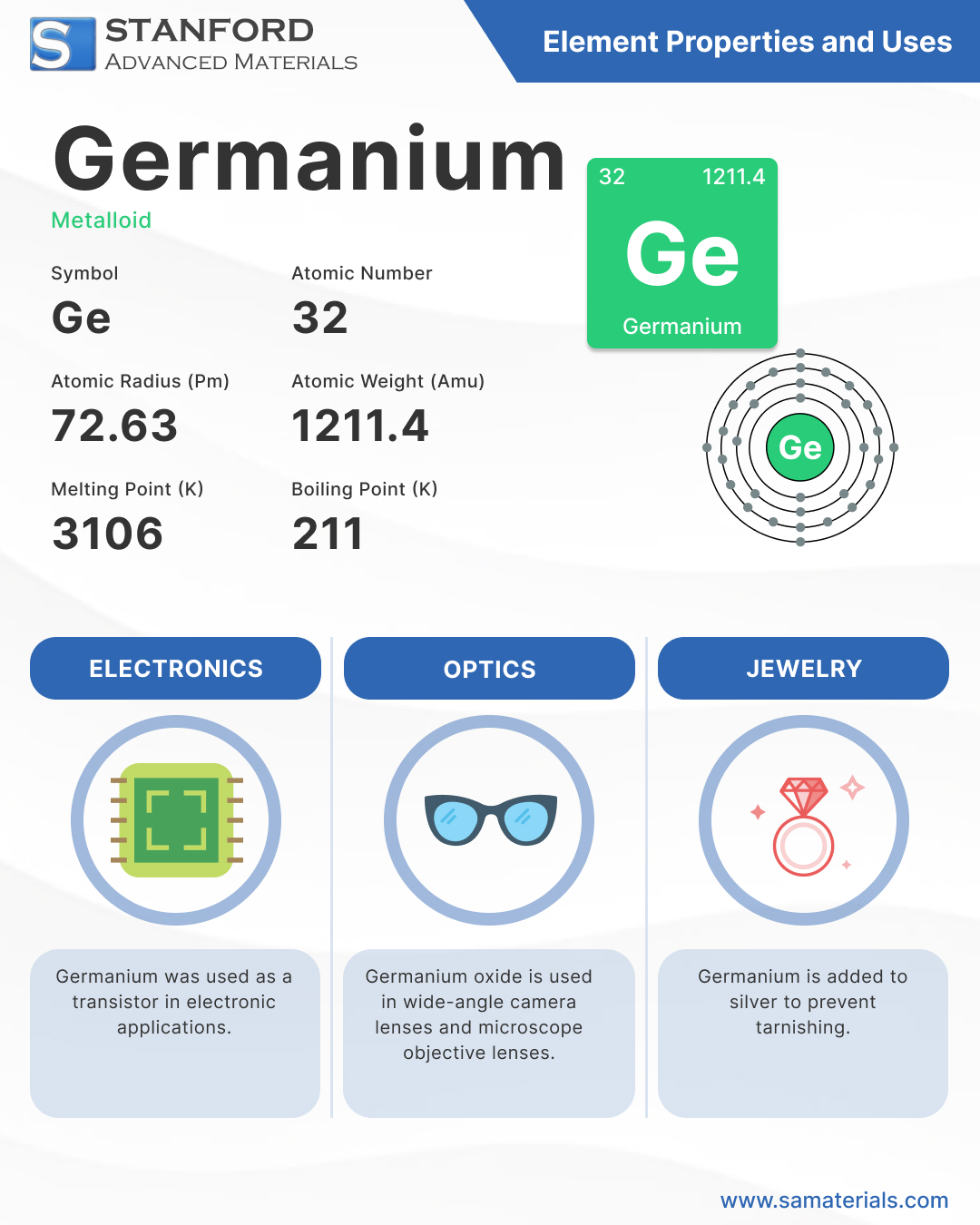
Germanium is included in the periodic table as a metalloid type chemical element. It is available in trace quantities within the Earth's crust and, though less than some other materials in abundance, has some high-value applications within different advanced industry sectors. It has a high melting point, along with semiconductor properties; germanium is essential in modern electronics, optical devices, and solar technology.

Physical Properties of Germanium
Germanium has physical properties that make it suitable for high-performance applications. For example:
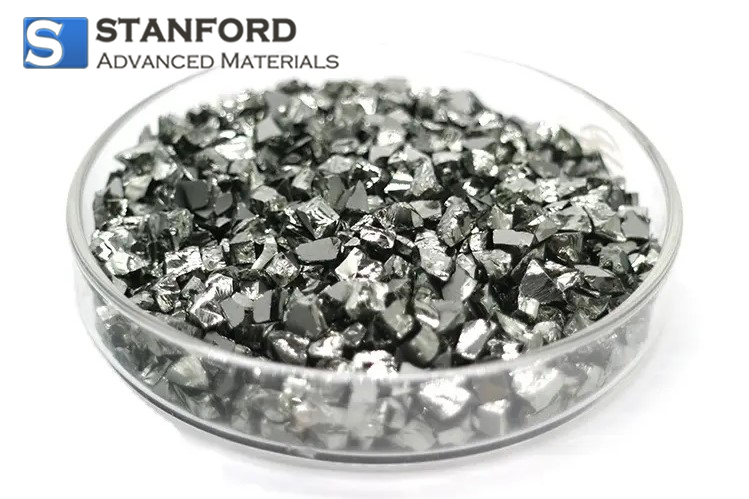
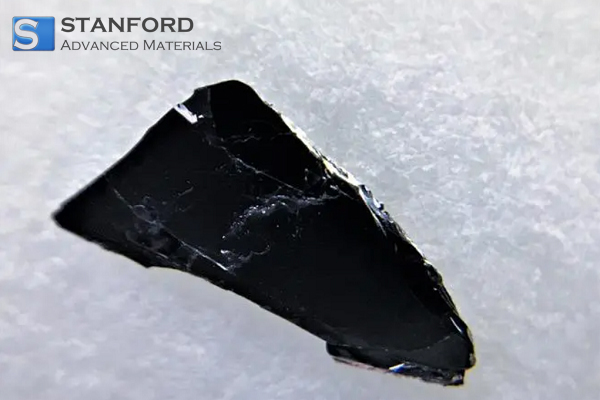
- Appearance: Germanium is a shiny, silvery-gray metal that resembles tin.
- Density: The density is 5.323 g/cm³, ranking it as a fairly dense metalloid.
- Melting Point: Germanium possesses a high melting point, about 937.4 °C, thus making it suitable in many high-temperature applications.
- Boiling Point: Germanium has a boiling point of 2,827°C, which further shows stability at high temperatures.
- Electrical Conductivity: Germanium, being a semiconductor, contains a bandgap of 0.66 eV at room temperature and hence operates effectively in controlling the flow of electrical current.
- Hardness: Germanium is brittle and has a Mohs hardness of 6, making it more fragile compared to metals. For more information, please check Stanford Advanced Materials (SAM).
Common Applications of Germanium
Although germanium is best known today because of its application in semiconductors, other significant uses are found in optics, solar technology, and alloys. Key applications include:
- Semiconductors: Germanium is utilized in the manufacture of transistors, diodes, and other electronic elements. Conventionally, this element was used in early transistor designs and is still useful in high-frequency electronics.
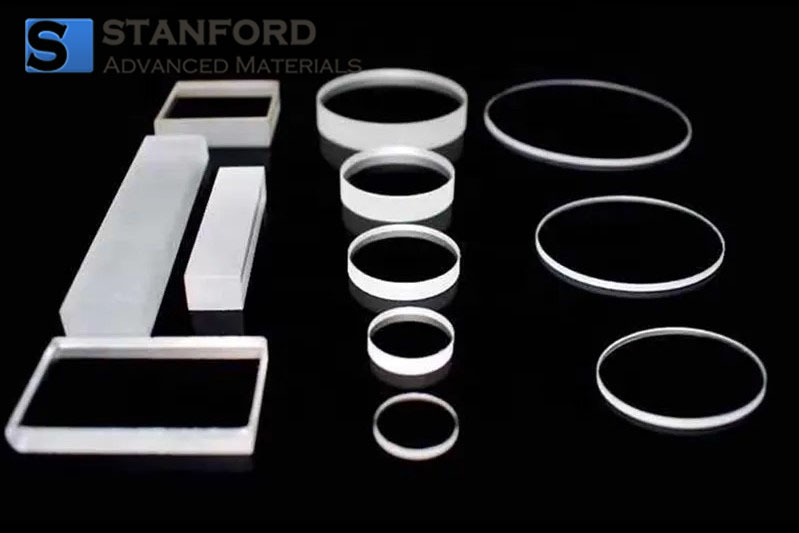
- Optics: Germanium is widely used in optical lenses, fibers, and windows due to its transparency to infrared light. It makes up crucial components in infrared detection systems in military, scientific, and medical devices.
- Solar Cells: Germanium is utilized in high-efficiency solar cells, especially in space applications where solar radiation is strong, and conditions can also be harsh.
- Alloys: Germanium acts as an alloying agent in improving the hardness and corrosion resistance of particular types of steels, among other materials.
Preparation Techniques of Germanium
The extraction of germanium represents a process by which germanium is reduced from compounds contained in ores, such as argyrodite, which is a germanium sulfide mineral. The most common germanium production practices include:
- Reduction of Germanium Oxide: Germanium dioxide, GeO₂, is reduced at elevated temperatures by hydrogen to obtain pure germanium metal. This is the major process for germanium production.
- Hydrometallurgical Processes: Acid dissolution of germanium compounds, followed by precipitation of pure germanium, is done through different chemical reactions, which again are more efficient and environment-friendly.
Comparison Table: Semiconductor Materials
|
Material |
Bandgap (eV) |
Electrical Conductivity |
Applications |
Properties |
|
Silicon (Si) |
1.1 |
Good |
Electronics, solar cells, transistors |
Abundant, stable, versatile |
|
Germanium (Ge) |
0.66 |
Excellent |
High-frequency electronics, optics, solar cells |
Higher mobility, less abundant |
|
Gallium Arsenide (GaAs) |
1.43 |
Very good |
High-speed electronics, lasers, photovoltaics |
High efficiency, fast switching |
|
Silicon Carbide (SiC) |
3.26 |
Excellent |
Power electronics, high-temperature devices |
High temperature and radiation resistance |
|
Gallium Nitride (GaN) |
3.4 |
Excellent |
LED lighting, high-power transistors |
High thermal stability, efficient |
This table shows some of the major differences among some common semiconductor materials, including electrical properties, typical applications, and advantages. Each material has unique characteristics and finds applications in different technologies and industries.
Frequently Asked Questions
What is germanium used for in electronics?
The major application of Germanium is in semiconductors, which include diodes and transistors, used extensively in modern electronics.
Is germanium toxic?
Generally, germanium is considered non-toxic, but in large quantities, its compounds are dangerous when ingested or inhaled.
How is germanium extracted?
Germanium is mainly obtained by reducing germanium oxide or by hydrometallurgical techniques from ores containing high amounts of germanium.
Why is germanium important in infrared optics?
Germanium is highly transparent to infrared light, and such property makes it perfect for infrared lenses, prisms, and optical windows in different detection systems.
Can germanium be used in solar panels?
Yes, germanium is utilized in high-efficiency solar cells, especially in space applications, due to its ability to perform well under harsh environmental conditions.

 Chin Trento