
 Products
 Bars
Bars
 Beads & Spheres
 Bolts & Nuts
 Crucibles
 Discs
Discs
 Fibers & Fabrics
 Films
Films
 Flake
Flake
 Foams
Foams
 Foil
Foil
 Granules
 Honeycombs
 Ink
Ink
 Laminate
 Lumps
Lumps
 Meshes
 Metallised Film
 Plate
Plate
 Powders
 Rod
Rod
 Single Crystals
 Sputtering Target
 Tubes
Tubes
 Washer
 Wires
Wires
 Converters & Calculators
 Write for Us



All You Need to Know about Platinum-Rhodium Thermocouples

Platinum-rhodium thermocouples are also called high-temperature precious metal thermocouples. They are used as temperature measuring sensors and are usually used together with temperature transmitters, regulators, and display instruments to form a process control system for directly measuring or controlling the temperature of fluid, steam, and gas media and solid surfaces in the range of 0-1800℃ in various production processes.
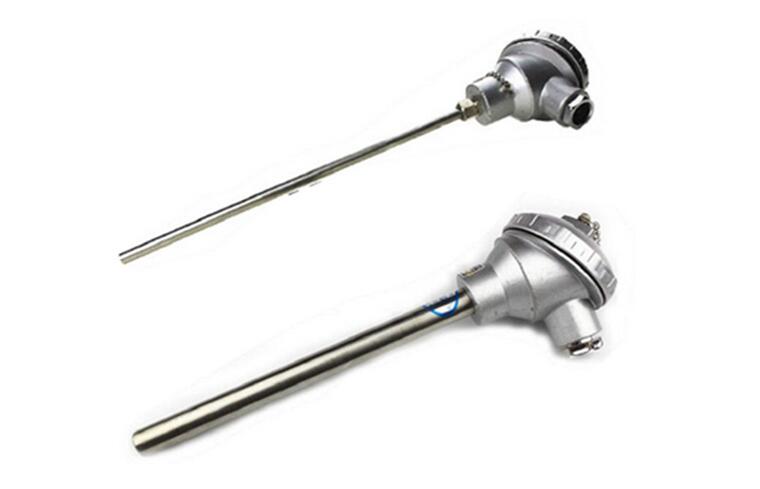
Platinum-Rhodium Thermocouples
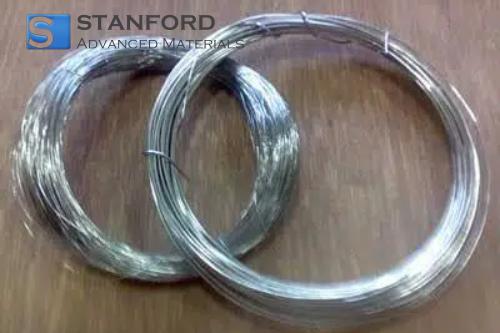
The diameter of the platinum-rhodium thermocouple wire is specified as 0.5mm, and the allowable deviation is -0.015mm. The chemical composition of its positive electrode is the platinum-rhodium alloy, which contains 30% rhodium and 70% platinum, and the negative electrode is also platinum-rhodium alloy with 6% rhodium content, so it is commonly known as the double platinum-rhodium thermocouple. The long-term maximum use temperature of the platinum-rhodium thermocouple is 1600℃, and the short-term maximum use temperature is 1800℃.
The Advantages of the Platinum-Rhodium Thermocouples
Platinum-rhodium thermocouples have the advantages of the highest accuracy, best stability, wide temperature range, long service life, and high-temperature limit. They are suitable for oxidizing and inert atmospheres, and can also be used in vacuum for a short time, but not for reducing atmospheres or atmospheres containing metal or non-metal vapors. An obvious advantage of the B-type thermocouple is that no compensation wire is needed for compensation because the thermoelectric potential is less than 3μV in the range of 0~50℃.
The Disadvantages of the Platinum-Rhodium Thermocouples
The disadvantage of platinum-rhodium thermocouples is the thermoelectric potential. The thermoelectric potential rate is small, the sensitivity is low, the mechanical strength decreases at high temperatures, it is very sensitive to pollution, and the precious metal materials are expensive, so the one-time investment is large.
The Working Principles of the Platinum-Rhodium Thermocouples
The working principle of the platinum-rhodium thermocouples is that the platinum-rhodium thermocouple is composed of two conductors with different compositions connected to the circuit and when the temperature of the two junctions is different, a thermal current is generated in the circuit. If there is a temperature difference between the working end and the reference end of the thermocouple, the display instrument will indicate the temperature value corresponding to the thermoelectric potential generated by the thermocouple.
The thermo-electromotive force of the platinum-rhodium thermocouple will increase with the temperature of the measuring end. Its strength is only related to the thermocouple material and the temperature at both ends, but not to the length and diameter of the hot electrode.
The appearance of various platinum-rhodium thermocouples is often different due to actual needs on-site, but their basic structures are roughly the same, usually composed of main components such as hot electrodes, insulating sleeve protection tubes, and junction boxes.
How to Choose the Platimum-Rhodium Thermocouples?
When the measured temperature is normal at 1000~1300℃, it is recommended to use a single platinum-rhodium thermocouple (platinum rhodium 10-platinum) while when the measured temperature is normal at 1200~1600℃, it is recommended to use a double platinum-rhodium thermocouple (platinum rhodium 30 -Platinum and rhodium 6), so that the service life of the platinum-rhodium thermocouples can be guaranteed within the temperature range used.
The Application Fields of the Platinum-Rhodium Thermocouples
Platinum-rhodium thermocouples are widely used in powder metallurgy, vacuum furnace, smelting furnace, steel furnace, industrial salt bath furnace, sintering furnace, and other industrial production. They are usually used in conjunction with temperature transmitters, regulators, and display instruments to form a process control system to directly measure or control temperature measurement in various production processes.
 Chin Trento