
 Products
 Bars
Bars
 Beads & Spheres
 Bolts & Nuts
 Crucibles
 Discs
Discs
 Fibers & Fabrics
 Films
Films
 Flake
Flake
 Foams
Foams
 Foil
Foil
 Granules
 Honeycombs
 Ink
Ink
 Laminate
 Lumps
Lumps
 Meshes
 Metallised Film
 Plate
Plate
 Powders
 Rod
Rod
 Single Crystals
 Sputtering Target
 Tubes
Tubes
 Washer
 Wires
Wires
 Converters & Calculators
 Write for Us



Perovskites and Perovskite Solar Cells: A Comparative Overview

What Are Perovskites and Perovskite Solar Cells?
Perovskites are a group of minerals with a special crystalline structure. They are not rare when produced in labs. Scientists use these lab-made materials to build solar cells. The resulting perovskite solar cells turn light into electricity. They show good performance and can be made with low cost. The structure of these materials helps improve light absorption and charge transfer. Many research groups use perovskite solar cells as a way to improve solar energy conversion.
These solar cells have received much attention over the last years. They have high light absorption and a simple manufacturing process. Their performance rivals that of older technologies. Many engineers compare these cells with traditional silicon solar cells. This discussion helps us understand how a perovskite solar cell can contribute to future energy needs.
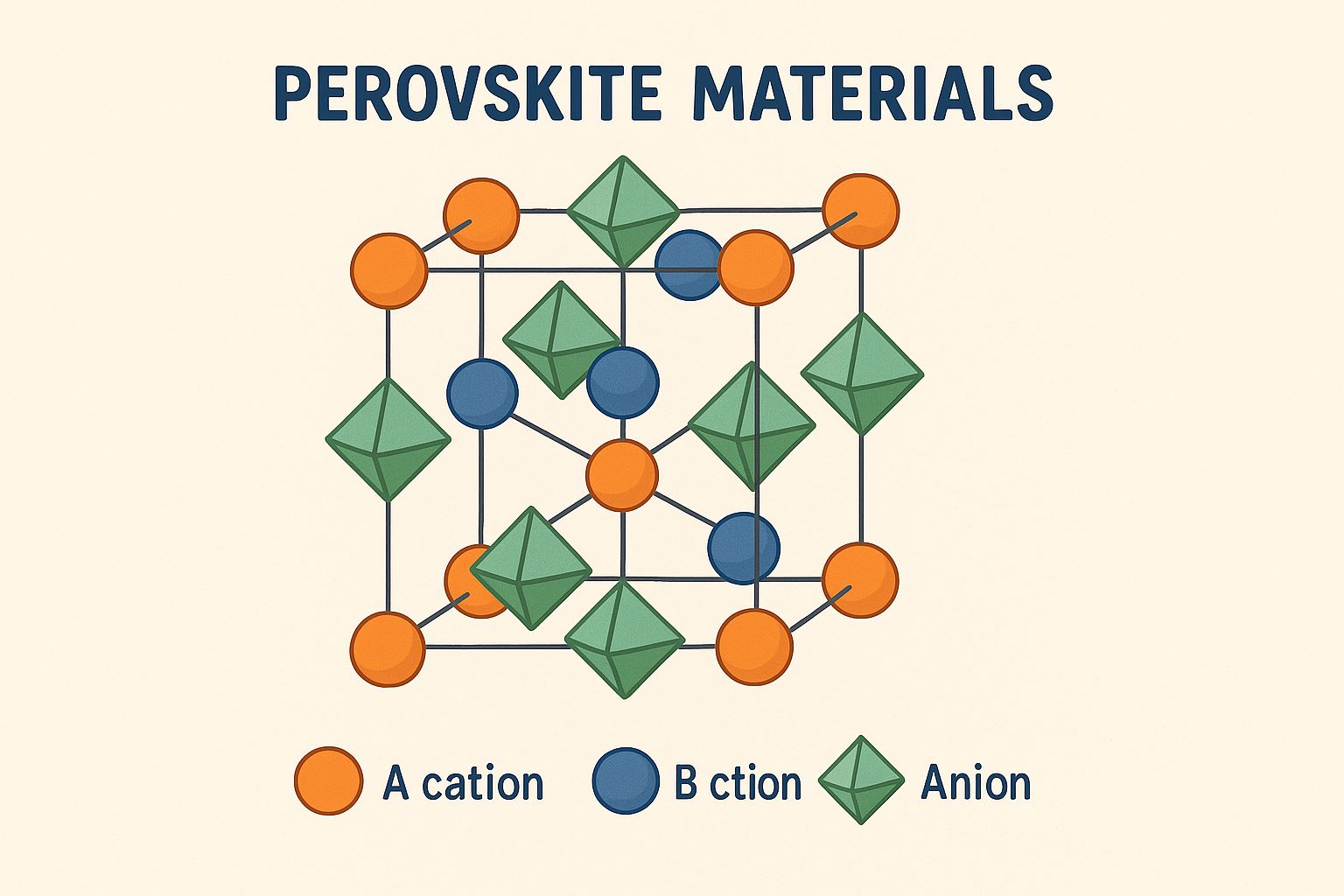
Structure and Materials for the Perovskite Solar Cell
Substrate
The substrate is the base of the solar cell. It gives physical support and holds other layers in place. Common substrates are glass or flexible plastic materials. These materials provide durability and stability. In many cases, the choice of substrate helps to reduce cost and ease installation.
Transparent Conductive Layer
The next layer is the transparent conductive layer. This layer allows light to reach the active zones. It also conducts electricity generated in the cell. Materials such as Indium Tin Oxide or fluorine-doped tin oxide are used here. They combine the need for transparency with a good electrical conduction.
Electron Transport Layer
The electron transport layer plays a key role in moving electrons away from the perovskite layer. Materials like titanium dioxide are common choices. This layer helps to prevent the recombination of electrons and holes. In doing so, it increases the overall efficiency of the solar cell.
Perovskite Layer
The perovskite layer is at the heart of the device. It contains the perovskite crystals that absorb light. When light hits this layer, it creates pairs of electrons and holes. This process is essential for the conversion of solar energy into electrical energy. The perovskite layer is often formed by a simple solution process that is less expensive compared to other methods.
Hole Transport Layer
After the perovskite layer, the hole transport layer comes into play. This layer carries positive charges away from the perovskite. It uses materials such as spiro-OMeTAD or other organic compounds. The layer ensures that the positive charges reach the metal electrode efficiently. This process reduces losses and improves the cell performance.
Metal Electrode
The final layer is the metal electrode. This layer collects the charges that have traveled through the layers. Good choices for the metal electrode include silver or gold. The metal electrode completes the electrical circuit in the solar cell. Its role is essential for the extraction and collection of the generated electricity.
How Does the Perovskite Solar Cell Work?
Light Absorption
The working process begins with light absorption. When the sun shines on the perovskite layer, the material takes in the light. The perovskite crystals have a high absorption coefficient. The absorbed light creates electron-hole pairs. This is the first step in the conversion of solar energy to electricity.
Charge Separation
Once the light is absorbed, the charge separation step occurs. The electron transport layer pulls electrons away from the perovskite layer. Meanwhile, the hole transport layer takes the positive charges. This separation prevents the charges from recombining too soon. A clear path is created for each type of charge.
Charge Collection
The final step is charge collection. The separated charges reach the metal electrode and the conductive layer. They form an electrical current. This current can then be used for practical applications. Each layer of the solar cell works in tandem to achieve this result. The process is simple yet effective.
Perovskite versus Other Solar Cell Technologies
Silicon Solar Cells
Silicon solar cells have been the gold standard for many years. They work well and offer long-term stability. However, a silicon solar cell requires high energy to produce. Perovskite solar cells use less energy in production. They can be manufactured through simpler methods. This difference makes them an attractive alternative.
Thin-Film Solar Cells
Thin-film solar cells include materials like cadmium telluride and copper indium gallium selenide. These cells are lightweight and more flexible than silicon cells. Perovskite solar cells share some of these benefits. They are also flexible in design and can be produced on roll-to-roll systems. In some tests, perovskite solar cells have shown higher efficiency over a short period. This has caught the attention of many engineers.
Organic Photovoltaics
Organic photovoltaics use carbon-based materials to convert light into electricity. They have the advantage of being inexpensive and flexible. However, they often show lower efficiency and shorter longevity. Perovskite solar cells provide a middle ground. They combine the ease of processing seen in organic photovoltaics with a higher efficiency. This makes them suitable in several settings including building-integrated photovoltaics.
Conclusion
Perovskites and perovskite solar cells have changed the way we look at solar energy. Their simple structure and cost-effective processes appeal to many researchers and industry groups. While challenges like stability and longevity remain, the benefits of lower production cost and high efficiency are promising. This overview shows that perovskite solar cells hold a strong place among other solar cell technologies. As research continues, these cells may become a common sight in our energy landscape.
Frequently Asked Questions
F: Are perovskite solar cells stable over time?
Q: Stability is improving. Many labs work on coatings and encapsulation to
protect the material.
F: What is the main component of a perovskite solar cell?
Q: The perovskite layer is essential as it is responsible for light absorption
and charge creation.
F: How do perovskite solar cells compare with silicon solar
cells?
Q: They are simpler and cheaper to produce, but silicon cells still lead in
long-term stability.
 Chin Trento