
 Products
 Bars
Bars
 Beads & Spheres
 Bolts & Nuts
 Crucibles
 Discs
Discs
 Fibers & Fabrics
 Films
Films
 Flake
Flake
 Foams
Foams
 Foil
Foil
 Granules
 Honeycombs
 Ink
Ink
 Laminate
 Lumps
Lumps
 Meshes
 Metallised Film
 Plate
Plate
 Powders
 Rod
Rod
 Single Crystals
 Sputtering Target
 Tubes
Tubes
 Washer
 Wires
Wires
 Converters & Calculators
 Write for Us



Clinical Applications of Porous Tantalum

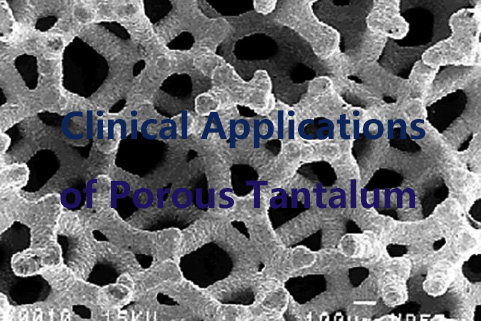
Porous tantalum has emerged as a miraculous material in biomedical engineering due to its excellent biocompatibility, corrosion resistance, and properties that match the mechanics of natural bone. It was initially synthesized for orthopedics, and presently its uses have also extended to dentistry, cardiovascular devices, and experimental regenerative medicine. Let's take a look at its experimental and clinical applications.
 [1]
[1]
Why Porous Tantalum?
Tantalum is a refractory metal that has numerous advantages when utilized as a biomaterial. Porous tantalum has also been particularly sought-after for osseointegration in addition to long-term biological stability.
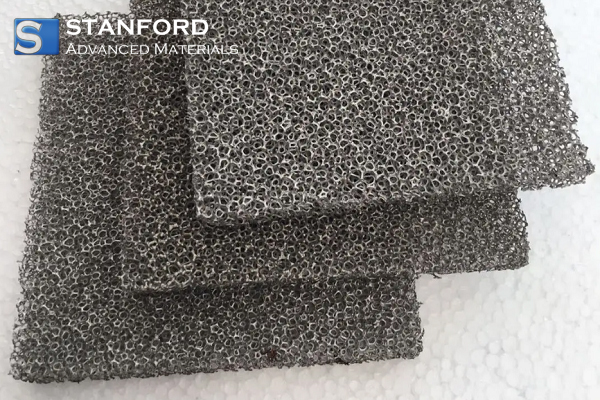
Porous tantalum is made by depositing tantalum onto a scaffold, creating a highly uniform, interconnected structure ideal for medical implants. Tantalum foam, produced by sintering or space-holder methods, has a less regular pore structure and is typically used in structural or experimental applications where lower precision is acceptable.
Porous tantalum possesses several significant properties that are well-suited for biomedical applications.
- High porosity, up to 80%, for tissue ingrowth and vascularization.
- Its elastic modulus is quite similar to cancellous bone, minimizing stress shielding and encouraging natural load transmission.
- Porous tantalum also has superior corrosion resistance, remaining stable and inert under physiological conditions.
- Its high friction coefficient also makes it have maximum initial mechanical stability at implantation.
All of these characteristics make porous tantalum particularly suitable for use in load-bearing implants as well as tissue engineering scaffolds.
Further reading: Tantalum: Properties and Applications
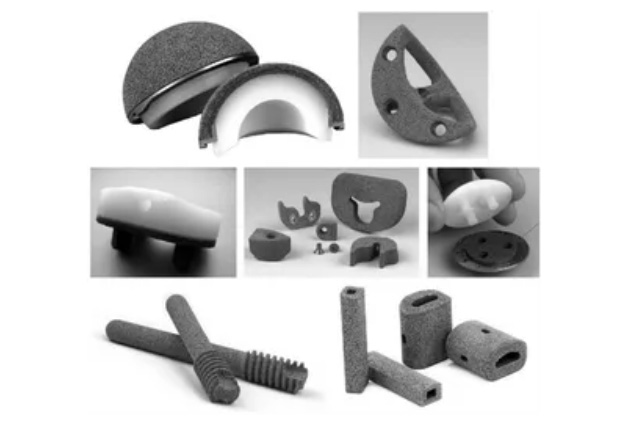 [2]
[2]
1. Orthopedic Implants
Porous tantalum is widely utilized in orthopedic reconstructive surgery, particularly in patients with severe bone loss or poor quality of bone.
--Hip and Knee Arthroplasty with Porous Tantalum
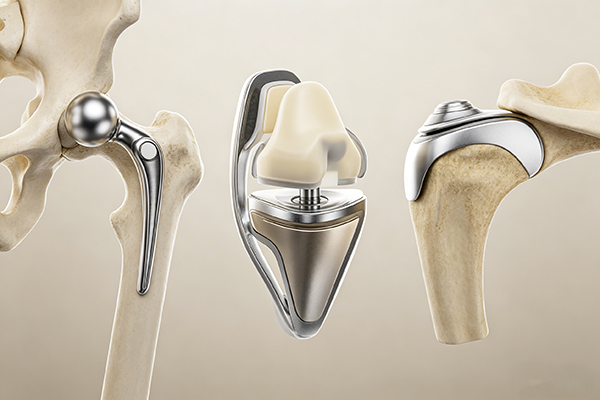
Porous tantalum has been an effective material for demanding hip and knee arthroplasty surgeries. Mechanical stability combined with high bone in-growth potential is specifically beneficial in revision total hip arthroplasty (THA) and total knee arthroplasties.
In revision THA, porous tantalum modular augments and acetabular cups are increasingly being employed to manage extensive bone loss and complex acetabular defects. These implants have a highly porous surface that enables rapid bone ingrowth, and because of their high friction coefficient, they enable strong primary fixation.
A landmark clinical paper by Weeden and Schmidt (2008) verified 98% survivorship at five years for individuals who had received porous tantalum acetabular cups in revision THA. The paper reviewed 43 difficult acetabular revisions, including 33 Paprosky type 3A and 10 type 3B defects with severe host bone loss and pelvic discontinuity. Modular tantalum augments were used to supplement the acetabular shell in 26 of them. At the average follow-up of 2.8 years, 42 of 43 components remained stable and there was a solitary failure due to septic loosening. [3]
In total knee arthroplasty, porous tantalum cones are commonly used in the management of large metaphyseal bone defects, both offering biological and mechanical fixation. The cones allow for the restoration of bone stock and a solid foundation for implant fixation in the case of extensive bone loss.
--Spinal Fusion Cages
Tantalum has shown tremendous potential in spinal fusion surgery, particularly as interbody cages for the procedure of transforaminal lumbar interbody fusion (TLIF). Tantalum cages are engineered to optimize spinal stability and promote bone integration while reducing implant subsidence risk via mechanical compatibility with contiguous bone.
Clinically, tantalum cages osseointegration has proved to be superior to that of the traditional materials such as polyetheretherketone (PEEK). Retrospective evaluation of 40 patients undergoing TLIF evaluated outcomes including symptom relief, return to activities, and radiographic union of fusion. While both groups, metal cage and PEEK cage, showed similar improvement in function, there were noticeable differences in bone response and fusion outcomes. [4]
At one-year follow-up, osteolysis occurred in 50% of the PEEK cage cases, compared to only 10% for the metal cage. Additionally, 40% of the metal cage cases exhibited fusion, far superior to the 15% seen with the PEEK cages. These findings indicate the osteoinductive nature of tantalum, along with high biocompatibility and mechanical competence.
2. Dental Implants
The biocompatibility and osseointegration capacity of tantalum are exploited in dental implants for patients with poor bone quality or previously failed implants. Its use is associated with reduced healing time and increased long-term fixation compared to standard titanium implants.
A preclinical study examined the performance of tantalum Trabecular Metal (TM) dental implants versus traditional titanium screw vent (TSV) implants, with a rabbit femoral condyle model. In the study, 20 implants (10 TM and 10 TSV) were randomly inserted in 10 New Zealand white rabbits. Following an 8-week healing phase, the implants were evaluated with micro-computed tomography (micro-CT), histology, and histomorphometry. [5]
Outcomes showed that the TM implants fared much better than TSV implants in bone-to-implant contact (BIC) and bone volume (BV) in the area of interest. TM implants recorded a BIC of 57.9% ± 6.5, compared to 47.6% ± 8 for TSV. Similarly, BV was 57% ± 7.3 for TM implants and 46.4% ± 7.4 for TSV. Micro-CT evaluation also confirmed the findings, with the TM group measuring 89.1% ± 8.7 bone volume percentage compared to 79.1% ± 8.6 for the TSV group.
3. Craniomaxillofacial Reconstruction
Porous tantalum plates and mesh are used in the complex facial reconstructions, with both esthetic conformity and mechanical stability. The open pore structure allows soft tissue integration as well as reduces the risk of infection.
Tantalum offers enhanced osteogenic capability compared to traditional materials such as Ti6Al4V, and is therefore particularly useful for stimulating bone regrowth in the intricate regions of the jaw and face.
To address the very personalized nature of CMF defects, 3D printing technology has been employed to produce patient-specific porous tantalum implants. In one recent study, 3D-printed tantalum scaffolds with nano-topographic surface modifications prepared by hydrothermal treatment were examined. This surface engineering was reported to promote the bioactivity of the scaffold by supporting osteoblast adhesion and triggering osteogenic differentiation of bone marrow stem cells (BMSCs). [6]
Conclusion
Porous tantalum has had a widespread impact on the practice of medicine, orthopedic and dental implant surgery in particular. With further progress in processing and customization, porous tantalum is poised to remain a cornerstone of tomorrow's implantable biomaterials. For more tantalum products and tech support, please check Stanford Advanced Materials (SAM).
Reference:
[1] Mohandas, Gokhuldass & Oskolkov, Nikita & Mcmahon, Michael & Walczak, Piotr & Janowski, Miroslaw. (2014). Porous tantalum and tantalum oxide nanoparticles for regenerative medicine. Acta neurobiologiae experimentalis. 74. 188-96. 10.55782/ane-2014-1984.
[2] Wang X, Zhou K, Li Y, Xie H, Wang B. Preparation, modification, and clinical application of porous tantalum scaffolds. Front Bioeng Biotechnol. 2023 Apr 4;11:1127939. doi: 10.3389/fbioe.2023.1127939. PMID: 37082213; PMCID: PMC10110962.
[3] Steven H. Weeden, Robert H. Schmidt, The Use of Tantalum Porous Metal Implants for Paprosky 3A and 3B Defects, The Journal of Arthroplasty, Volume 22, Issue 6, Supplement, 2007, Pages 151-155, ISSN 0883-5403.
[4] Cuzzocrea F, Ivone A, Jannelli E, Fioruzzi A, Ferranti E, Vanelli R, Benazzo F. PEEK versus metal cages in posterior lumbar interbody fusion: a clinical and radiological comparative study. Musculoskelet Surg. 2019 Dec;103(3):237-241. doi: 10.1007/s12306-018-0580-6. Epub 2018 Dec 10. PMID: 30536223.
[5] Al Deeb M, Aldosari AA, Anil S. Osseointegration of Tantalum Trabecular Metal in Titanium Dental Implants: Histological and Micro-CT Study. J Funct Biomater. 2023 Jul 6;14(7):355. doi: 10.3390/jfb14070355. PMID: 37504850; PMCID: PMC10382015.
[6] Zhang C, Zhou Z, Liu N, Chen J, Wu J, Zhang Y, Lin K, Zhang S. Osteogenic differentiation of 3D-printed porous tantalum with nano-topographic modification for repairing craniofacial bone defects. Front Bioeng Biotechnol. 2023 Aug 21;11:1258030. doi: 10.3389/fbioe.2023.1258030. PMID: 37671184; PMCID: PMC10475942.
 Chin Trento