
 Products
 Bars
Bars
 Beads & Spheres
 Bolts & Nuts
 Crucibles
 Discs
Discs
 Fibers & Fabrics
 Films
Films
 Flake
Flake
 Foams
Foams
 Foil
Foil
 Granules
 Honeycombs
 Ink
Ink
 Laminate
 Lumps
Lumps
 Meshes
 Metallised Film
 Plate
Plate
 Powders
 Rod
Rod
 Single Crystals
 Sputtering Target
 Tubes
Tubes
 Washer
 Wires
Wires
 Converters & Calculators
 Write for Us



History and Types of Bioceramic Materials

Introduction
Bioceramic materials have long played a meaningful role in both science and everyday life. They are used in various fields. Their applications range from medical devices and implants to everyday materials.
What Are Bioceramics?
Bioceramics are ceramic materials that interact with living tissue. They are made from compounds like alumina, zirconia, and calcium phosphate. Their key feature is that they are friendly to body tissues. They can join with bone and are useful in implants. Bioceramics are different from other ceramics because they are designed with health in mind. They must be safe and stable inside the body.
These materials have a special surface that encourages bone cells to grow. They are strong and wear-resistant. They also have a low chance of causing harmful reactions. A common example is the use of hydroxyapatite in dental implants. This material resembles the mineral part of bones and teeth. Another example is alumina, which is used in joint replacements. The material’s toughness and long-lasting properties help build reliable and durable medical devices.
In everyday life, you may come in touch with bioceramics indirectly. They are present in devices that help people regain movement. Their role in medicine is profound, yet their concept is simple. They bond with living tissue without causing adverse reactions. Many bioceramics even promote the reconstruction of healthy tissue. This makes them an important asset in medical science.
History and Development of Bioceramic Materials
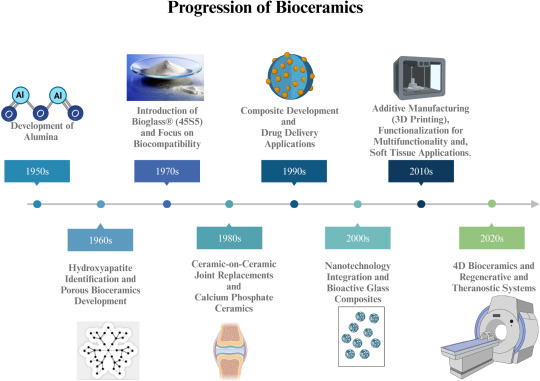
The use of ceramic materials in medicine has ancient roots. Early people used natural clays to mend broken bones. Over centuries, craftsmen developed new ceramic techniques. They utilized various clay compounds to create items that were safe and effective. Treatments and tools were developed based on ceramic properties.
In the 20th century, the field of bioceramics gained momentum. Researchers observed that certain ceramics could support bone growth. They recognized that these materials caused fewer side effects compared to metallic implants. This observation led to more research and trials. Laboratories started testing biocompatibility. Research resulted in the formulation of materials like high-purity alumina and zirconia. Longevity and stability were highly sought-after qualities.
The next phase was marked by the application of bioceramics in implant surgery. The idea was simple: use materials similar to bone, reduce rejection risk, and increase the life span of the implant. Surgeons started applying bioceramic materials in hip replacements and dental surgery. The data from these early implementations were promising. More hospitals began using these materials, and workshops and universities prepared detailed studies. In recent years, innovations in processing techniques have resulted in superior bioceramics. They have excellent wear resistance and display strong integration with host tissues.
Advancements in the last decades have made bioceramics more reliable. Researchers improved the composition by adding metals or using special nanostructures. This leads to better performance in specific uses. Some bioceramics now have self-healing properties when they crack under stress. The field has come a long way since the early days of using natural clays. Today, bioceramics are a key element in advanced medical treatments and various non-medical fields.
Classification of Bioceramics
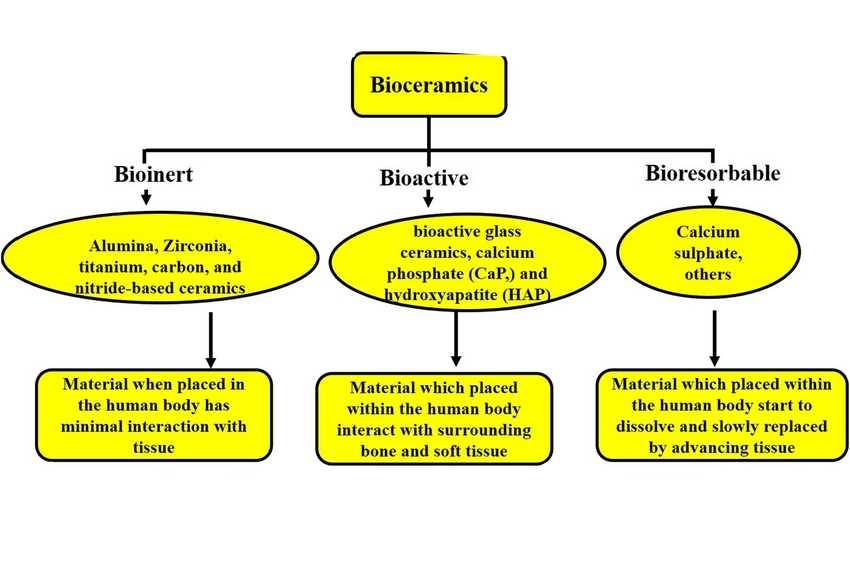
Bioceramic materials are classified by their chemical properties and how they interact with living tissue. There are three main groups.
The first group is bioinert ceramics. These ceramics do not cause any reaction in the body. Alumina and zirconia are typical examples. They are mainly used in load-bearing applications. Their role in joint replacements is well known. They offer strength and longevity. Bioinert ceramics are stable and have excellent mechanical properties. This group shows high durability even after years of use.
Next is biodgradable ceramics. These ceramics gradually break down in the body. Calcium phosphate-based ceramics are leaders in this group. An important example is tricalcium phosphate. They are used in bone grafts and dental applications. When implanted, they gradually get absorbed. This absorption allows natural bone cells to fill the gap. The method reduces the risk of long-term inflammation. The pace of degradation is controlled by the ceramic’s composition. Researchers adjust the porosity and crystal structure. Many successful cases list the repair of bone fractures with these materials. They shorten recovery time and aid natural healing processes.
The third group is bioactive ceramics. They interact actively with the tissues. Bioactive glasses are common in this group. They not only bond with bone but also stimulate new bone formation. These ceramics are used in periodontal repair and orthopaedic surgeries. The surface of bioactive ceramics changes upon contact with body fluid, creating a layer that helps cells adhere. This unique property makes them promising in surgical applications where fast healing is needed.
Each classification of bioceramics carries its own benefits. The choice depends on the need. For a stable, long-lasting joint replacement, a bioinert ceramic is usually preferred. For applications where the implant is expected to be absorbed over time, biodurable ceramics work well. When immediate bone integration is required, bioactive ceramics come into play.
Numerous studies have reported the capability of each type. For instance, alumina shows exceptional wear resistance, making it favorable for hip implants. Calcium phosphate ceramics have been seen in successful bone regeneration cases. Bioactive glass has been used in dental repairs with positive outcomes. Over time, material engineers have been able to tailor characteristics with precise control. The result is a range of ceramic materials suited for various treatments.
The field continues to evolve. New composites also combine bioceramics with polymers to improve toughness and flexibility. Researchers are working on hybrid materials that blend the best properties of each ceramic type. These innovative combinations promise better outcomes for patients and new applications in technology.
Conclusion
Bioceramic materials have made a lasting impact on medicine and various other industries. Their basic safety and compatibility with the body have made them reliable choices in surgery and repair.
Frequently Asked Questions
F: What are bioceramic materials used for in the body?
Q: They are used in implants, dental repairs, and bone substitutes. They support tissue regeneration and structural repair.
F: Why do bioceramics come in different types?
Q: They are made to interact with tissues differently. Some are inert, some bioactive, and some gradually absorb in the body.
F: Can bioceramics improve healing in bone surgery?
Q: Yes, many bioceramics promote cell adhesion and bone growth, helping to restore bone integrity efficiently.
Reference:
[1] Kumar, Ritesh & Pattanayak, Ipsita & Dash, Pragyan & Mohanty, Smita. (2023). Bioceramics: a review on design concepts toward tailor-made (multi)-functional materials for tissue engineering applications. Journal of Materials Science. 58. 1-25. 10.1007/s10853-023-08226-8.

 Chin Trento