

 Products
 Bars
Bars
 Beads & Spheres
 Bolts & Nuts
 Crucibles
 Discs
Discs
 Fibers & Fabrics
 Films
Films
 Flake
Flake
 Foams
Foams
 Foil
Foil
 Granules
 Honeycombs
 Ink
Ink
 Laminate
 Lumps
Lumps
 Meshes
 Metallised Film
 Plate
Plate
 Powders
 Rod
Rod
 Single Crystals
 Sputtering Target
 Tubes
Tubes
 Washer
 Wires
Wires
 Converters & Calculators
 Write for Us



Best Materials for Resistance Welding: Steel, Aluminum, and More

Introduction
Resistance welding is a process that uses electrical current and pressure to join metal parts. In industrial settings, it plays an important role in making parts for vehicles, appliances, and many other products. The process is fast and produces high-quality joints. For successful welding, choosing the right material matters a lot.
Selecting the right metal is much like choosing the right tool for a job. Each metal has unique traits such as conductivity, strength, and melting point. These traits affect how easily the material can be welded and how it performs after welding. The choices you make can impact production speed and product durability.
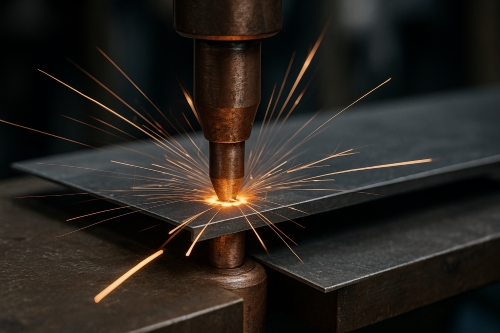
Steel: The Most Common Material for Resistance Welding
Steel is the workhorse of resistance welding. It is strong, reliable, and is used in many industries. The most common type is carbon steel due to its ease of use during the welding process.
When welding steel, you benefit from its predictable behavior under heat. The gentle heating and quick cooling during resistance welding produces a solid weld. Many automotive industries rely on carbon steel in car bodies. For instance, car manufacturers often use resistance welding to produce the frame of a vehicle, keeping it safe and strong.
Data shows that carbon steel has a melting point above 1425°C. This characteristic allows for a stable welding process. In addition, steel is cost-effective and widely available, making it a popular choice in industrial manufacturing. The availability of many grades also lets manufacturers choose the best type for strength and flexibility in the final product.
Aluminum: Lightweight and Corrosion-Resistant
Aluminum is a favorite when light weight is important. It has a low density and excellent resistance to corrosion. These properties make aluminum a common choice in the aerospace and transportation industries.
One advantage of aluminum is its lower melting point compared to steel. This means less energy is needed to weld it. However, it also means there is a risk of overheating if the welding current is not carefully controlled. For example, in airplane construction, the weight reduction that aluminum provides is key to fuel efficiency.
Due to its high thermal conductivity, heat spreads quickly through aluminum. This can lead to variable weld quality if the process is not finely tuned. Many welders use special techniques to manage the heat and ensure a consistent weld. Aluminum alloys, which mix aluminum with other metals, are often selected to improve strength without sacrificing lightweight properties.
Copper and Copper Alloys: High Conductivity, But Difficult to Weld
Copper and copper alloys are well known for their high electrical and thermal conductivity. This makes them excellent choices in applications where electrical properties are critical. However, the very property that makes them desirable also poses challenges in resistance welding.
The high thermal conductivity of copper means that heat disperses very fast from the weld point. This makes it hard to reach the necessary temperature for a sound weld. In many cases, copper’s melting point is reached unevenly, resulting in weak joints. In practice, special welding techniques or even additional heat sources are used to overcome these challenges.
Copper alloys, such as brass or bronze, can offer a balance between conductivity and workability. They have additional elements that change their melting behavior slightly. Industrial applications often see these alloys used in electrical equipment and plumbing. A common example is the use of brass in the fabrication of valves and fittings, where both durability and resistance welding are critical.
Stainless Steel: Strong, Corrosion-Resistant, and Versatile
Stainless steel offers a good mix of strength and a high resistance to corrosion. This metal is popular in harsh environments where the finished product must stand up to weather, chemicals, and repeated use. In resistance welding, stainless steel is valued for its consistent performance.
The alloy composition of stainless steel typically includes elements like chromium and sometimes nickel. These elements protect the metal from rust and corrosion. You often see stainless steel in kitchen appliances, medical instruments, and structural components. For instance, the kitchen of a busy restaurant may feature stainless steel equipment because it withstands frequent washing and intensive use.
The welding process for stainless steel may require more precise control to maintain the appearance and strength of the weld joint. The heat input needs careful management to avoid discoloration or weakening the steel. Over many years, manufacturers have developed techniques to blend the heat effectively, producing joints that are as strong as the base metal.
Titanium: Lightweight, Strong, but Expensive
Titanium finds its use when a combination of strength and light weight is needed. It is as strong as steel but nearly 45 percent lighter. Although titanium offers excellent performance, it comes at a high cost.
Resistance welding of titanium requires a clean environment. The metal reacts with oxygen at high temperatures, which can affect the quality of the weld. Industries like aerospace sometimes choose titanium because its high strength-to-weight ratio is unmatched. For example, certain aerospace components benefit from titanium not only for its weight savings but also for its ability to handle stress and high temperatures.
Titanium’s high cost means its usage is often limited to applications where benefits clearly outweigh the expense. Many welding shops use advanced techniques and controlled environments to minimize imperfections during the welding of titanium. While its welding requires more expertise and special equipment, the final product is highly valued in critical applications.
Frequently Asked Questions
F: What is resistance welding used for in industry?
Q: It is used for joining metal pieces quickly and reliably in automotive, aerospace, and appliance manufacturing.
F: Why is steel the most common material for resistance welding?
Q: Steel is strong, reliable, and cost-effective, making it suitable for high-volume industrial production.
F: How does high thermal conductivity affect copper welding?
Q: The high conductivity disperses heat too quickly, making it hard to achieve a strong and even weld.
 Dr. Samuel R. Matthews