
 Products
 Bars
Bars
 Beads & Spheres
 Bolts & Nuts
 Crucibles
 Discs
Discs
 Fibers & Fabrics
 Films
Films
 Flake
Flake
 Foams
Foams
 Foil
Foil
 Granules
 Honeycombs
 Ink
Ink
 Laminate
 Lumps
Lumps
 Meshes
 Metallised Film
 Plate
Plate
 Powders
 Rod
Rod
 Single Crystals
 Sputtering Target
 Tubes
Tubes
 Washer
 Wires
Wires
 Converters & Calculators
 Write for Us



ASTM E1019: Standard Test Methods for Elemental Analysis of Alloys

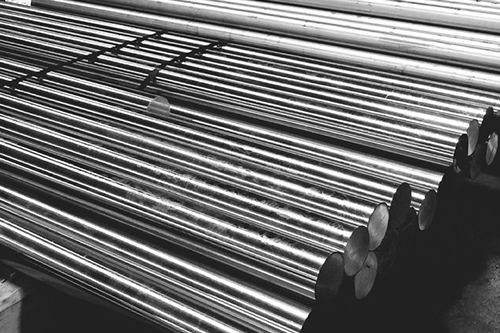
ASTM E1019 provides standardized test methods for the precise determination of carbon, sulfur, nitrogen, and oxygen in steel, iron, nickel, and cobalt alloys, using combustion and inert gas fusion techniques. These measurements are crucial for optimizing alloy composition and ensuring material performance in demanding industrial applications.
Why Elemental Analysis in Alloys Matters
Elemental analysis cannot be overemphasized as a process of controlling the chemical components of alloys to produce the required physical, mechanical, and chemical characteristics. Carbon, sulfur, nitrogen, and oxygen are some of the elements that considerably affect the characteristics of an alloy with regard to strength, ductility, corrosion-resistant characteristics, and stability at high temperatures. Knowledge of these elements helps refine an alloy depending on its application.
- Carbon: Helps in determining strength, hardness, and weldability, particularly in steels and alloys.
- Sulfur: May deteriorate material properties by reducing ductility and toughness.
- Nitrogen: It improves strength, hardness, and corrosion resistance; however, excessive amounts can lead to brittleness.
- Manganese: Inhibits the formation of alumina during refining and affects hot strength.
Standard Test Methods ASTM E1019
The standards specified by ASTM E1019 describe the processes that have to be followed in the measurement of the important trace element contents using the processes of combustion and inert gas fusion. The processes involved have a high level of accuracy.
Combustion Method
In the combustion method, the small sample of the alloy is burned in the presence of an abundance of oxygen, thus producing gases such as carbon dioxide (CO₂), sulfur dioxide (SO₂), nitrogen oxides (NOx), and oxygen (O₂). The gases are then analyzed using different detection principles, including infrared absorption or thermal conductivity to quantify the different elements.
Inert Gas Fusion Method
The inert gas fusion analytical technique is applied mainly for the analysis of the oxygen and nitrogen levels of alloys. In the technique, the alloy sample is heated in a furnace with the use of an inert gas, for instance, argon. The heating causes the evolution of the gases as a result of the reaction between the alloy sample and the gases. The gases can then be tested for the quantitative levels of the elements.
Main Advantages of ASTM E1019
- Precision and Accuracy: The procedures described in ASTM E1019 ensure a high degree of accuracy in their outcomes, which is a predominant requirement in those industries requiring alloys.
- Versatility – The document is applicable to different alloys such as steel, iron, nickel, and cobalt, and is, therefore, very versatile.
- Quality Control: ASTM E1019 assists in implementing quality control measures by ensuring any alloy adheres to certain quality requirements.
- Material Certification: The test methods assist in complying with material certification, especially in the aerospace industry where material authenticity plays a critical role.
Uses of ASTM E1019 in Industry
Aerospace: Real proof that turbine and engine alloys meet the correct performance spots, especially in terms of extreme heat and stress.
Automobiles: Optimizing compositions of alloys used in automobile engine components, exhaust, and suspension systems to achieve durability and performance.
Energy: Verification of alloys employed in power stations, turbines, and reactors to ensure suitability in terms of stability at higher temperatures and corrosion resistance.
Manufacturing: Alloy composition control in machinery is an important factor in those sectors except mass production
Comparison of ASTM E1019 with Other Testing Standards
|
Standard |
Material Type |
Primary Focus |
Common Applications |
|
ASTM E1019 |
Wrought and cast metals |
Composition Analysis |
Steel manufacturing, construction |
|
ASTM E8/E8M |
Metallic materials |
Tension testing |
General metal testing |
|
ASTM A370 |
Steel products |
Mechanical testing |
Structural steel evaluation |
|
ISO 6892 |
Metallic materials |
Tensile testing |
International metal standards |
For more information, please check Stanford Advanced Materials (SAM).
Conclusion
It is critical for precise measurement of the presence of carbon, sulfur, nitrogen, and oxygen in alloys. For example, with the use of the processes involved in the ASTM E1019 instrument, it becomes possible to ensure the quality, reliability, and performance that must be preserved in the automotive industry.
Frequently Asked Questions
1) What materials does ASTM E1019 cover?
ASTM E1019 covers steel, iron, nickel, and cobalt alloys; it is commonly used in applications where precise analysis of elements is required.
2) In what respects does the combustion technique have significant benefits in elemental analysis?
Combustion method gives good analysis of carbon, sulfur, and nitrogen and is preferred in industry due to ease of analysis and results.
3) For what reasons is inert gas fusion applied in the analysis of nitrogen and oxygen?
Inert gas fusion provides very precise values for both the determination of nitrogen and that of oxygen, particularly when these components are present at low concentrations, as is particularly important in high-performance alloys.
4) How does ASTM E1019 apply to quality control? With its ability to accurately analyze elements,
E1019 ensures that alloys have specifications that work well in a demanding environment.
5) In which kind of industries is ASTM E1019 applied?
The standard is applied extensively across the aerospace, autos, energy, and manufacturing industries, where the accurate alloying composition is crucial to the longevity and functionality of the component.

 Chin Trento