
 Products
 Bars
Bars
 Beads & Spheres
 Bolts & Nuts
 Crucibles
 Discs
Discs
 Fibers & Fabrics
 Films
Films
 Flake
Flake
 Foams
Foams
 Foil
Foil
 Granules
 Honeycombs
 Ink
Ink
 Laminate
 Lumps
Lumps
 Meshes
 Metallised Film
 Plate
Plate
 Powders
 Rod
Rod
 Single Crystals
 Sputtering Target
 Tubes
Tubes
 Washer
 Wires
Wires
 Converters & Calculators
 Write for Us



ASTM E399: Assessing Toughness in Metals and Alloys

What Is Fracture Toughness?
Fracture toughness refers to a material's ability to resist the extension of pre-existing cracks. Unlike the plain tensile strength, which determines the force needed to deform a material, fracture toughness concerns the material's response when the material already contains a flaw or crack.
Practically speaking, high fracture toughness allows metals and alloys to resist operating stresses without failure that is catastrophic in nature. The property finds specific importance in structural applications where failure would have significant consequences, such as in aircraft, bridges, or pressure vessels. Low fracture toughness, on the other hand, renders materials prone to brittle fracture, which may occur suddenly and with little or no preceeding deformation.
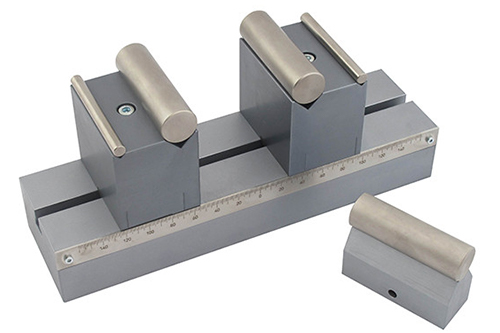
What Is ASTM E399
Purpose and Goals
ASTM E399 is intended to determine the interplanar-strain fracture toughness (K_IC) of metals. Plane-strain conditions are achieved by using thick specimens such that at the crack tip, the tension-controlled stress condition and not the bending-controlled condition exists. The standard provides reproducible and comparable results required for design, material selection, and quality control.
Test Procedure
ASTM E399 test requires some critical steps to attain reproducibility and accuracy:
1. Specimen Preparation:
The samples are machined to the desired dimensions and a fatigue pre-crack is created. This ensures reproducible crack initiation and stress distribution with uniformity.
2. Loading:
The specimen is subjected to loading in a mechanical test device and subjected to controlled, incrementing load. The test is typically carried out under conditions of displacement control such that crack initiation can be detected accurately.
3. Measurement and Calculation:
When the crack begins to propagate, the critical load is recorded. Plane-strain fracture toughness (K_IC) is calculated from applied load and specimen geometry using standard equations.
Applications in Metals and Alloys
ASTM E399 has widespread applications in metal sectors where metal components are required to resist crack propagation when subjected to stress. These include:
• Aerospace: Conducting testing of the fracture toughness of turbine blades, fuselage, and landing gear material.
• Automotive: Conducting testing of engine blocks, chassis, and suspension components for toughness.
• Construction and Infrastructure: Avoiding steel beams, pipes, and structural alloys from losing their integrity under conditions.
• Energy and Nuclear Industries: Conducting testing of reactor, pressure vessel, and pipeline metals to prevent failure.
With its supply of accurate fracture toughness data, ASTM E399 makes it possible for engineers to select correctly the right choice of alloys, design optimally, and assure safety.
Factors Influencing Toughness
There are several factors which influence the measured fracture toughness of metal and alloy:
• Microstructure: Microstructure dimensions such as grain size, phase distribution, and inclusions can have enormous potential to raise or lower toughness. Small, equiaxed grains will increase resistance to crack growth.
• Temperature: All metals become more brittle at low temperature, lowering K_IC values. Higher temperatures also soften materials, with varying crack resistance.
• Loading Rate: Faster-applied loads can reduce apparent toughness as materials have less time to deform plastically.
• Specimen Geometry: Thickness and length of cracks influence plane-strain conditions; changes can alter measured K_IC values.
It is noteworthy to learn these variables for test result analysis and for usage of the data in real engineering design.
Frequently Asked Questions
For what purpose is ASTM E399 used?
ASTM E399 measures the plane-strain fracture toughness of metallic materials, their ability to resist extension of cracks.
Why is fracture toughness important in metals and alloys?
It determines the material's stress resistance without sudden failure, ensuring safety and dependability for high-stakes applications.
How is ASTM E399 testing conducted?
Pre-cracking of samples, controlled loading, and determination of K_IC from critical load and specimen geometry are performed.
In which industries is ASTM E399 used routinely?
It is applied in widespread usage in aerospace, automotive, construction, energy, and nuclear industries wherever structural integrity is a matter of highest priority.
What are the variables that can affect test results?
Microstructure, temperature, rate of loading, and geometry of the specimen all affect fracture toughness tests.

 Chin Trento