
 Products
 Bars
Bars
 Beads & Spheres
 Bolts & Nuts
 Crucibles
 Discs
Discs
 Fibers & Fabrics
 Films
Films
 Flake
Flake
 Foams
Foams
 Foil
Foil
 Granules
 Honeycombs
 Ink
Ink
 Laminate
 Lumps
Lumps
 Meshes
 Metallised Film
 Plate
Plate
 Powders
 Rod
Rod
 Single Crystals
 Sputtering Target
 Tubes
Tubes
 Washer
 Wires
Wires
 Converters & Calculators
 Write for Us



ASTM E18: Hardness Testing of Metals and Alloys

Introduction
ASTM E18 is a crucial standard in the field of materials science, specifically focusing on the hardness testing of metals and alloys. Hardness testing is essential for determining the resistance of a material to deformation, which is a key indicator of its performance in various applications.
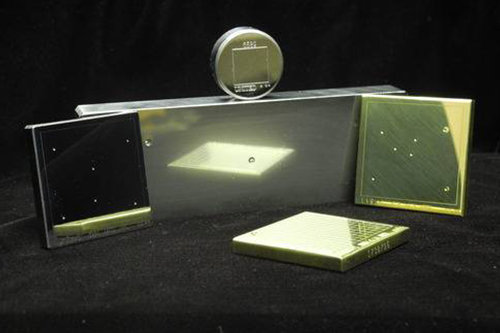
What Is ASTM E18
ASTM E18 is a standard test method established by ASTM International for conducting Rockwell hardness tests on metallic materials. This method provides a consistent approach to measuring hardness, ensuring reliability and accuracy across different laboratories and industries.
Hardness testing, as outlined in ASTM E18, plays a vital role in assessing the mechanical properties of metals and alloys. It helps in determining material suitability for specific applications, predicting wear resistance, and ensuring quality control in manufacturing processes.
Procedure of ASTM E18
The ASTM E18 standard specifies the use of Rockwell hardness testers, which apply a minor load followed by a major load to indent the material's surface. The depth of the indentation correlates with the material's hardness value, providing a quantitative measure of its resistance to deformation.
Factors Affecting Hardness Test Results
Several factors can influence the accuracy of hardness tests under ASTM E18, including surface preparation, indenter calibration, and the correct application of loads. Ensuring these factors are controlled is essential for obtaining reliable hardness measurements.
Applications of ASTM E18
ASTM E18 is widely used in various industries, including automotive, aerospace, and construction, to evaluate the hardness of components such as gears, shafts, and structural elements. This ensures that materials meet the required specifications for durability and performance.
Common Rockwell Hardness Scales Used in ASTM E18
|
Rockwell Scale |
Application |
Indenter Type |
Load Applied |
|
B |
Thin materials and soft metals |
Steel ball |
100 kgf |
|
C |
Hard metals and alloys |
Diamond cone |
150 kgf |
|
A |
Very hard materials |
Diamond cone |
60 kgf |
|
D |
Medium hard materials |
Diamond cone |
150 kgf |
For more information, please check Stanford Advanced Materials (SAM).
Frequently Asked Questions
What does ASTM stand for?
ASTM stands for American Society for Testing and Materials, an international
standards organization that develops and publishes technical standards for a
wide range of materials and products.
Why is hardness testing important for metals and alloys?
Hardness testing determines a material's resistance to deformation, which is
crucial for assessing its suitability for specific applications and ensuring
its performance and durability.
How does ASTM E18 differ from other hardness testing standards?
ASTM E18 specifically outlines the Rockwell hardness testing method for metals
and alloys, providing standardized procedures and scales to ensure consistent
and accurate measurements.
What are the common Rockwell hardness scales used in ASTM E18?
The common Rockwell scales used in ASTM E18 include the B, C, A, and D scales,
each suited for different types of materials and hardness ranges.
Can ASTM E18 be used for non-metallic materials?
ASTM E18 is primarily designed for metallic materials. Non-metallic materials
typically require different hardness testing standards and methods.
 Chin Trento