
 Products
 Bars
Bars
 Beads & Spheres
 Bolts & Nuts
 Crucibles
 Discs
Discs
 Fibers & Fabrics
 Films
Films
 Flake
Flake
 Foams
Foams
 Foil
Foil
 Granules
 Honeycombs
 Ink
Ink
 Laminate
 Lumps
Lumps
 Meshes
 Metallised Film
 Plate
Plate
 Powders
 Rod
Rod
 Single Crystals
 Sputtering Target
 Tubes
Tubes
 Washer
 Wires
Wires
 Converters & Calculators
 Write for Us



ASTM E84: Assessing Surface Burning Characteristics

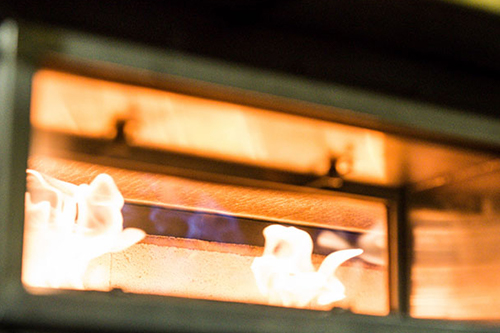
It is important how materials react at their surfaces when they come into contact with flame, which is a concern for where we ultimately use those materials – buildings, interior, and structural. There is a standard test for how materials react under flame exposure, which is important for safety and compliance with building codes, established in ASTM E84. This test is very important for manufacturers, architects, and individuals within safety circles concerned with resistance to fire.
Why the Surface Burning Rating Is Important
Knowing how a material burns on the surface is important because:
- Safety: If the burn performance of the material on the surface isn't good, the fire spread rate can accelerate, thus posing threats to both people and properties.
- Compliance: Certain burning ratings are mandated by code and regulation to remain within specified limits of safety.
- Material Selection: Using materials possessing appropriate burning properties will enhance the fire-resistance properties of the building.
- Insurance: Complying with ASTM E-84 standards may be relevant to insurance costs as well as liability in case of a fire.
Procedure Overview
- Sample Preparation: The sample is cut into the desired size and prepared in a temperature- and humidity-controlled environment.
- Test Setup: Mount the sample specimens in the test fixture.
- Ignition: Using a controlled flame, ignite the surface for a specified time.
- Observation: Observe the movement of the flame across the surface and determine the flame spread index (FSI) and the smoke developed index (SDI).
- Data Analysis: Results should be evaluated for their burning characteristics on the surface and verified for compliance with the ASTM E84 standard.
Where ASTM E84 Is Used
This standard is universal in regions with a focus on fire safety. The key considerations are:
- Construction materials: Product testing of paints, coatings, floors, and wall materials to check their fire safety.
- Furniture Production: Examination of flameability of upholstered furniture and fabrics.
- Automotive Industry: Evaluating fire resistance of interior components.
- Public Transportation: Making sure that the materials used in the construction of buses, trains, and other vehicles conform to safety standards.
- Consumer Products:The testing of products such as curtains and bedding to ensure fire safety standards.
Comparison of Surface Burning Standards
|
Standard |
Test Method |
Applications |
Advantages |
Limitations |
|
ASTM E84 |
Steiner Tunnel Test |
Building materials, furniture |
Widely recognized, reliable results |
Time-consuming, requires specialized equipment |
|
ISO 11925-2 |
Single Flame Test |
Interior finishes, textiles |
Quick assessment, simple setup |
Less comprehensive than ASTM E84 |
|
NFPA 255 |
Room Corner Test |
Building materials, furnishings |
Simulates real-world fire spread |
More complex and expensive |
|
UL 723 |
Flame Spread Rating |
Building materials, insulation |
Standardized for safety ratings |
Limited to specific material types |
|
CAN/ULC-S102 |
Steady State Test |
Building and interior materials |
Consistent and repeatable testing |
Regional applicability (Canada) |
For more information, please check Stanford Advanced Materials (SAM).
Frequently Asked Questions
What's ASTM E84 all about?
It's that test which measures the surface burning characteristics of building materials, ensuring flame spread and smoke development fall within safety limits.
Why do we care about the surface burning ratings?
These ratings tell us how materials behave under fire aspects that directly influence both occupant safety and structural integrity.
Can ASTM E84 be used on all materials?
Pretty much. It covers a wide range of building and interior materials—paints, coatings, textiles, plastics, and on—provided it follows all the sample prep rules.
What PPE would you need for ASTM E84 testing?
You will need a Steiner Tunnel Test apparatus, an enclosure, an ignition source calibrated with a control atmosphere, and an apparatus for measuring the flame spread indices and smoke development.
How does ASTM E84 keep fire safety assessments reliable?
The standard outlines specific preparation of samples, control of test conditions, and data analysis to obtain consistent and reliable results.
 Chin Trento