Products
 Bars
Bars
 Beads & Spheres
 Bolts & Nuts
 Crucibles
 Discs
Discs
 Fibers & Fabrics
 Films
Films
 Flake
Flake
 Foams
Foams
 Foil
Foil
 Granules
 Honeycombs
 Ink
Ink
 Laminate
 Lumps
Lumps
 Meshes
 Metallised Film
 Plate
Plate
 Powders
 Rod
Rod
 Single Crystals
 Sputtering Target
 Tubes
Tubes
 Washer
 Wires
Wires
 Converters & Calculators
 Write for Us



Magnesium: Element Properties and Uses

Description
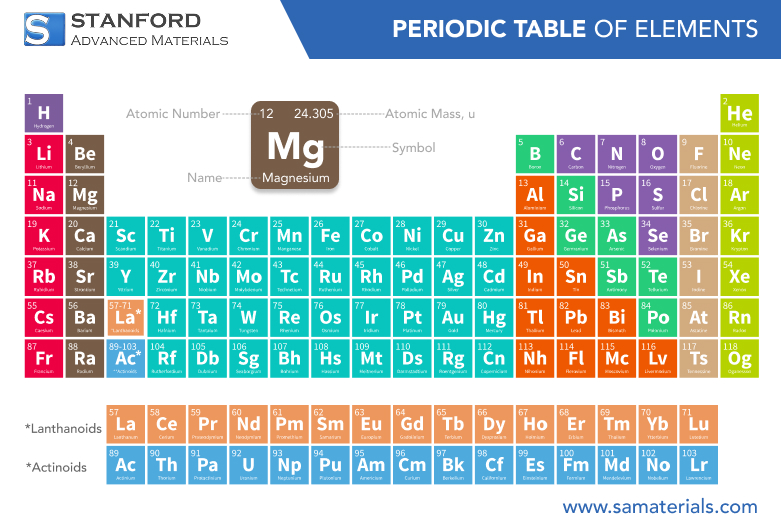
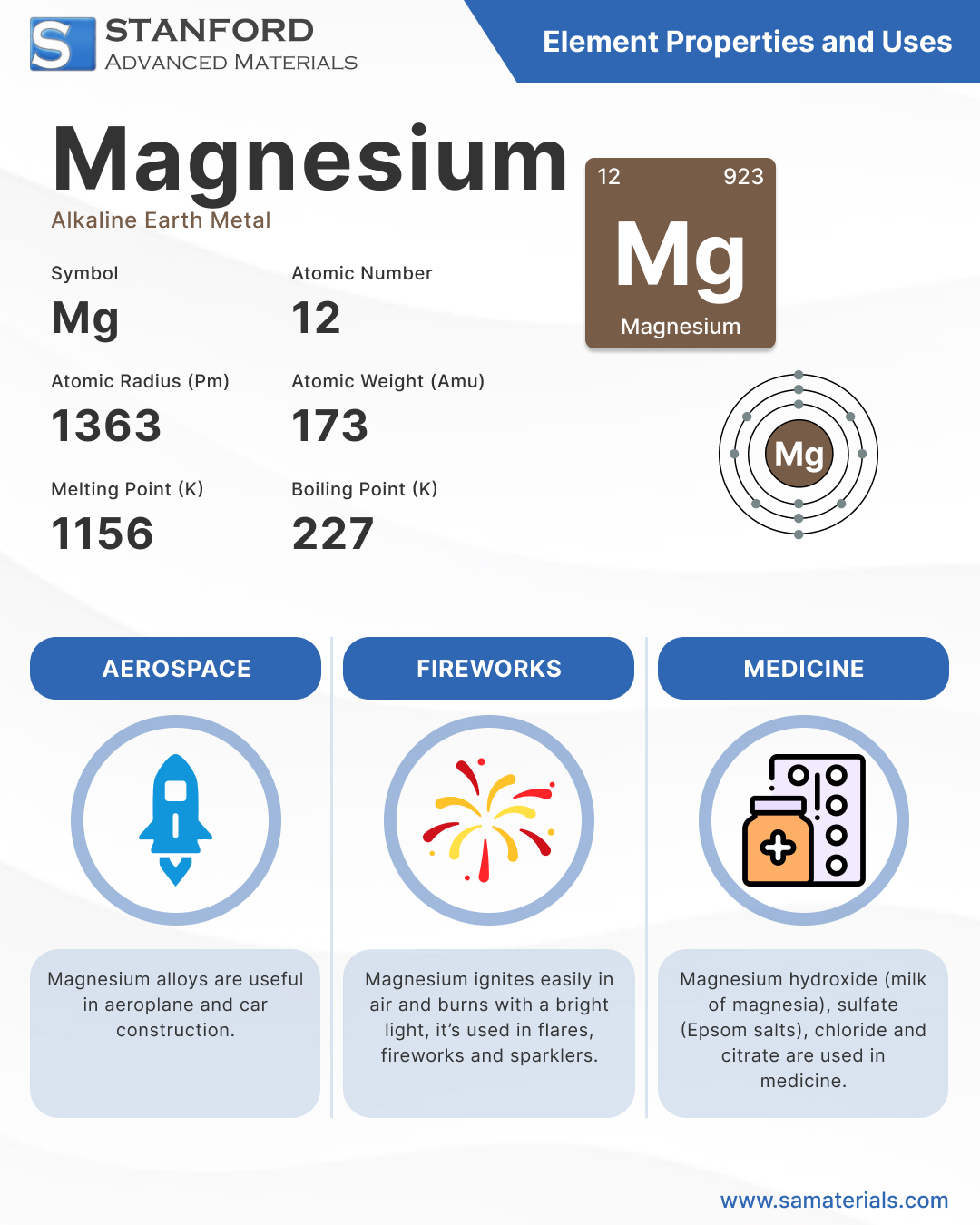
Magnesium is a chemical element with the symbol Mg and atomic number 12. It is a lightweight, silvery-white metal essential to both biological processes and modern industry.
Introduction to the Element
Magnesium is the eighth most abundant element in the Earth's crust and the third most dissolved mineral in seawater. It does not occur naturally in pure form but is found in minerals such as dolomite, magnesite, and carnallite. In biological systems, magnesium is a cofactor in over 300 enzymatic reactions and is critical for DNA synthesis, muscle function, and nerve transmission.
Industrially, magnesium is valued as the lightest structural metal—about one-quarter the density of steel and two-thirds that of aluminum. Its combination of low density, high specific strength, and good machinability makes it indispensable in applications where weight reduction is a priority.
Chemical Properties
Magnesium is chemically reactive, particularly with oxygen and water. When exposed to air, it forms a thin, protective oxide layer that prevents further corrosion under normal conditions. However, in finely divided form (powder or ribbon), it ignites readily and burns with an intense white flame—a property exploited in fireworks and flares.
Magnesium reacts slowly with cold water but vigorously with hot water or steam, releasing hydrogen gas. It also dissolves readily in mineral acids, with visible hydrogen evolution. As an alkaline earth metal, magnesium has a relatively low ionization energy and typically exhibits a +2 oxidation state in its compounds.
Physical Properties Data Table
| Property | Value | Comparison |
|---|---|---|
| Density | 1.738 g/cm³ | ~2/3 of aluminum, 1/4 of steel |
| Melting Point | 650°C | Slightly below aluminum (660°C) |
| Boiling Point | 1,090°C | - |
| Electrical Conductivity | 22.4 × 10⁶ S/m | ~61% of aluminum |
| Thermal Conductivity | 156 W/(m·K) | ~60% of aluminum |
| Young's Modulus | 45 GPa | Lower stiffness than Al or steel |
| Tensile Strength (pure) | 90-190 MPa | Alloys reach 250-350 MPa |
| Poisson's Ratio | 0.29 | - |
| Crystal Structure | Hexagonal (HCP) | Affects formability at room temp |
Common Uses by Industry
Automotive
Magnesium alloys are used in steering wheel cores, seat frames, instrument panel supports, and transmission housings. Replacing aluminum with magnesium can reduce component weight by 25-35%, which is increasingly valuable for electric vehicle battery range. BMW, Audi, and Ford have used magnesium components in production vehicles for decades.
Aerospace
Helicopter transmission housings, engine gearboxes, and missile fins. Weight savings are critical in aerospace, and magnesium offers the best strength-to-weight ratio among common structural metals. Parts are typically protected with coatings to address corrosion concerns.
Consumer Electronics
Laptop enclosures, camera bodies, and smartphone frames. Magnesium alloys provide rigidity, EMI shielding, and heat dissipation while keeping devices light. The "magnesium body" feature in premium electronics is a direct result of these properties.
Other Applications
-
Sacrificial Anodes: Protecting steel structures (pipelines, ships, water heaters) from corrosion
-
Pyrotechnics: Magnesium powder in fireworks, flares, and military illuminants
-
Metallurgy: Nodularizer in ductile iron production; reducing agent in titanium and uranium extraction
-
Chemical Processing: Grignard reagents in organic synthesis
Available Forms from Stanford Advanced Materials
Stanford Advanced Materials supplies magnesium and magnesium alloys in various forms for research and industrial applications:
-
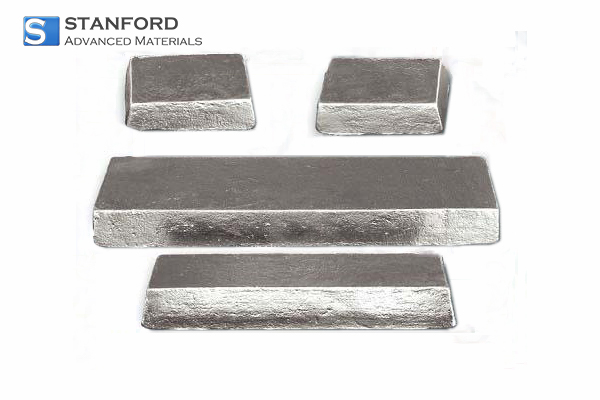
Magnesium Ingots: Purity 99.8% - 99.99%
-
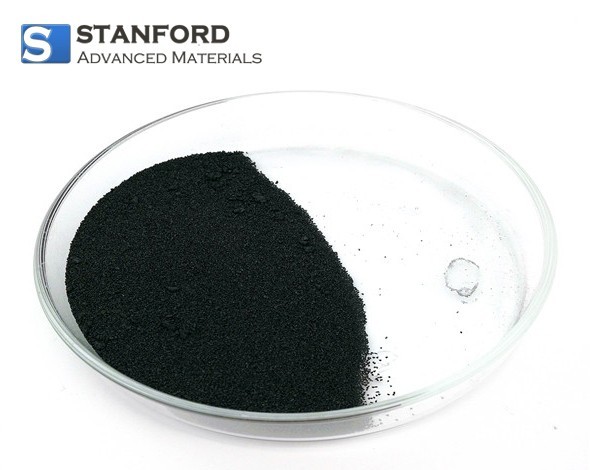
Magnesium Powder: -20 to -325 mesh, also custom particle sizes
-
Magnesium Alloys: AZ31, AZ61, AZ91, ZK60, and custom compositions
-
Machined Forms: Sheets, plates, rods, and custom shapes per drawing
All products are supplied with certified composition analysis. [Contact us] for specifications, pricing, or technical questions.
Preparation Methods
Commercial magnesium production follows two main routes:
Electrolysis accounts for about 75% of global production. Magnesium chloride derived from seawater, brine, or salt lakes is melted and electrolyzed, producing molten magnesium and chlorine gas.
Thermal reduction (Pidgeon process) is used primarily in China. Calcined dolomite is mixed with ferrosilicon and heated under vacuum. Magnesium vaporizes and condenses as pure metal crystals, which are then melted and cast.
Frequently Asked Questions
Q: What are the main advantages of magnesium over aluminum?
A: Magnesium is about 33% lighter than aluminum, offering better strength-to-weight ratio. It also has better damping capacity (vibration absorption) and is easier to machine. However, aluminum generally offers better corrosion resistance and is less expensive.
Q: How does magnesium corrode, and how is it protected?
A: Magnesium is susceptible to galvanic corrosion when in contact with more noble metals. Protection methods include: chromate conversion coatings, anodizing, painting, and avoiding direct contact with dissimilar metals. High-purity alloys also have improved corrosion resistance.
Q: What magnesium alloys are most common?
A: AZ31 (sheet and plate), AZ61 (extrusions), AZ91 (die castings), and ZK60 (high-strength applications). Each offers different balances of strength, ductility, and corrosion resistance.
Q: Is magnesium safe to handle and machine?
A: Bulk magnesium is safe, but fine chips and dust are flammable. Machining requires proper chip management, sharp tools, and avoiding water-based coolants (which can react). Fire extinguishers should be Class D for metal fires.
Q: What purity levels do you offer?
A: We supply 99.8% (2N8), 99.9% (3N), and 99.99% (4N) magnesium, with trace element analysis provided. Higher purities are available for research applications.
Q: Can you supply custom magnesium alloy compositions?
A: Yes. We work with customers to produce small to medium batches of custom alloys for R&D and specialized applications. Minimum quantities vary by composition and form.
Q: How should magnesium be stored?
A: Store in a dry area away from moisture and incompatible materials (acids, oxidizers). Powder and fine chips should be kept in sealed containers with inert atmosphere if possible. Bulk ingots and machined parts are stable under normal conditions.
Stanford Advanced Materials (SAM) supplies high-purity magnesium, magnesium alloys, and related products to research institutions and industrial customers worldwide. [Browse our magnesium catalog] or [request a quote] for your specific requirements.
 Chin Trento