
 Products
 Bars
Bars
 Beads & Spheres
 Bolts & Nuts
 Crucibles
 Discs
Discs
 Fibers & Fabrics
 Films
Films
 Flake
Flake
 Foams
Foams
 Foil
Foil
 Granules
 Honeycombs
 Ink
Ink
 Laminate
 Lumps
Lumps
 Meshes
 Metallised Film
 Plate
Plate
 Powders
 Rod
Rod
 Single Crystals
 Sputtering Target
 Tubes
Tubes
 Washer
 Wires
Wires
 Converters & Calculators
 Write for Us



Cobalt: Element Properties and Uses

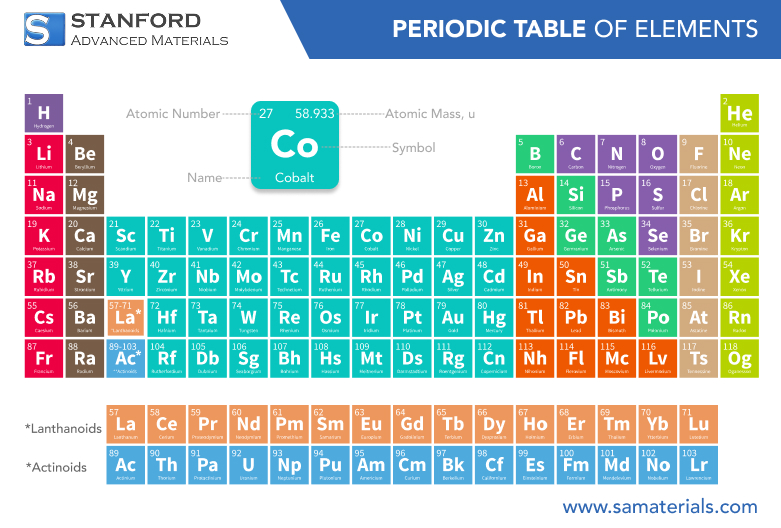
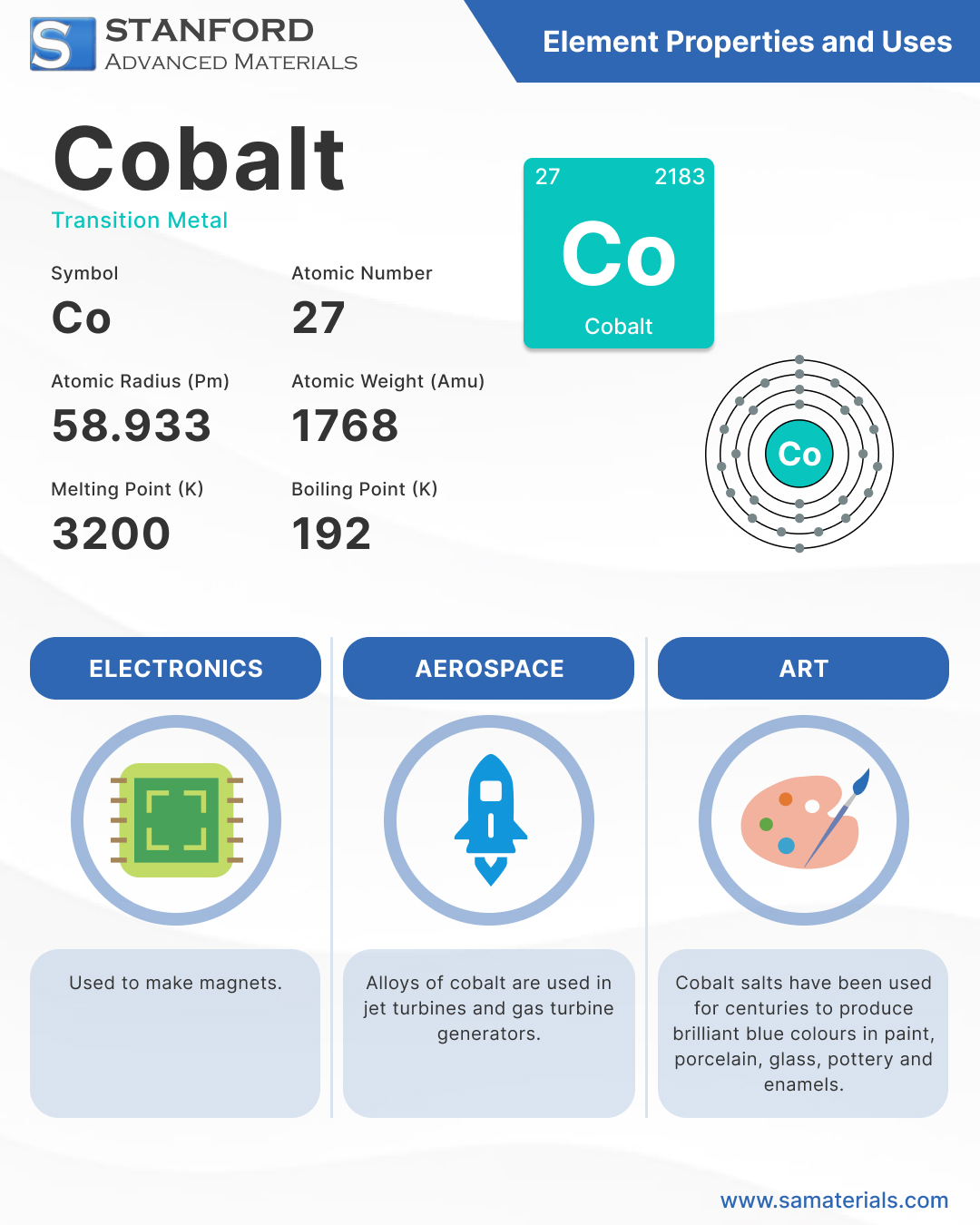
Cobalt (Co), a transition metal with atomic number 27, is widely used in energy storage, aerospace, and manufacturing. Its primary uses include lithium-ion batteries, cobalt blue pigments, powerful magnets, and superalloys for extreme environments.
Introduction to the Element
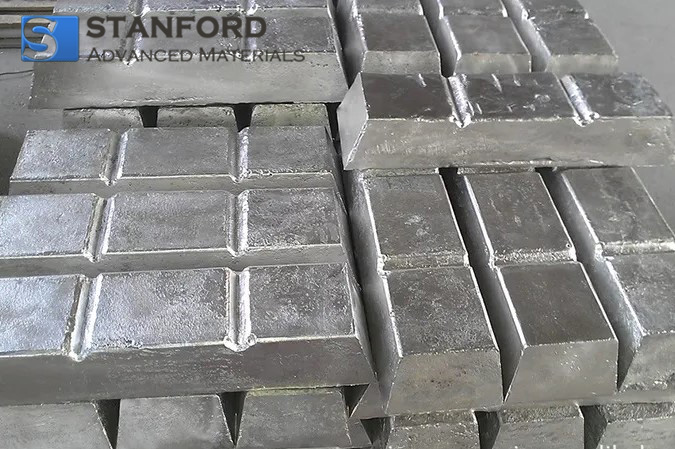
Cobalt is a hard, silvery-blue metal that belongs to the transition metals on the periodic table. It is commonly found in ores alongside nickel and copper, often in the form of cobaltite and erythrite. Cobalt's most notable properties include its ferromagnetic behavior, high melting point (1,495°C), and excellent resistance to heat and corrosion. These qualities make cobalt essential for various industrial applications, particularly in sectors that require materials capable of withstanding harsh conditions, such as aerospace, energy, and electronics.
Chemical Properties Description
Cobalt is known for its magnetic properties and the ability to form various compounds, especially cobalt salts, which are used in pigments. Some key chemical properties of cobalt include:
- Cobalt typically has an oxidation state of +2 or +3 in its compounds.
- It reacts with oxygen to form cobalt oxide.
- Cobalt compounds, such as cobalt chloride (CoCl2), exhibit color-changing properties, making them useful in various applications.
- Cobalt also forms several complex compounds with various ligands, showing its versatility in coordination chemistry.
Physical Properties Data Table
|
Property |
Value |
|
1,495°C |
|
|
Boiling Point |
2,927°C |
|
Density |
8.9 g/cm³ |
|
Hardness |
5 on Mohs scale |
|
Magnetic Property |
Ferromagnetic |
For more information, please check Stanford Advanced Materials (SAM).
Common Uses
Cobalt is widely used across different industries, particularly in sectors such as electronics, energy, and manufacturing. Some of its primary uses include:
- Battery production: Cobalt is a critical component in lithium-ion batteries used in electric vehicles and portable electronic devices.
- Superalloys: Cobalt is used in high-temperature alloys for jet engines and gas turbines due to its ability to withstand extreme conditions.
- Catalysts: Cobalt compounds are used as catalysts in the production of synthetic fuels and petrochemical processes.
- Magnetic materials: Due to its ferromagnetic properties, cobalt is also used in the production of magnets.
Preparation Methods
Cobalt is typically extracted from its ores, such as cobaltite and erythrite. The primary methods of cobalt extraction include:
- Hydrometallurgical techniques: Cobalt is extracted from ores using acid leaching and then purified through solvent extraction and electrowinning.
- Pyrometallurgical techniques: Cobalt is obtained through smelting, which involves heating the ore in the presence of a reducing agent.
Related Industrial Products
Cobalt plays a critical role in the production of various industrial products. Some key products related to cobalt include:
- Cobalt-chromium alloys: These are used in the aerospace and medical industries for their strength and corrosion resistance.
- Cobalt-based pigments: Cobalt compounds are used to produce vibrant blue and green colors in ceramics, glass, and paints.
- Cobalt salts: Used in the manufacturing of fertilizers, and as catalysts in various chemical processes.
Frequently Asked Questions
What are the main sources of cobalt?
Cobalt is primarily sourced from cobalt-bearing minerals, such as cobaltite, erythrite, and skutterudite, as well as from by-products of copper and nickel mining.
Is cobalt toxic?
While cobalt is essential in trace amounts for human health, excessive exposure can lead to toxic effects, particularly in the form of respiratory issues or skin irritation.
What are the environmental impacts of cobalt mining?
Cobalt mining can have significant environmental impacts, including habitat destruction and pollution. Efforts are being made to improve the sustainability of cobalt extraction methods.
Can cobalt be recycled?
Yes, cobalt can be recycled, particularly from used batteries, which helps reduce the need for new mining operations and supports sustainability in industries that rely on cobalt.
What industries benefit from cobalt?
Cobalt is used in various industries, including electronics, automotive (especially for electric vehicle batteries), aerospace, and manufacturing.
 Chin Trento