Products
 Bars
Bars
 Beads & Spheres
 Bolts & Nuts
 Crucibles
 Discs
Discs
 Fibers & Fabrics
 Films
Films
 Flake
Flake
 Foams
Foams
 Foil
Foil
 Granules
 Honeycombs
 Ink
Ink
 Laminate
 Lumps
Lumps
 Meshes
 Metallised Film
 Plate
Plate
 Powders
 Rod
Rod
 Single Crystals
 Sputtering Target
 Tubes
Tubes
 Washer
 Wires
Wires
 Converters & Calculators
 Write for Us



Praseodymium Properties and Applications in Industries

Praseodymium is a rare earth element that contains special chemical and physical properties; hence, it is applied widely in high-strength alloy production, magnets, specialty glasses, and catalytic applications.
Introduction to Praseodymium
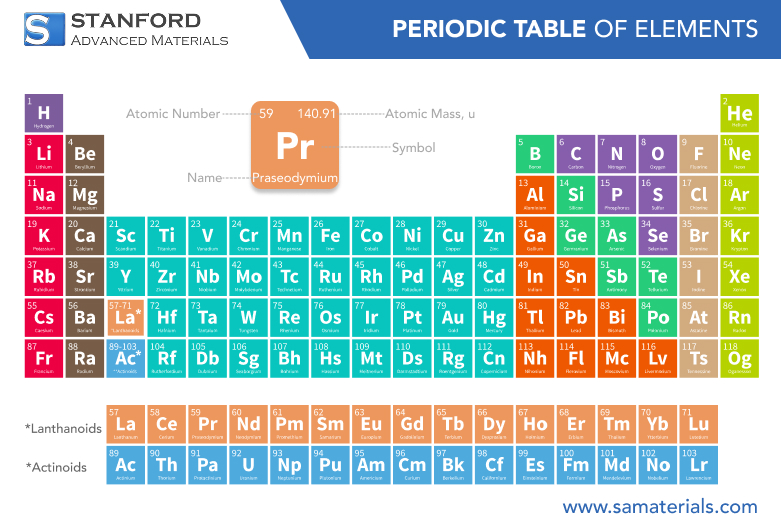
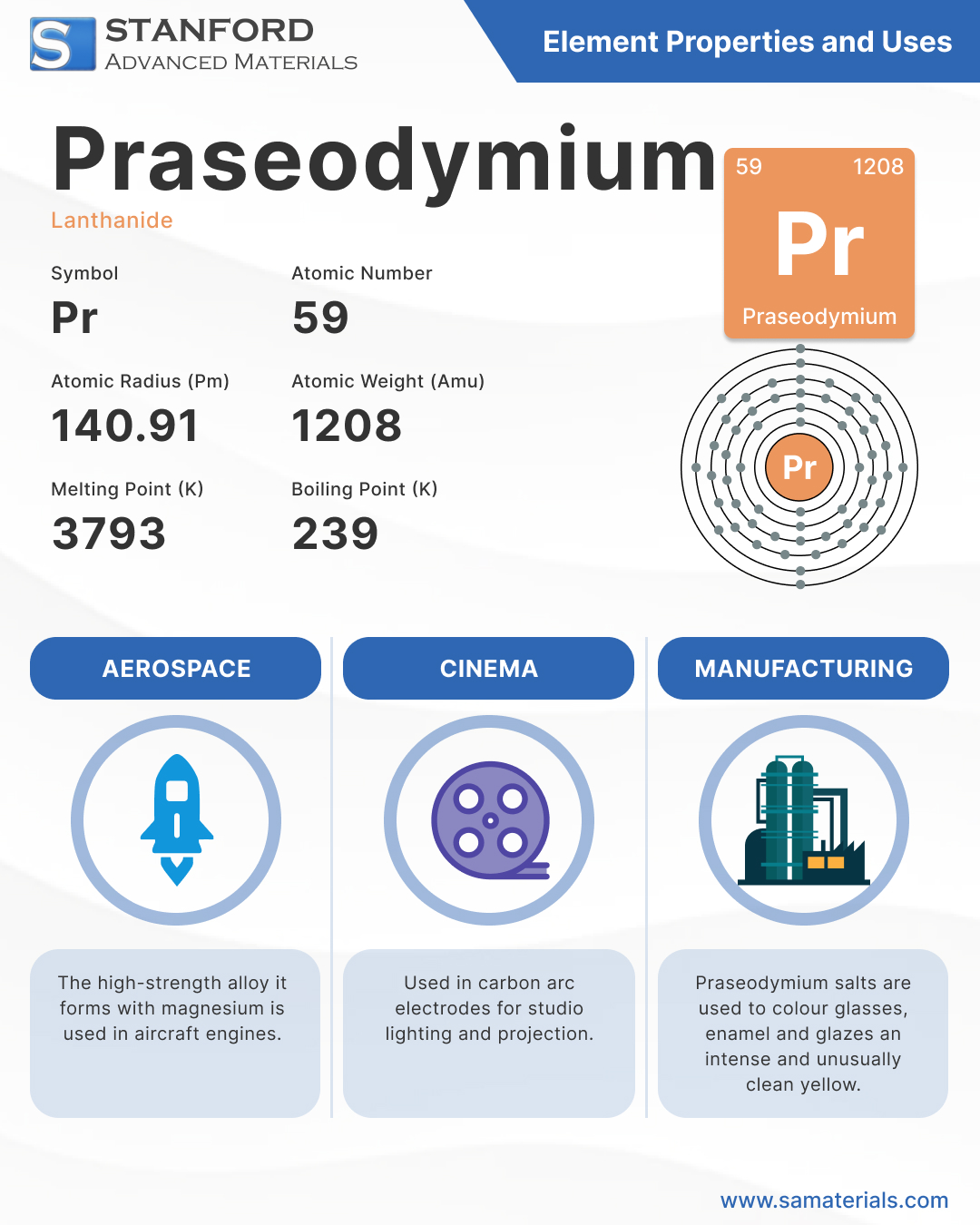
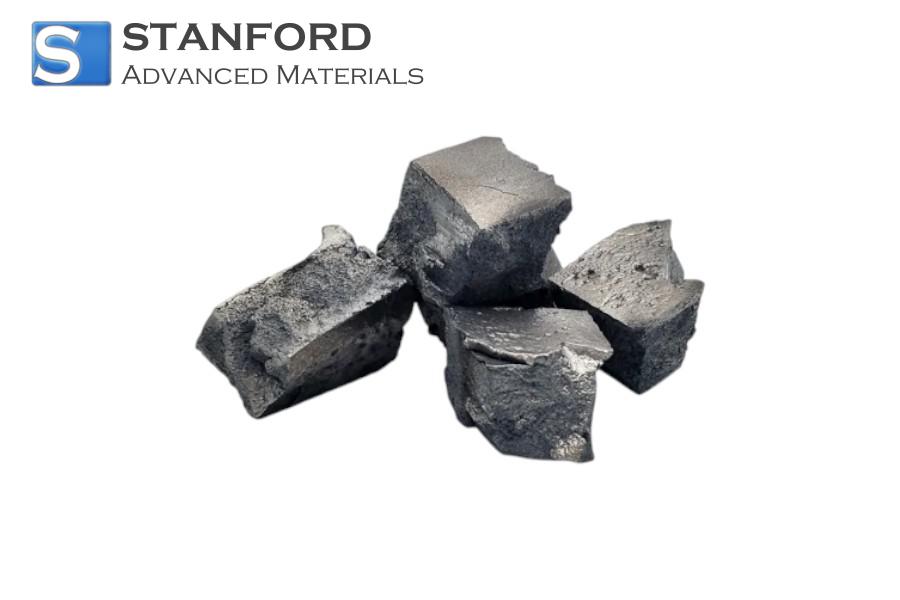
Praseodymium (symbol Pr, atomic number 59) is part of the lanthanide series in the periodic table, a group of fifteen chemically similar elements. Characterized by its silvery appearance, praseodymium is soft, malleable, and relatively reactive, making it valuable in a range of specialized applications. Though it is often found in combination with other rare earth metals in natural mineral deposits such as monazite and bastnasite, praseodymium plays an essential role in material science, metallurgy, and other high-tech industries.
Chemical Properties of Praseodymium
Praseodymium primarily exists in the +3 oxidation state, which is common among the lanthanides and contributes to its chemical stability. In this state, praseodymium forms a variety of stable compounds, including oxides (Pr₂O₃), halides (PrCl₃), and other salts. The electron configuration of praseodymium supports its reactivity, facilitating its participation in a wide range of catalytic processes.
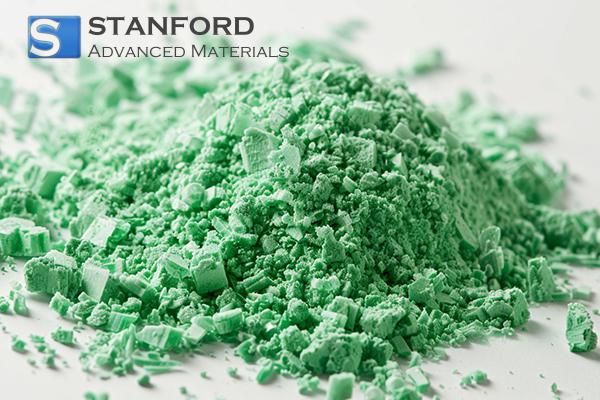
Its compounds often display vibrant colors due to f-electron transitions, a hallmark of rare earth elements, making praseodymium compounds useful in a variety of optical applications, such as lasers and specialized lighting. Praseodymium's reactivity with air and water is moderate, which means it can be safely handled in controlled environments but does require precautions in more reactive conditions. Its chemical properties also allow it to form stable complexes with ligands, which are used in industrial catalysis and other applications.
Physical Properties of Praseodymium
Physical properties are some of the reasons praseodymium is valued in industries and technology. Some of the key physical properties are summarized below.
|
Property |
Value |
Unit |
|
Atomic Number |
59 |
- |
|
Atomic Weight |
140.91 |
g/mol |
|
Melting Point |
931 |
°C |
|
Boiling Point |
3520 |
°C |
|
Density |
6.77 |
g/cm³ |
The relatively low melting point of 931°C and high boiling point of 3520°C make praseodymium suitable for high-temperature applications. Its density of 6.77 g/cm³ places it among the heavier elements in the lanthanide series, and its ability to form stable compounds makes it useful in high-performance alloys and other industrial materials. For more information, please check Stanford Advanced Materials (SAM).
Application Fields of Praseodymium
The uses of praseodymium also span a number of the different industries, with magnetic, chemical, and optical properties being in use. Primary applications include:
1. High-Strength Alloys
Praseodymium is utilized to enhance the magnetic and structural properties of high-strength alloys. This makes it particularly valuable in aerospace and automotive applications where materials need to bear high stresses and often remain stable under extreme conditions.
2. Permanent Magnets
Praseodymium is one of the vital materials contributing to the fabrication of high-performance permanent magnets, finding utility in many electronic gadgets such as electric motors, hard disk drives, and other audio equipment. Combined with other rare earth elements, praseodymium maintains the stability and strength of these magnets, hence making them indispensable in current technologies.
3. Special Glasses and Ceramics
Praseodymium is added to special glass and ceramics, where it provides a number of characteristic coloring effects. It is used in the manufacture of optical lenses, filters, and various colored glasses for artwork. The optical properties make it suitable when specific light absorption or reflection is required.
4. Catalysis
Praseodymium is used as a catalyst to bring about several chemical reactions, particularly in the production of fuels and in refining of petrochemicals. This serves in enhancing the efficiency of these processes, hence increasing both yield and rates of reaction. Its ability to form stable compounds and complexes makes it an important material for industrial catalysis.
5. Optical and Lighting Applications
At the same time, praseodymium is used in the optics industry for the creation of lasers and light systems in medicine, military affairs, and science. The element contributes to the enhancement of the quality of some light sources and optical devices.
Preparation Methods of Praseodymium
The separation of praseodymium is commonly derived from ores like monazite and bastnasite, both of which contain mixtures of rare earth elements. The extraction of praseodymium requires a series of chemical reactions that will help in separating the element from others.
- Solvent Extraction: Through this process, praseodymium compounds are dissolved in solvents for further separation from other rare earth elements.
- Ion Exchange: This is a technique through which certain chemical agents are used to help in the selection and removal of praseodymium ions from some mixture to a more purified form of the element.
After extraction, it is normally transformed into a compound such as praseodymium oxide, Pr₂O₃, from which various alloys and magnets, among other industrial products, are prepared.
Comparison Chart: Rare Earth Elements in Magnets & Alloys
|
Element |
Magnetic Strength |
Melting Point (°C) |
Common Uses |
Properties |
|
Praseodymium (Pr) |
Moderate |
931 |
Alloys, permanent magnets, optics, catalysis |
Enhances magnetic stability, optical properties |
|
Neodymium (Nd) |
Very High |
1,024 |
High-performance magnets, electronics |
Strongest magnets, critical in electronics |
|
Dysprosium (Dy) |
High |
1,412 |
High-temperature magnets |
Excellent high-temperature stability |
|
Samarium (Sm) |
High |
1,072 |
Permanent magnets, alloys |
Used in high-temperature applications |
|
Lanthanum (La) |
Low |
920 |
Hydrogen storage, optical lenses |
Lightweight, used in optics and hydrogen storage |
This table compares key rare earth elements used in high-performance magnets and alloys, focusing on their magnetic strength, melting points, and common uses. Each element brings unique properties to various applications, from electronics to high-temperature systems.
Frequently Asked Questions
For what purpose is praseodymium used?
Currently, it is used in the production of high-strength alloys, permanent magnets, special glasses, and ceramics, and catalytic processes.
How is praseodymium extracted?
Praseodymium is extracted from rare earth ores, for example, from monazite and bastnasite, by solvent extraction and ion exchange.
What are the chemical properties of praseodymium?
Praseodymium exists almost wholly in the +3 oxidation state; it forms stable compounds and colored transitions, typical for an REE member due to f-electron activity.
Is praseodymium rare?
While praseodymium is considered one of the rare earth elements, it is fairly abundant within the Earth's crust, but never usually found in its pure form.
What industries is praseodymium used in?
The elements praseodymium improve the alloy properties in such industries as aerospace, automotive, optics, and lighting because of the involved alloys, magnets, and glass products.
 Chin Trento