Products
 Bars
Bars
 Beads & Spheres
 Bolts & Nuts
 Crucibles
 Discs
Discs
 Fibers & Fabrics
 Films
Films
 Flake
Flake
 Foams
Foams
 Foil
Foil
 Granules
 Honeycombs
 Ink
Ink
 Laminate
 Lumps
Lumps
 Meshes
 Metallised Film
 Plate
Plate
 Powders
 Rod
Rod
 Single Crystals
 Sputtering Target
 Tubes
Tubes
 Washer
 Wires
Wires
 Converters & Calculators
 Write for Us



Length Conversion Table: Metric to US Standard Units

Introduction
Length measurement is fundamental in various fields, including science, engineering, and everyday activities. Different regions use different measurement systems, primarily the metric system and the US standard system. Understanding how to convert between these systems is essential for accurate communication and application.
If you work with materials—ordering metal stock, reading technical drawings, or checking specifications—you'll run into both systems regularly. A quick reference table helps, but sometimes you need exact conversions for odd numbers. That's where online tools come in.
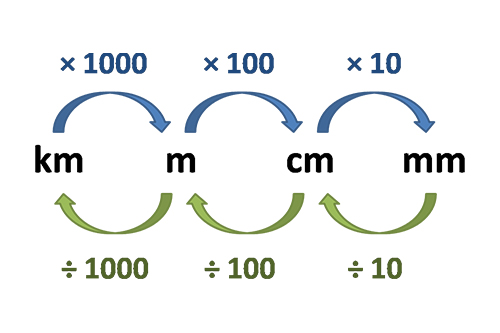
Metric to Inches Conversion
The metric system is widely used internationally and is based on units of ten, making calculations straightforward. However, in the United States, the standard system is predominantly used. Converting metric units to inches can bridge the gap between these two systems.
Practical Applications
Accurate length conversion comes up more often than you might think:
Engineering and Manufacturing
When you're working from a drawing that's in millimeters but the raw material stock is listed in inches, conversion isn't optional—it's how you make sure parts fit. A 6mm plate and a 1/4" plate look similar on paper, but 6mm is actually 0.236", which matters when tolerances are tight.
Construction and Fabrication
Framing lumber comes in US standard dimensions, but hardware specs from overseas suppliers might be metric. Knowing that an M8 bolt is roughly 5/16" helps you grab the right bin without second-guessing.
Everyday Situations
Furniture assembly instructions from European brands often list dimensions in centimeters. If your tape measure only shows inches, you need a quick way to tell whether that 120cm desk will fit against your 48" wall.
Length Conversion Table
Metric to US Standard
| Metric Unit | Inches Equivalent | Common Use |
|---|---|---|
| 1 millimeter (mm) | 0.0394 in | Sheet thickness, small parts |
| 1 centimeter (cm) | 0.394 in | Product dimensions, small furniture |
| 1 meter (m) | 39.37 in | Room dimensions, large components |
| 1 kilometer (km) | 39,370 in | Land distance, mapping |
US Standard to Metric
| US Standard Unit | Metric Equivalent | Common Use |
|---|---|---|
| 1 inch (in) | 25.4 mm | Fasteners, material thickness |
| 1 foot (ft) | 0.3048 m | Lumber, room dimensions |
| 1 yard (yd) | 0.9144 m | Fabric, construction materials |
| 1 mile (mi) | 1.609 km | Distance, surveying |
Need a conversion not listed here? Use this online length unit converter—just type in your number and it handles the rest.
Why Conversion Accuracy Matters in Material Sourcing
When you order materials from suppliers, the difference between 6mm and 1/4" (6.35mm) might not seem like much. But if you're stacking multiple layers or working with press-fit components, those fractions add up.
We deal with this daily at Stanford Advanced Materials (SAM)—customers send us drawings in both unit systems, and we need to make sure they get exactly what they're asking for. That's why we put together a length converter tool that handles decimal places and odd conversions without the mental math.
Quick Reference: Common Material Conversions
If you order metal or ceramic materials regularly, these come up often:
-
1/8" sheet = 3.175 mm
-
1/4" sheet = 6.35 mm
-
1/2" rod = 12.7 mm
-
3/4" plate = 19.05 mm
-
1" bar stock = 25.4 mm
Going the other way:
-
3 mm sheet ≈ 0.118" (just under 1/8")
-
6 mm plate ≈ 0.236" (between 7/32" and 1/4")
-
12 mm rod ≈ 0.472" (just under 1/2")
Frequently Asked Questions
How do I convert centimeters to inches quickly?
Multiply centimeters by 0.394. For example, 10 cm × 0.394 = 3.94 inches. For numbers that don't multiply neatly, an online converter saves time.
Why is it important to understand both metric and US standard units?
If you only work locally, maybe it's not. But if you deal with international suppliers, read foreign technical papers, or order equipment from overseas, you'll encounter both. Knowing how to convert—or having a reliable tool—keeps you from making expensive mistakes.
Can I use online tools for length conversion?
Yes. The key is finding one that uses the right conversion factors (1 inch = 25.4 mm exactly, not rounded). Our converter tool uses standard values and handles decimal places accurately.
What is the equivalent of one meter in inches?
One meter equals 39.3701 inches. For most purposes, 39.37 is close enough.
What's the difference between a millimeter and a thousandth of an inch?
One mil (0.001") is 0.0254 mm. If you're working in thou (common in machining), multiply by 0.0254 to get mm, or divide mm by 0.0254 to get thou.
For consistent, high-quality materials in the exact dimensions you need, visit Stanford Advanced Materials (SAM) to explore our full product catalog.
 Chin Trento