
 Products
 Bars
Bars
 Beads & Spheres
 Bolts & Nuts
 Crucibles
 Discs
Discs
 Fibers & Fabrics
 Films
Films
 Flake
Flake
 Foams
Foams
 Foil
Foil
 Granules
 Honeycombs
 Ink
Ink
 Laminate
 Lumps
Lumps
 Meshes
 Metallised Film
 Plate
Plate
 Powders
 Rod
Rod
 Single Crystals
 Sputtering Target
 Tubes
Tubes
 Washer
 Wires
Wires
 Converters & Calculators
 Write for Us



Solubility in Chemistry

Definition
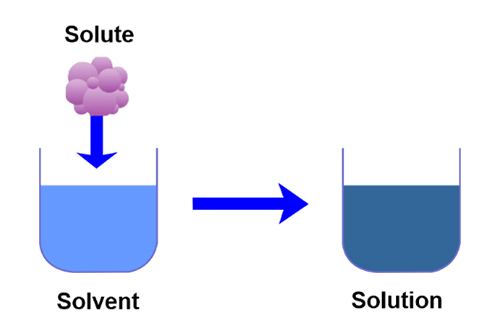
Solubility is defined in chemistry as the maximum amount of solute that can dissolve in a solvent to form a stable, homogeneous solution. This property is dependent on temperature, pressure, and the chemical nature of the solute and solvent. Solubility plays a critical role in scientific, industrial, and everyday processes, from drug absorption to the control of environmental pollution.
Factors Affecting Solubility
Any substance's solubility within a given solvent is affected by various factors. Understanding these factors allows better control in applications that range from field to field.
1. Temperature
The temperature will increase the solubility of most solids, causing the particles of solute to move more freely into the solvent. For instance, sugar would easily dissolve into hot tea rather than in cold tea. On the other hand, increasing the temperature will decrease the solubility of gases. This is because at higher temperatures, all the molecules have a higher kinetic energy and can break their interactions with surrounding liquid molecules easier; that is why carbonated beverages lose their 'fizz' when heated.
2. Pressure
Pressure usually affects the solubility of gases in liquids. When increasing the pressure, it forces more gas molecules into the solvent, raising their solubility. This principle is behind processes such as carbonation, where carbon dioxide gas gets dissolved under high pressure into soft drinks to give them life.
3. Nature of Solute and Solvent
The saying "like dissolves like" describes the effect of polarity on solubility. A polar solvent, such as water, dissolves a polar solute, such as salt, but a non-polar solvent does not. Like oil and water, they cannot mix because there is no intermolecular interaction between them due to their opposite natures. For instance, ethanol mixes with water in any proportions (it is miscible with water) because it is polar, while vegetable oil is not miscible with water.
4. Presence of Other Substances
The solubility of one substance can also be affected by the presence of other dissolved substances. For example, the common ion effect, when a substance with an ion common to the solute is added to the solution, will decrease the solubility of the solute. In addition, solvents can change their characteristics when other solutes are present, therefore affecting positively or negatively the dissolution of a specific compound.
Applications of Solubility
Applications of solubility are so varied-from the pharmaceutical industry right through to environmental science and food production. Here are a few key applications where the role of solubility is fundamentally important:
1. Pharmaceuticals
In medicine, solubility directly impacts drug bioavailability. A drug needs to dissolve into the body fluids in order for proper absorption into the bloodstream and to take effect. Drugs that are not very soluble will likely never achieve therapeutic levels. Pharmaceutical companies design drugs for optimal solubility in order to enhance effectiveness and guarantee proper drug absorption.
2. Environmental Science
Solubility affects the dispersion of pollutants in water bodies, thereby impacting water quality and ecosystem health. Highly soluble substances may cause area-wide contamination and changes in aquatic life. Substances such as pesticides and fertilizers that are highly soluble could thus easily dissolve and permeate waters, possibly posing environmental risks. Understanding solubility helps in predicting and mitigating effects related to water pollution.
3. Water Treatment
Processes involved in water treatments rely heavily on the solubility of many disinfectants, coagulants, and other chemicals used in water purification. For instance, chlorine will dissolve in water to give a solution that disinfects drinking water by killing harmful microorganisms. In similar ways, solubility is critical in processes related to the removal of contaminants from wastewater.
4. Food Processing
In food processing, solubility is a factor in the degree to which sugar, salt, and flavorings are incorporated into drinks and foods. Sugar dissolves in hot drinks like tea or coffee to sweeten them. On the other hand, the solubility of salt is related to food preservation: it draws water from the food, thereby inhibiting bacterial and spoilage growth.
5. Chemical Engineering
Solubility is crucial in chemical engineering processes such as crystallization, distillation, and extraction. Each of these processes has a basis on the principles of a solute dissolving into a solvent and then undergoing separation or purification. For example, in crystallization, a solubility curve will show how much solute can be dissolved at a particular temperature.
6. Agriculture
The ability of fertilizers to dissolve affects agriculture in terms of the speed at which plants can absorb vital nutrients like nitrogen, phosphorus, and potassium. In a similar vein, the efficiency of pesticides and herbicides depends on their solubility, which determines the rate of absorption by either plants or pests.
7. Cosmetics
Solubility is very important in cosmetic products, providing the conditions under which preservatives, fragrances, and active compounds dissolve in lotions, creams, and perfumes. If the ingredients are not dissolved consistently, it will affect the effectiveness of the product and its texture.
8. Fuels and Energy
Importance of solubility in fuel industries is the mixing of additives with fuels. For example, detergent additives in gasoline should be soluble to prevent engine deposits and improve efficiency. The solubility of different compounds in fuel determines combustion efficiency and overall performance of the engine.
Solubility of Common Materials in Water
From the table below, the solubility of some common substances in water at 25° C will be illustrated. These values will show how varied materials interact with water:
|
Material |
Solubility in Water (at 25°C) |
Description |
|
Sodium chloride (NaCl) |
357 g/L |
Highly soluble; dissociates into Na⁺ and Cl⁻ ions. |
|
Sugar (Sucrose) |
2000 g/L |
Extremely soluble; forms a sweet solution. |
|
Ethanol (C₂H₅OH) |
Completely miscible |
Forms a homogeneous solution in any ratio with water. |
|
Oxygen (O₂) |
8.3 mg/L |
Low solubility; decreases with higher temperatures. |
|
Carbon dioxide (CO₂) |
1.7 g/L |
Solubility increases with pressure and decreases with temperature. |
|
Calcium chloride (CaCl₂) |
745 g/L |
Highly soluble; used in de-icing. |
|
Potassium nitrate (KNO₃) |
1320 g/L |
Highly soluble; used in fertilizers. |
|
Copper sulfate (CuSO₄) |
29.6 g/L |
Moderately soluble; forms a blue solution. |
|
Calcium carbonate (CaCO₃) |
0.001 g/L |
Very low solubility; responsible for hard water. |
|
Oil (Vegetable oil) |
Insoluble |
Does not dissolve in water due to being nonpolar. |
For more information, please check Stanford Advanced Materials (SAM).





 Chin Trento