
 Products
 Bars
Bars
 Beads & Spheres
 Bolts & Nuts
 Crucibles
 Discs
Discs
 Fibers & Fabrics
 Films
Films
 Flake
Flake
 Foams
Foams
 Foil
Foil
 Granules
 Honeycombs
 Ink
Ink
 Laminate
 Lumps
Lumps
 Meshes
 Metallised Film
 Plate
Plate
 Powders
 Rod
Rod
 Single Crystals
 Sputtering Target
 Tubes
Tubes
 Washer
 Wires
Wires
 Converters & Calculators
 Write for Us



Molecules: An Overview

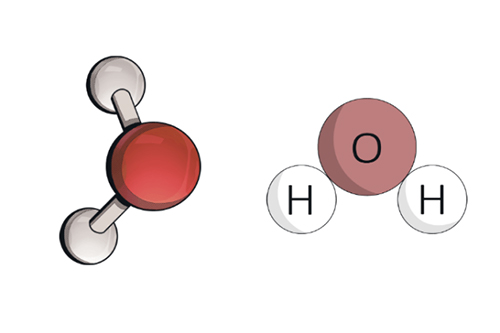
A molecule is the smallest unit of a chemical compound that retains its chemical properties. It consists of two or more atoms bonded together through chemical bonds. Molecules can be composed of the same type of atoms, such as oxygen (O₂), or different types, such as water (H₂O).
Examples of Molecules
Molecules are found everywhere around us and play a crucial role in various chemical and biological processes. Here are some common examples:
- Water (H₂O): Composed of two hydrogen atoms and one oxygen atom, water is essential for all known forms of life.
- Carbon Dioxide (CO₂): Consists of one carbon atom and two oxygen atoms, playing a vital role in the Earth's carbon cycle.
- Methane (CH₄): Made up of one carbon atom and four hydrogen atoms, methane is a primary component of natural gas.
- Glucose (C₆H₁₂O₆): A simple sugar that is an important energy source in living organisms.
Atoms vs. Molecules
Understanding the distinction between atoms and molecules is fundamental in chemistry. While atoms are the basic building blocks of matter, molecules are formed when atoms bond together.
|
Feature |
Atom |
Molecule |
|
Definition |
The smallest unit of an element. |
A group of two or more atoms bonded together. |
|
Composition |
Consists of protons, neutrons, and electrons. |
Consists of atoms of the same or different elements. |
|
Examples |
Hydrogen (H), Oxygen (O), Carbon (C). |
Water (H₂O), Carbon Dioxide (CO₂), Methane (CH₄). |
|
Chemical Bonds |
Single atoms do not have chemical bonds. |
Held together by covalent, ionic, or metallic bonds. |
|
Properties |
Have unique properties based on the element. |
Have properties different from individual atoms. |
For more information, please check Stanford Advanced Materials (SAM).
Molecular Bonding and Molecular Weight
Molecular bonding refers to the interaction between atoms in a molecule, where electrons are either shared or transferred. The two primary types of bonds are covalent bonds, where atoms share electrons (e.g., in water, H₂O), and ionic bonds, where electrons are transferred between atoms (e.g., in sodium chloride, NaCl). These bonds determine a molecule's structure, stability, and properties.
Molecular weight (or molecular mass) is the sum of the atomic weights of all the atoms in a molecule. For example, in Hyaluronic Acid (HA), the molecular weight is calculated by summing the atomic weights of its constituent atoms—hydrogen (H), carbon (C), nitrogen (N), and oxygen (O). A typical molecular weight for hyaluronic acid can range from 10,000 to 1,000,000 g/mol, depending on its polymer length. Molecular weight is important for understanding the molecule's behavior in chemical reactions, its biological functions, and its use in medical and cosmetic applications.
Frequently Asked Questions
What is the primary difference between an atom and a molecule?
An atom is the basic unit of an element, while a molecule is a group of two or more atoms bonded together.
Can molecules consist of the same type of atoms?
Yes, molecules can consist of the same type of atoms, such as O₂ (oxygen) or N₂ (nitrogen).
How are molecules formed?
Molecules are formed through chemical bonds, which can be covalent, ionic, or metallic, between atoms.
Why are molecules important in biology?
Molecules like DNA, proteins, and carbohydrates are essential for the structure, function, and regulation of living organisms.
Can molecules change their structure?
Yes, molecules can undergo chemical reactions that change their structure and form new molecules.





 Chin Trento