
 Products
 Bars
Bars
 Beads & Spheres
 Bolts & Nuts
 Crucibles
 Discs
Discs
 Fibers & Fabrics
 Films
Films
 Flake
Flake
 Foams
Foams
 Foil
Foil
 Granules
 Honeycombs
 Ink
Ink
 Laminate
 Lumps
Lumps
 Meshes
 Metallised Film
 Plate
Plate
 Powders
 Rod
Rod
 Single Crystals
 Sputtering Target
 Tubes
Tubes
 Washer
 Wires
Wires
 Converters & Calculators
 Write for Us



Volume Conversion Table

Understanding Volume Measurements
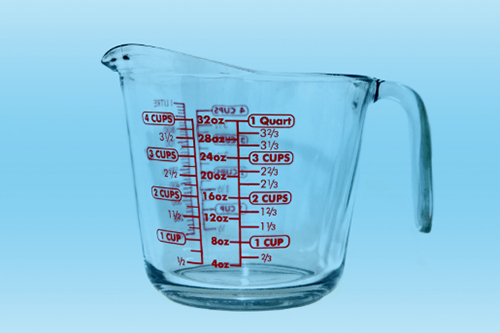
Volume measurement is essential in various fields such as science, engineering, and everyday life. It quantifies the space that an object or substance occupies, using units like liters and cubic feet.
Practical Applications of Volume Conversion
Volume conversion is used in various scenarios, such as cooking, where recipes may require measurements in different units, or in industries like shipping and construction, where accurate volume calculations are critical for logistics and material planning.
In material sourcing, volume conversion comes up more often than you might think. Liquid chemicals might be listed in liters by one supplier and gallons by another. Powder materials need volume calculations for storage and shipping. We run into this regularly at Stanford Advanced Materials (SAM)—if you're unsure about a conversion or need help with material specifications, you can contact us directly.
Common Volume Units: Liter and Cubic Feet
The liter is a metric unit commonly used to measure liquids, while cubic feet is an imperial unit often used for larger volumes such as in construction or shipping. Understanding both units is crucial for accurate volume conversions.
How to Convert Liters to Cubic Feet
Converting between liters and cubic feet involves knowing the conversion factor. One liter is approximately equal to 0.0353 cubic feet. This conversion is vital for applications that require switching between metric and imperial systems.
Volume Conversion Table
|
Unit |
To Cubic Inches (in³) |
To Cubic Centimeters (cm³) |
To Liters (L) |
To Gallons (US) |
To Milliliters (mL) |
To Cubic Feet (ft³) |
|
Cubic Inches (in³) |
1 |
16.387 |
0.016387 |
0.004329 |
16.387 |
0.0005787 |
|
Cubic Centimeters (cm³) |
0.0610237 |
1 |
0.001 |
0.0002642 |
1 |
3.5315e-05 |
|
Liters (L) |
61.0237 |
1000 |
1 |
0.2642 |
1000 |
0.0353147 |
|
Gallons (US) |
231 |
3785.41 |
3.78541 |
1 |
3785.41 |
0.133681 |
|
Milliliters (mL) |
0.0610237 |
1 |
0.001 |
0.0002642 |
1 |
3.5315e-05 |
|
Cubic Feet (ft³) |
1728 |
28316.8 |
28.3168 |
7.48052 |
28316.8 |
1 |
Need a conversion not in this table? Use our online volume converter—just enter your number and get instant results.
Frequently Asked Questions
How many liters are in one cubic foot?
One cubic foot is approximately 28.3168 liters.
Why is volume conversion important in daily life?
It allows for accurate measurement and comparison of quantities across different unit systems, ensuring precision in tasks like cooking, purchasing, and engineering.
When ordering liquid chemicals, should I use liters or gallons?
It depends on the supplier. US suppliers typically use gallons, while European and Asian suppliers use liters. Always confirm the unit before ordering to avoid quantity errors. If you're unsure, you can ask us directly.
How do I calculate the volume of powder materials?
Powders are usually sold by weight, but storage and shipping require volume. Use the bulk density (g/cm³ or lb/ft³): Volume = Weight ÷ Density. We have density data for some materials—let us know if you need it.
What tools can help with volume conversions?
Conversion tables, calculators, and smartphone apps are effective tools. For quick and accurate conversions, try our online volume converter.
For consistent, high-quality liquid chemicals, powder materials, and more, visit Stanford Advanced Materials (SAM) to explore our full product catalog.
 Chin Trento