
 Products
 Bars
Bars
 Beads & Spheres
 Bolts & Nuts
 Crucibles
 Discs
Discs
 Fibers & Fabrics
 Films
Films
 Flake
Flake
 Foams
Foams
 Foil
Foil
 Granules
 Honeycombs
 Ink
Ink
 Laminate
 Lumps
Lumps
 Meshes
 Metallised Film
 Plate
Plate
 Powders
 Rod
Rod
 Single Crystals
 Sputtering Target
 Tubes
Tubes
 Washer
 Wires
Wires
 Converters & Calculators
 Write for Us



Electrical Resistivity and Conductivity

Introduction
Electrical resistivity and conductivity are fundamental properties that determine how materials respond to electric currents. These properties are crucial in designing electrical systems, selecting materials for specific applications, and improving energy efficiency in various technologies.
Factors Affecting Electrical Resistivity and Conductivity
Several factors influence the electrical resistivity and conductivity of materials:
Temperature
As temperature increases, the resistivity of most conductors also increases due to increased lattice vibrations that impede electron flow. Conversely, in semiconductors, resistivity typically decreases with rising temperature.
Material Composition
Different materials have intrinsic resistivities. Metals generally have low resistivity, making them excellent conductors, while non-metals and insulators have higher resistivities.
Impurities and Defects
The presence of impurities and structural defects in a material can disrupt the flow of electrons, increasing resistivity. High-purity materials usually exhibit lower resistivity.
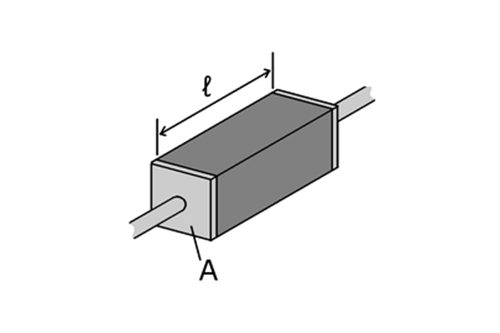
Physical Dimensions
The resistivity of a material is independent of its shape and size. However, the overall resistance of a material depends on its length and cross-sectional area.
Electrical Conductivity of Metals
Metals are renowned for their high electrical conductivity, which is attributed to the presence of free electrons that facilitate easy movement of electric charge. The conductivity of metals can be tailored by alloying and processing techniques to meet specific electrical requirements.
Table of Electrical Resistivity and Conductivity
Here’s a table summarizing the electrical resistivity and conductivity of common materials. Resistivity is typically measured in ohm-meters (Ω·m), and conductivity in siemens per meter (S/m).
|
Material |
Resistivity (Ω·m) |
Conductivity (S/m) |
|
Silver |
1.59 × 10⁻⁸ |
6.30 × 10⁷ |
|
Copper |
1.68 × 10⁻⁸ |
5.96 × 10⁷ |
|
Gold |
2.44 × 10⁻⁸ |
4.10 × 10⁷ |
|
2.82 × 10⁻⁸ |
3.55 × 10⁷ |
|
|
Iron |
9.71 × 10⁻⁸ |
1.03 × 10⁷ |
|
Nickel |
6.99 × 10⁻⁸ |
1.43 × 10⁷ |
|
5.60 × 10⁻⁷ |
1.79 × 10⁶ |
|
|
Lead |
2.20 × 10⁻⁷ |
4.55 × 10⁶ |
|
1.06 × 10⁻⁷ |
9.43 × 10⁶ |
|
|
Carbon (Graphite) |
3.5 × 10⁻⁵ |
2.86 × 10⁴ |
|
6.40 × 10³ |
1.56 × 10⁻⁴ |
|
|
Rubber |
10¹⁴ - 10¹⁶ |
10⁻¹⁶ - 10⁻¹⁴ |
|
Glass |
10¹³ - 10¹⁶ |
10⁻¹³ - 10⁻¹⁶ |
|
Wood (Dry) |
10⁻¹ - 10¹² |
10¹⁰ - 10⁻⁹ |
|
Water (Distilled) |
18.2 × 10³ |
5.49 × 10⁻⁵ |
|
Concrete |
10¹⁴ - 10¹⁶ |
10⁻¹⁶ - 10⁻¹⁴ |
Notes:
- Metals (like silver, copper, and aluminum) have low resistivity, meaning they are excellent conductors.
- Semiconductors like silicon have moderate resistivity and are used in electronic devices.
- Insulating materials such as rubber, glass, and wood have very high resistivity and poor conductivity.
- Water in its pure form (distilled) has relatively high resistivity, but impurities (like salts) greatly increase its conductivity.
Frequently Asked Questions
What is the difference between electrical resistivity and conductivity?
Electrical resistivity measures how strongly a material opposes the flow of electric current, while conductivity measures how easily electric current can flow through a material.
How does temperature affect electrical conductivity in metals?
In metals, as temperature increases, electrical conductivity typically decreases because increased lattice vibrations scatter electrons more effectively.
Why are metals better conductors than non-metals?
Metals have free electrons that move easily through the lattice structure, facilitating the flow of electric current, whereas non-metals lack these free charge carriers.
Can impurities improve the conductivity of a metal?
Generally, impurities increase the resistivity of a metal by disrupting the regular lattice structure, making it harder for electrons to flow.
What applications require materials with high electrical conductivity?
High electrical conductivity materials are essential in electrical wiring, power transmission, electronic devices, and components like connectors and switches.
 Chin Trento