
 Products
 Bars
Bars
 Beads & Spheres
 Bolts & Nuts
 Crucibles
 Discs
Discs
 Fibers & Fabrics
 Films
Films
 Flake
Flake
 Foams
Foams
 Foil
Foil
 Granules
 Honeycombs
 Ink
Ink
 Laminate
 Lumps
Lumps
 Meshes
 Metallised Film
 Plate
Plate
 Powders
 Rod
Rod
 Single Crystals
 Sputtering Target
 Tubes
Tubes
 Washer
 Wires
Wires
 Converters & Calculators
 Write for Us



Thermal Diffusivity: Basics and Examples

What Is Thermal Diffusivity
Thermal diffusivity is a crucial property in materials science and engineering, determining how efficiently a material can conduct heat relative to its ability to store thermal energy. It plays a significant role in various applications, including insulation, electronics cooling, and material processing.
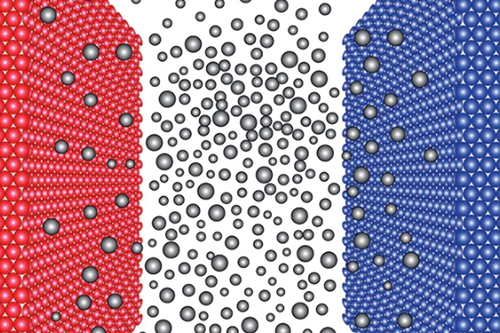
Mathematically, thermal diffusivity (α) is defined as:
α = k / (ρ · cₚ)
where:
- k = thermal conductivity (W/m·K)
- ρ = density (kg/m³)
- cₚ = specific heat capacity (J/kg·K)
A high thermal diffusivity means heat spreads quickly through the material; low thermal diffusivity means the material responds slowly to temperature changes.
Factors Affecting Thermal Diffusivity
Several factors influence a material's thermal diffusivity:
- Thermal Conductivity: Higher thermal conductivity typically leads to higher thermal diffusivity.
- Density: Materials with higher density may exhibit different heat transfer characteristics.
- Specific Heat Capacity: The amount of heat required to change a material's temperature affects its thermal diffusivity.
Thermal Diffusivity vs Thermal Conductivity
While both thermal diffusivity and thermal conductivity relate to heat transfer, they describe different aspects:
- Thermal Conductivity: Measures a material's ability to conduct heat—how much heat flows through a material under a temperature gradient.
- Thermal Diffusivity: Indicates how quickly heat spreads through a material, factoring in thermal conductivity, density, and specific heat capacity. It's the material's "thermal response speed."
Understanding the distinction between these properties is essential for selecting materials for specific thermal applications.
Applications of Thermal Diffusivity
Thermal diffusivity is vital in various industries:
- Electronics: Ensures efficient heat dissipation in devices—materials with high thermal diffusivity quickly spread heat away from hot spots.
- Construction: Aids in selecting materials with appropriate insulation properties—low thermal diffusivity materials help maintain stable indoor temperatures.
- Manufacturing: Guides processes like welding and heat treatment by predicting how heat flows through parts during processing.
Thermal Diffusivity Data for Common Materials
The table below shows typical thermal diffusivity values for various materials at or near room temperature. Values can vary with temperature, purity, and material condition.
| Material | Thermal Diffusivity (×10⁻⁶ m²/s) |
|---|---|
| Diamond | 450 |
| Copper | 111 |
| Aluminum | 97 |
| Steel (carbon) | 15 |
| Concrete | 0.8 |
| Glass | 0.7 |
| Wood | 0.1 |
| Water | 0.144 |
| Air | 0.22 |
| Helium | 0.23 |
| Nitrogen | 0.22 |
Note: Thermal diffusivity varies widely across materials—from highly conductive metals like diamond and copper to insulating materials like wood and concrete. Gases have thermal diffusivity values in a similar range to some solids, but the heat transfer mechanism differs (convection in gases vs. conduction in solids).
Thermal Management Materials from SAM
Stanford Advanced Materials (SAM) supplies high-performance materials for thermal management applications—including metals, ceramics, and composites. Many of the materials listed above are available in various forms:
- High-purity copper and aluminum for heat sinks and thermal spreaders
- Thermal interface materials for improved contact conductance
- Ceramic substrates with controlled thermal properties for electronics
[Browse our materials] or [contact us] for technical data sheets and custom requirements.
Frequently Asked Questions
What is the unit of thermal diffusivity?
Thermal diffusivity is measured in square meters per second (m²/s) or square millimeters per second (mm²/s).
How is thermal diffusivity calculated?
It is calculated by dividing the thermal conductivity by the product of density and specific heat capacity: α = k / (ρ · cₚ).
Why is thermal diffusivity important in materials selection?
It helps determine how quickly a material can respond to temperature changes, which is critical for thermal management in various applications—fast response for heat spreading, slow response for insulation.
Can thermal diffusivity be increased in a material?
Yes, by enhancing thermal conductivity or reducing density and specific heat capacity, thermal diffusivity can be increased. This is often done in composite materials or through material processing.
How does thermal diffusivity affect building insulation?
Materials with low thermal diffusivity are better insulators as they slow down the rate of heat transfer, maintaining temperature stability. They respond slowly to outside temperature changes.
 Chin Trento