
 Products
 Bars
Bars
 Beads & Spheres
 Bolts & Nuts
 Crucibles
 Discs
Discs
 Fibers & Fabrics
 Films
Films
 Flake
Flake
 Foams
Foams
 Foil
Foil
 Granules
 Honeycombs
 Ink
Ink
 Laminate
 Lumps
Lumps
 Meshes
 Metallised Film
 Plate
Plate
 Powders
 Rod
Rod
 Single Crystals
 Sputtering Target
 Tubes
Tubes
 Washer
 Wires
Wires
 Converters & Calculators
 Write for Us



Reflectivity in Physics and Engineering

Description of Reflectivity
Reflectivity is a measure of the amount of light or energy a surface reflects, which is important in many scientific and engineering endeavors.
--What Is Reflectivity
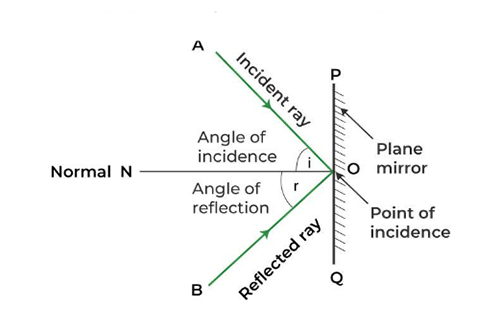
Reflectivity is the ratio of the reflected light or energy to the incident light or energy that a surface returns. Reflectivity is an essential property in material science and optics, as it determines how materials reflect light.
--Reflectivity vs Reflectance
Although synonymously utilized, reflectivity and reflectance are not the same. Reflectivity is a property of a material defined as the ability of the material to reflect energy at every wavelength. Reflectance is the measure of reflected light against incident light at any given wavelength and angle.
--Reflectivity vs Emissivity
Reflectivity and emissivity are analogous but opposite properties. Reflectivity measures the capability of an object to radiate energy as thermal radiation. Kirchhoff's law of thermal radiation tells us that at thermal equilibrium, reflectivity equals one minus emissivity. High reflectivity corresponds to low emissivity, and vice versa.
Uses of Reflectivity
1. Solar Panels
Solar panels utilize anti-reflective coatings and rough surfaces to lower the reflection of light within wavelengths in which their PV cells absorb best, which provides maximum energy trapping. This enhances efficiency through trapping more sunlight as electricity rather than as reflection. Anti-reflective coatings are typically placed on the surface of solar panels to reduce light reflection and improve energy trapping.
2. Energy Efficiency
Reflective materials are used in effective buildings to reduce heat absorption, so indoor temperatures can be lower. Reflective roofing material, for example, can decrease the intake of sunlight by buildings, thereby minimizing air conditioning costs.
3. Mirrors and Optical Instruments
Extremely reflective mirrors are used in a wide type of optical equipment, from telescopes and microscopes to laser devices and cameras. The high reflectivity of silver and aluminum is essential to the operation of these instruments.
4. Radar and Satellite Technology
Reflectivity has important applications in radar systems as well, where the reflectivity of the material to electromagnetic waves can make or break a reading. Similarly, coatings on satellites require that they be reflective of certain radiation wavelengths in order to operate at their best.
5. Photography
Photography exposure and image quality are influenced by reflectivity of different surfaces. Reflector surfaces are used for reflecting light on objects in portrait photography and lighting methods.
Reflectivity of Common Materials
1. Mirror (Silver, Aluminum)
Mirrors are typically made of reflective metals like silver or aluminum. Silver has one of the best reflectivity values, with a reflectivity that reflects around 95-98% of visible light. Aluminum also has a high reflectivity of around 90%. Both materials have the potential to be used in a wide range of applications ranging from household mirrors to laboratory equipment.
2. White Surfaces
White surfaces such as white paint or paper reflect nearly 80-90% of visible light. White is one of the most suitable colors for reflectance because it scatters light in all directions and provides maximum reflection across the visible spectrum.
3. Black Surfaces
Black surfaces such as black paint or fabric absorb nearly all the visible light, with a reflectance of only 5-10%. Black material is thus highly appropriate for application where heat must be absorbed, such as in solar collectors or heat exchangers.
4. Glass
Glass is relatively reflective and will reflect approximately 8-10% of the visible light. The reflectivity, however, varies with thickness, coating, and glass type. For example, building and window reflective glass can be coated to increase the reflectivity to 30% and more.
5. Metals (Gold, Copper, Stainless Steel)
Metals, especially the precious ones like gold and silver, are excellent reflectors of light. Gold, for example, reflects up to 98% of visible light and is also highly reflective in the infrared, and it is especially useful in such applications as space telescope reflective coatings. Copper, although not quite as reflective as gold, still reflects in the order of about 90% of visible light.
6. Water
Water reflects about 10% of visible light, but this will become very much greater when the surface of the water is calm. Water reflectance depends on wavelength too, with higher reflectance in the infrared and lower in the ultraviolet.
7. Wood and Fabric
Wood and fabric have comparatively low reflectance, and they reflect 20-30% visible light. The specific reflectance may vary depending on texture and color of the material, and lighter-colored woods and fabrics reflect more than dark-colored ones.
8. Concrete
Concrete finishes, particularly dry finishes, reflect about 30-40% visible light. Reflectivity can increase with the use of reflective coatings or additives within the mix.
9. Plastic
The reflectivity of plastics can vary fairly widely based on their type and finish. Transparent plastics like acrylic can have moderate reflectivity, around 10-20%. Glossy plastics will have reflectivity in the range of as high as 80-90%. Matte plastics have lower reflectivity because light gets scattered.
10. Stone and Rock
stones such as granite and marble are of moderate reflectivity, usually at the range 20-40% for their shiny surfaces. Rough or unpolished stones will exhibit lower reflectance and more diffuse scattering.
Frequently Asked Questions
What is the distinction between reflectance and reflectivity?
Reflectivity refers to a material property that indicates the capability of a material to reflect energy of any wavelength, while reflectance measures the reflected amount of light relative to incident light at a specific wavelength and angle.
How does reflectivity contribute to solar panel efficiency?
High reflectivity materials have the ability to reduce unnecessary heat absorption, minimizing energy loss and solar panel efficiency in general.
Is reflectivity in materials alterable?
Yes, reflectivity can be engineered by changing a material's surface color, composition, or texture to achieve desired reflection properties for an intended application.
How is reflectivity related to emissivity?
Emissivity is a figure of merit of how well a material emits energy as thermal radiation. Emissivity is equal to one minus reflectivity at thermal equilibrium, and therefore high reflectivity implies low emissivity and vice versa.
Why is reflectivity important in optical devices?
Reflectivity in mirrors and lenses is crucial because the best reflective properties are essential to the effective functioning of optical instruments in the focusing, guiding, and manipulation of light.


 Chin Trento