Products
 Bars
Bars
 Beads & Spheres
 Bolts & Nuts
 Crucibles
 Discs
Discs
 Fibers & Fabrics
 Films
Films
 Flake
Flake
 Foams
Foams
 Foil
Foil
 Granules
 Honeycombs
 Ink
Ink
 Laminate
 Lumps
Lumps
 Meshes
 Metallised Film
 Plate
Plate
 Powders
 Rod
Rod
 Single Crystals
 Sputtering Target
 Tubes
Tubes
 Washer
 Wires
Wires
 Converters & Calculators
 Write for Us



What Metal is a Good Conductor of Heat

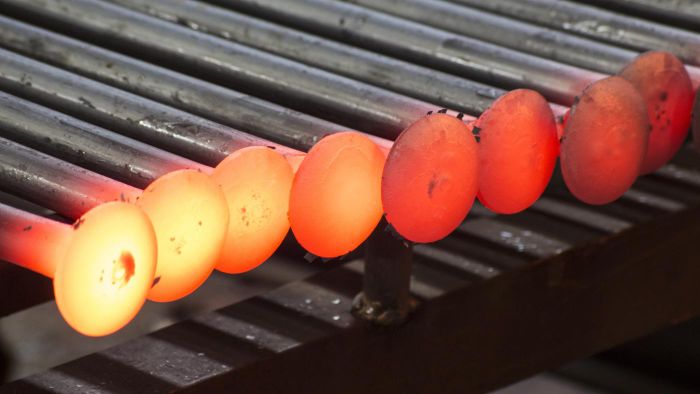
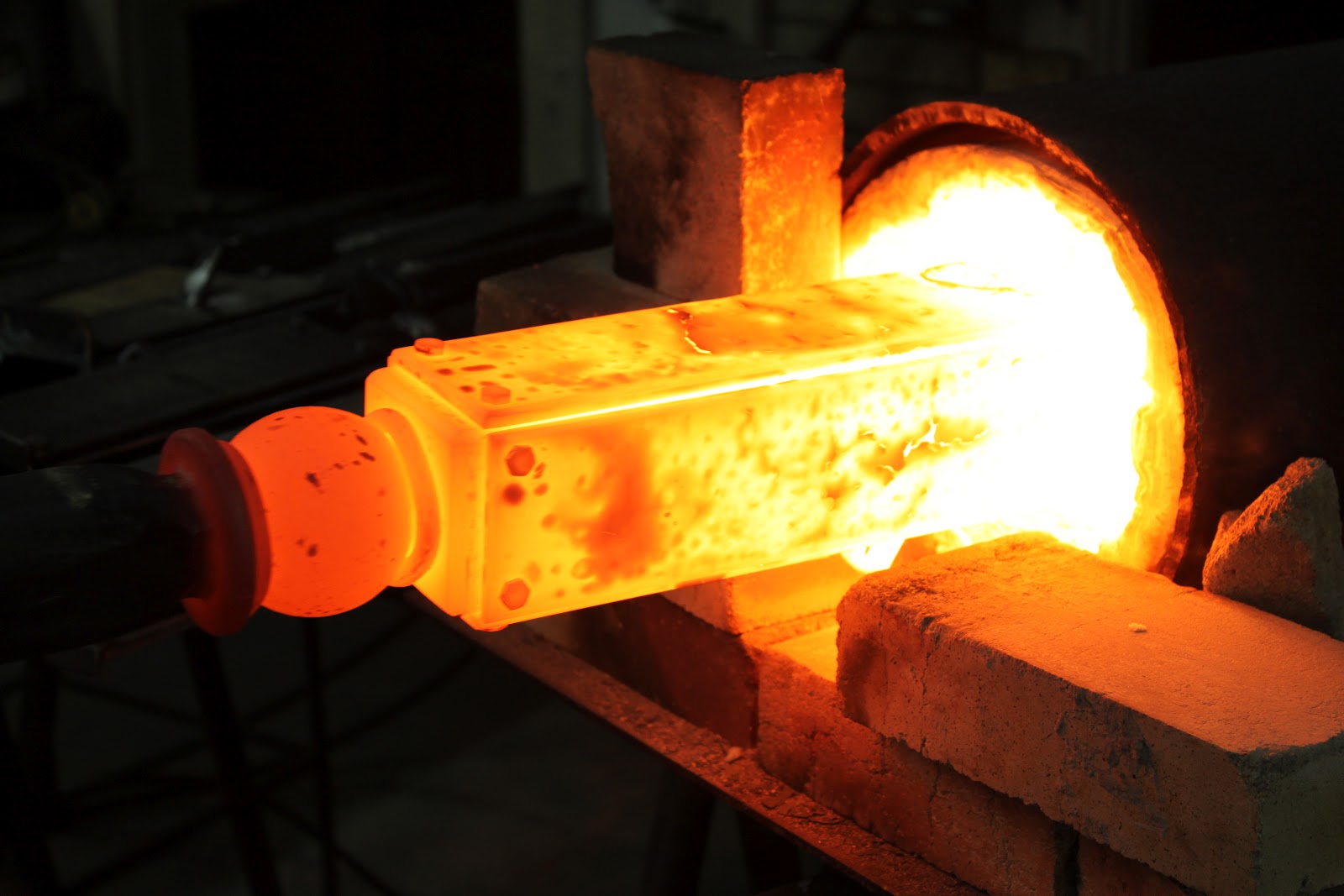
In general, metals are shiny, reflecting most of the light that strikes them. They are malleable and ductile (that is, they will bend under pressure and are not brittle). They have a broad range of melting temperatures (e.g., mercury is a liquid at room temperature, gallium will melt in one’s hand, and tungsten has a melting temperature of around 3,400 degrees Celsius). The thermal and electrical conductivity of all metals is high compared to nonmetallic substances, such as plastics and ceramics, rocks, and solid salts.
The aluminum foil, steel wool, paper clip, copper, charcoal stick, and graphite pencil were good conductors and displayed metallic properties. The glass rod, plastic, rubber, and wood were poor conductors.
Most of the samples with metallic properties contained metallic bonds. The exception was carbon.
Carbon is a non-metal and therefore has covalent bonds. However, in this experiment, it exhibited metallic properties. Carbon in the form of graphite is the only non-metallic element that conducts electricity.
As we all know, graphite is composed of sheets of hexagons of carbon atoms joined by covalent bonds. Between each sheet, there are weaker (pi) bonds along which the electrons are free to move. It is the movement of electrons between the layers that explains this unusual property of graphite.
Copper contains metallic bonds and so conducts electricity. Rubber contains covalent bonds and so does not conduct electricity. It protects the user from getting an electric shock.
Summary Table: Common Metals with Good Thermal Conductivity
| Metal | Thermal Conductivity (W/m·K) | Applications |
|---|---|---|
| Silver (Ag) | ~430 | High-end electronics, precision instruments, solar panels |
| Copper (Cu) | ~400 | Electrical wiring, heat exchangers, cookware |
| Gold (Au) | ~315 | Connectors, microelectronics, aerospace electronics |
| Aluminum (Al) | ~235 | Heat sinks, automotive parts, aerospace components |
| Tungsten (W) | ~173 | Rocket nozzles, furnace parts, radiation shielding |
| Zinc (Zn) | ~116 | Die casting, galvanization, alloys |
| Nickel (Ni) | ~91 | Turbine blades, batteries, high-temp alloys |
| Iron (Fe) | ~80 | Engines, tools, machinery |
| Brass (Cu-Zn alloy) | 60–120 | Plumbing, musical instruments, fittings |
| Bronze (Cu-Sn alloy) | ~60–110 | Bearings, sculptures, marine parts |
| Steel (Carbon/Stainless) | ~15–50 | Construction, appliances, automotive structures |
| Titanium (Ti) | ~22 | Aircraft, medical implants, heat exchangers |
| Lead (Pb) | ~35 | Radiation shielding, cable sheathing, batteries |
For more information, please check Thermal Conductivity of Common Materials.
 Chin Trento