
 Products
 Bars
Bars
 Beads & Spheres
 Bolts & Nuts
 Crucibles
 Discs
Discs
 Fibers & Fabrics
 Films
Films
 Flake
Flake
 Foams
Foams
 Foil
Foil
 Granules
 Honeycombs
 Ink
Ink
 Laminate
 Lumps
Lumps
 Meshes
 Metallised Film
 Plate
Plate
 Powders
 Rod
Rod
 Single Crystals
 Sputtering Target
 Tubes
Tubes
 Washer
 Wires
Wires
 Converters & Calculators
 Write for Us



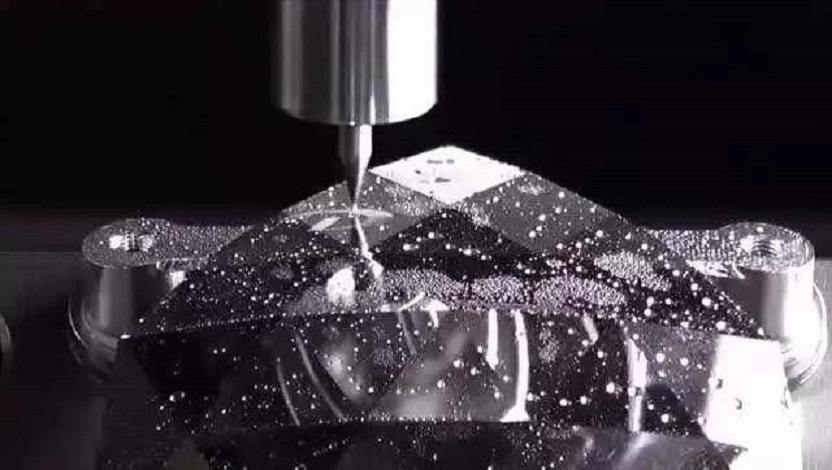
Titanium Alloy Forging Process

Titanium and titanium alloys have the advantages of low density, high specific strength, and good corrosion resistance, and are widely used in various fields. In order to use these materials better, researchers have done a lot of research on the titanium alloy forging process.
Titanium Alloy Forging Process
The Main Process of Titanium Alloy Forging
Forging is a plastic forming process, that is, using the plasticity of metal to make the blank material obtain a certain shape and structural properties under the impact or pressure of the tool.
1. Free Forging
Free forging is generally carried out between two flat dies or molds without a cavity. The tools used in free forging are simple in shape, flexible, short in the manufacturing cycle, and low in cost. However, free forging has high labor intensity, difficult operation, low productivity, low forging quality, and large machining allowance. Therefore, it is only suitable for use when there are no special requirements for the performance of the parts and the number of parts is small.
2. Open Die Forging
The blank is deformed between two molds with cavities, the forging is confined in the cavity, and the excess metal flows out from the narrow gap between the two molds, forming burrs around the forging. Under the resistance of the mold and surrounding burrs, the metal is forced to be pressed into the shape of the mold cavity.
3. Closed Die Forging
In the closed die forging process, no transverse burrs perpendicular to the direction of die movement are formed. The cavity of the closed forging die has two functions: one is for forming the blank, and the other is for guiding.
4. Extrusion Die Forging
It refers to using the extrusion method for die forging, which includes forward extrusion die forging and reverse extrusion die forging. Extrusion die forging can manufacture all kinds of hollow and solid parts and can obtain forgings with high geometrical precision and denser internal structure.
5. Multi-Directional Die Forging
Multi-directional die forging is performed on a multi-directional die forging machine. In multi-directional die forging, the slider acts alternately and jointly on the workpiece from the vertical and horizontal directions, and one or more perforation punches are used to make the metal flow outward from the center of the cavity to achieve the purpose of filling the cavity.
6. Partial Die Forging
In order to forge large integral forgings on the existing hydraulic pressure, partial die forging methods, such as segment die forging, pad die forging, etc. can be used. The feature of the partial die forging method is to process the forging piece by piece, processing one part at a time, so the required equipment tonnage can be very small. Generally speaking, this method can be used to process extra-large forgings on medium hydraulic presses.
7. Isothermal Forging
Before forging, the mold is heated to the forging temperature of the blank, and the temperature of the mold and the blank remains the same throughout the forging process so that a large amount of deformation can be obtained under the action of a small deformation force.
The forging process of titanium alloys is widely used in aviation and aerospace manufacturing (isothermal die forging process has been used in the production of engine parts and aircraft structural parts) and is increasingly welcomed by industrial sectors such as automobiles, electric power, and ships.
Conclusion
Thank you for reading our article and we hope it can help you to know the titanium alloy forging process better. If you want to know more about titanium and titanium alloys, we would like to recommend you to visit Stanford Advanced Materials (SAM) for more information.

 Chin Trento