
 Products
 Bars
Bars
 Beads & Spheres
 Bolts & Nuts
 Crucibles
 Discs
Discs
 Fibers & Fabrics
 Films
Films
 Flake
Flake
 Foams
Foams
 Foil
Foil
 Granules
 Honeycombs
 Ink
Ink
 Laminate
 Lumps
Lumps
 Meshes
 Metallised Film
 Plate
Plate
 Powders
 Rod
Rod
 Single Crystals
 Sputtering Target
 Tubes
Tubes
 Washer
 Wires
Wires
 Converters & Calculators
 Write for Us



Rubidium: Element Properties and Uses

Description
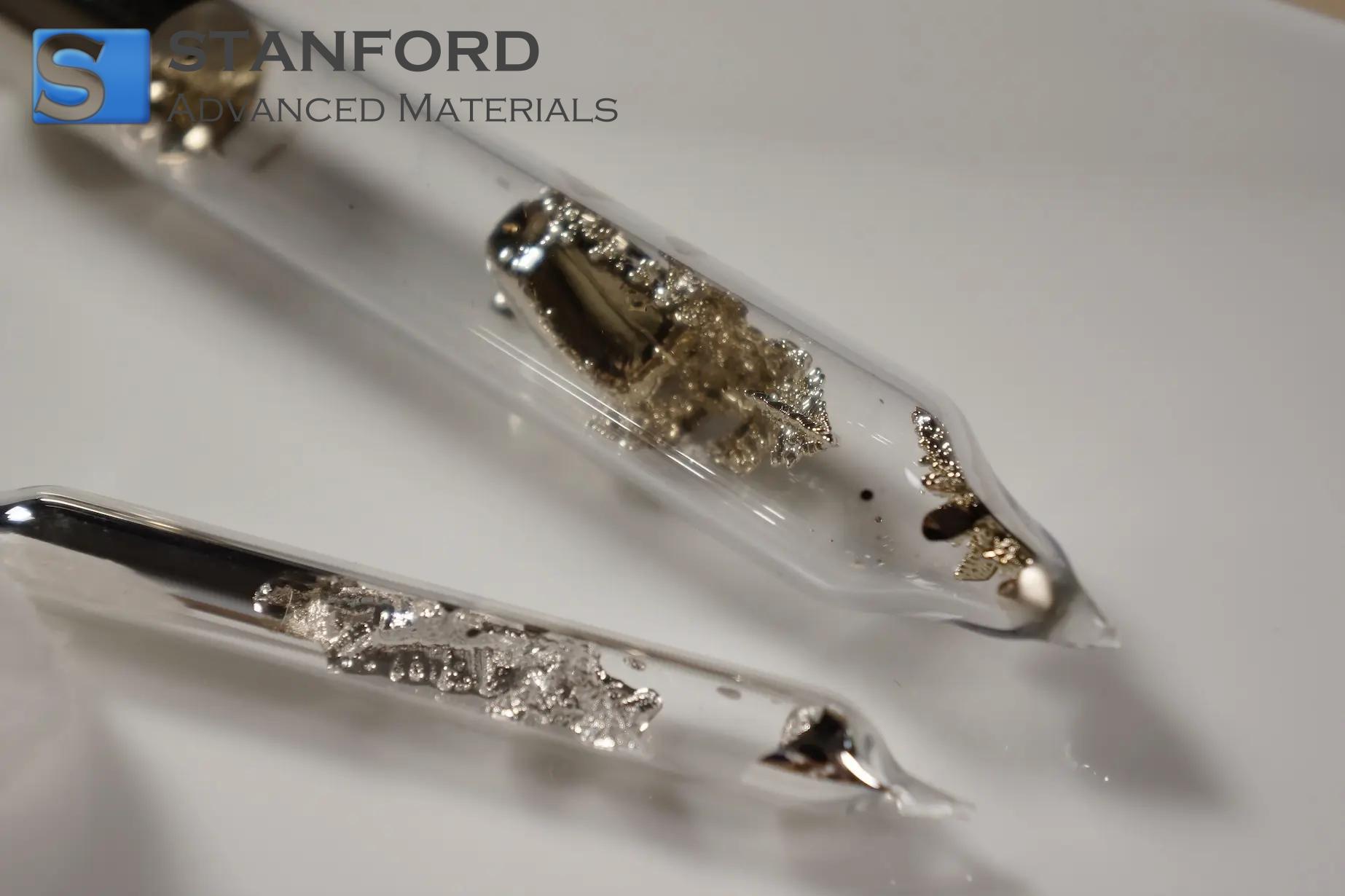
Rubidium is a soft, silvery-white alkali metal with distinctive chemical and physical traits, crucial for advanced research and diverse industrial applications.
Introduction to the Element
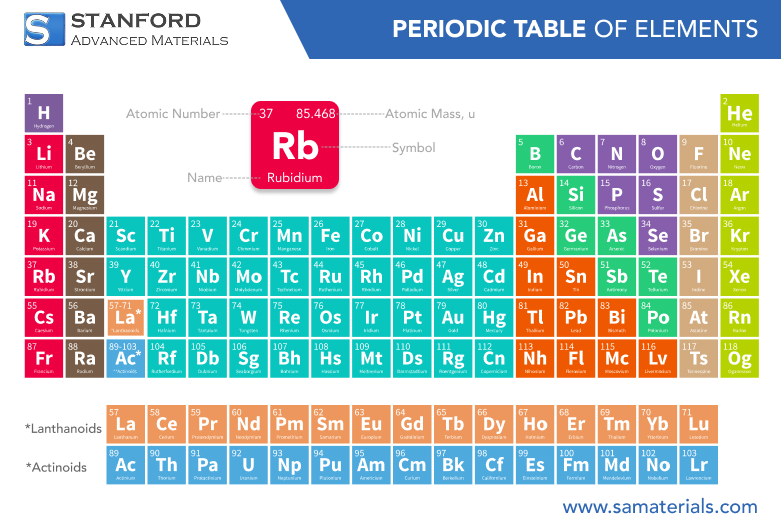
Rubidium, with the atomic number 37, is a fascinating alkali metal known for its soft, silvery appearance and high reactivity. Discovered in the mid-19th century, it quickly gained attention due to its unique properties that distinguish it from other elements in the periodic table.
As an element with a low melting point and a propensity to react with water and air, rubidium is handled with care in controlled environments. Its electrons are loosely held, which makes it highly reactive and capable of forming various compounds with oxygen and halogens.
Researchers have long been interested in rubidium due to its ability to produce observable spectral lines when excited. These characteristics have allowed scientists to use rubidium in experimental physics and high-precision timekeeping devices. The element's ability to influence electronic properties has also led to its application in specialized industrial products.
Chemical Properties Description
Rubidium exhibits a set of chemical properties that are typical of alkali metals, though with some unique distinctions.
In chemical reactions, rubidium readily loses its outermost electron, forming a monovalent cation (Rb⁺). This ion is highly reactive, especially in aqueous solutions where it can react violently with water, producing rubidium hydroxide and hydrogen gas. Its compounds are generally colorless, and rubidium salts tend to be highly soluble in water. The element is also known for its strong reducing properties. When introduced into a chemical system, rubidium can cause rapid oxidation of other substances.
Physical Properties Data Table
|
Property |
Value |
|
Atomic Number |
37 |
|
Atomic Weight |
85.47 |
|
39.31 °C |
|
|
Boiling Point |
688 °C |
|
Density |
1.532 g/cm³ |
|
Appearance |
Silvery-white metal |
|
Reactivity |
Highly reactive |
For more information, please check Stanford Advanced Materials (SAM).
Common Uses
Rubidium is not only of academic interest but also has several practical applications.
One of the most notable common uses is in the production of atomic clocks. Rubidium atomic clocks are known for their exceptional precision, which is vital for global positioning systems and telecommunications networks.
Additionally, the metal finds applications in research laboratories where it is used to create vapor cells for laser cooling and trapping experiments.
Industrial sectors also benefit from rubidium's properties. It is used in the manufacturing of specialty glasses and ceramics that require high purity and specific optical characteristics.
In the field of electronics, rubidium compounds are incorporated into devices to enhance conductivity and stability. Its unique role in these high-tech applications underlines the importance of rubidium in both scientific research and commercial product development.

Preparation Methods
Preparation methods for rubidium primarily involve extraction from natural mineral deposits that contain rubidium in compound form. The most common method includes the chemical reduction of rubidium salts, often through electrolysis or thermal reduction techniques. These methods allow the isolation of high-purity rubidium metal suitable for laboratory and industrial applications. Advanced techniques in metallurgy and chemical processing have optimized the extraction process, ensuring that rubidium is produced in a controlled and efficient manner.
Frequently Asked Questions
What is rubidium primarily used for?
Rubidium is widely used in atomic clocks, research laboratories, and the production of specialty glasses and electronic components.
How is rubidium extracted from natural sources?
It is typically extracted by reducing rubidium salts found in mineral deposits using electrolysis or thermal reduction techniques.
What are the key chemical properties of rubidium?
Rubidium readily loses its outer electron to form Rb⁺ ions, reacts violently with water, and acts as a strong reducing agent in chemical reactions.
Are there any safety concerns with handling rubidium?
Yes, due to its high reactivity, especially with water and air, rubidium must be handled in controlled environments to avoid hazardous reactions.
Which industrial products incorporate rubidium compounds?
Rubidium compounds are used in the manufacture of specialty glasses, ceramics, and various electronic components, making it an essential material in high-tech industries.
 Chin Trento