
 Products
 Bars
Bars
 Beads & Spheres
 Bolts & Nuts
 Crucibles
 Discs
Discs
 Fibers & Fabrics
 Films
Films
 Flake
Flake
 Foams
Foams
 Foil
Foil
 Granules
 Honeycombs
 Ink
Ink
 Laminate
 Lumps
Lumps
 Meshes
 Metallised Film
 Plate
Plate
 Powders
 Rod
Rod
 Single Crystals
 Sputtering Target
 Tubes
Tubes
 Washer
 Wires
Wires
 Converters & Calculators
 Write for Us



Lithium: Element Properties and Uses

Understanding Lithium the Element
What Is Lithium?
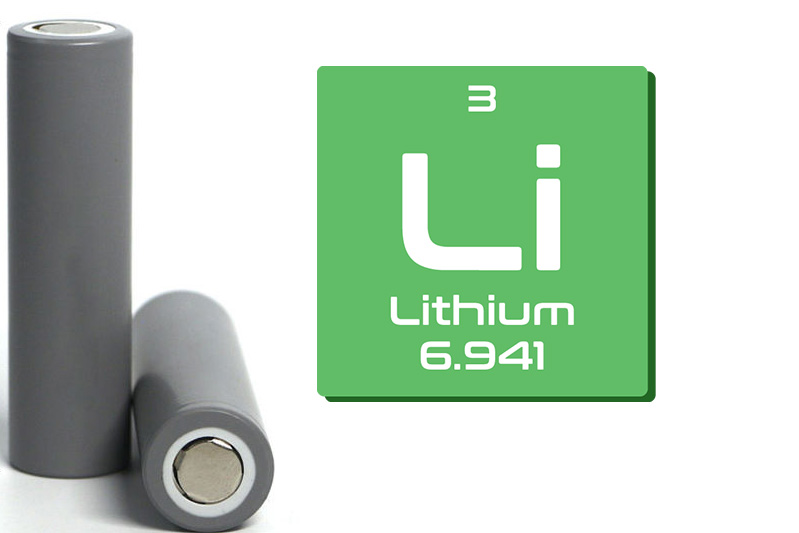
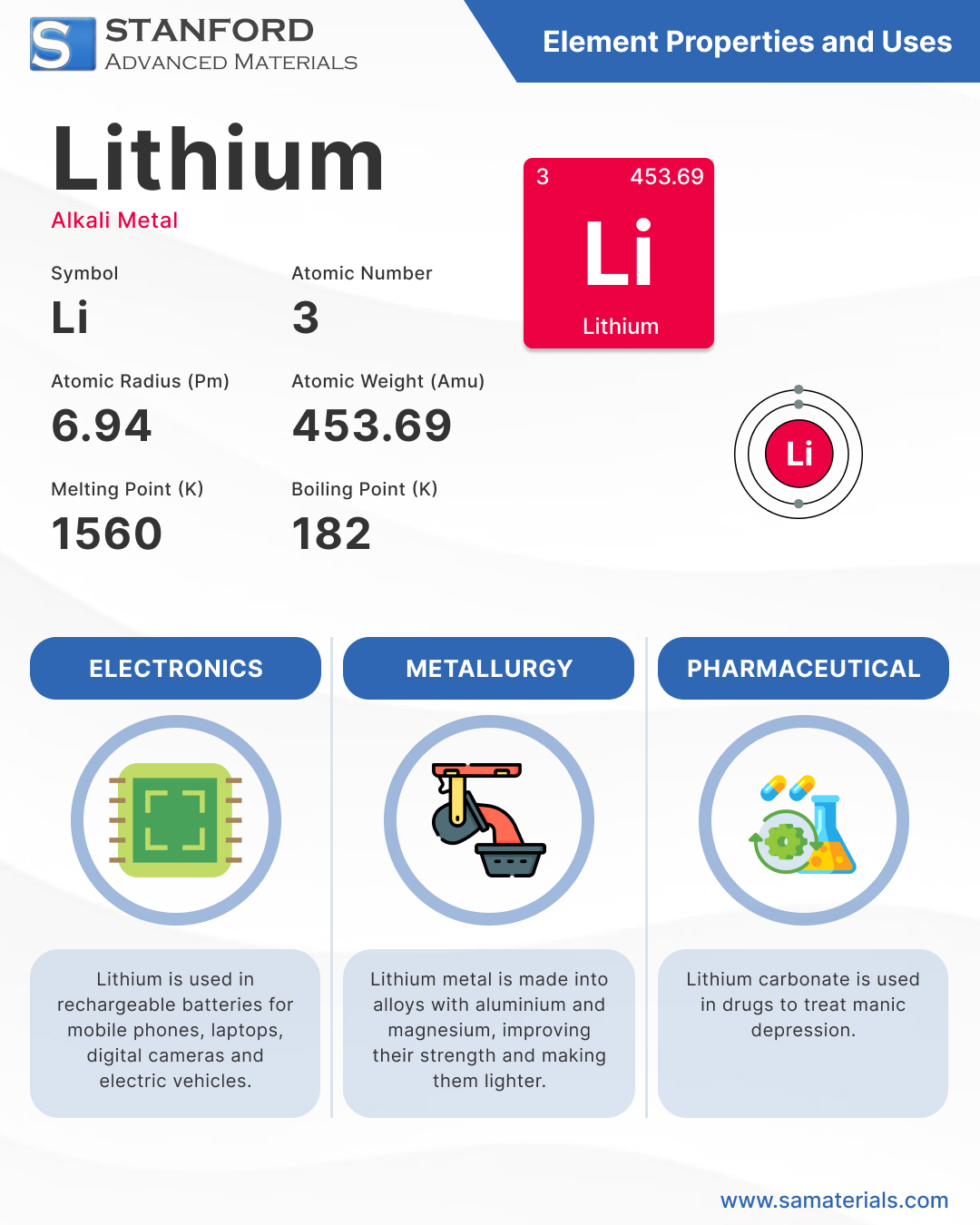
Lithium, atomic number 3 and symbol Li, is the lightest metal in the periodic table and an alkali metal. During the two centuries of its existence as a laboratory curiosity, lithium has evolved into a globally traded industrial commodity. Today, lithium refining and production-through electrolysis of salt or milling of minerals such as spodumene-are the basis for a multibillion-dollar industry in energy storage, space exploration, and electronics.
Chemical Properties Description
Lithium's chemical properties mirror its physical properties as being just as distinctive:
•Reactivity: Lithium vigorously reacts with water to form lithium hydroxide (LiOH) and hydrogen gas. For example, a piece of small lithium submerged in water can develop visible effervescence within seconds.
•Alkaline Nature: Being another alkali metal, lithium readily gives away its one outer electron to produce the Li⁺ ion, thus becoming an important player in electrochemical reactions, including in lithium-ion batteries.
• Flammability: Lithium ignites with a characteristic red flame, which the engineers must keep in mind while working with and storing bulk lithium.
Physical Properties Data Table
|
Property |
Value |
|
Atomic Number |
3 |
|
Atomic Weight |
6.94 g/mol |
|
Melting Point |
180.54 °C |
|
Boiling Point |
1590 °C |
|
Density |
0.534 g/cm³ |
|
Appearance |
Silvery-white metal |
|
Hardness |
Soft |
|
Electrical Conductivity |
High |
|
Thermal Conductivity |
High |
Discovery of Lithium
Lithium was first discovered in 1817 in petalite, an island of Utö, Sweden. Arfvedson's analysis revealed a new unidentified element with properties other than sodium or potassium. Metallic lithium was later separated, by electrolysis of lithium salts, so scientists and engineers could further analyze its physical and chemical properties. Over time, the strange combination of lithium's lightness, high reactivity, and electrochemical potential put it on a trajectory from energy storage to industrial greases and medicine.
Alloys and Lithium Compounds
• Lithium-Aluminum Alloys: Extremely light and hard, used in aircraft components and sports car parts.
• Lithium-Copper Alloys: Impart enhanced electrical conductivity, often used in electronic connectors and circuits.
• Lithium-Iron Phosphate (LiFePO₄): Common in electric car battery cathodes due to stability and long cycle life.
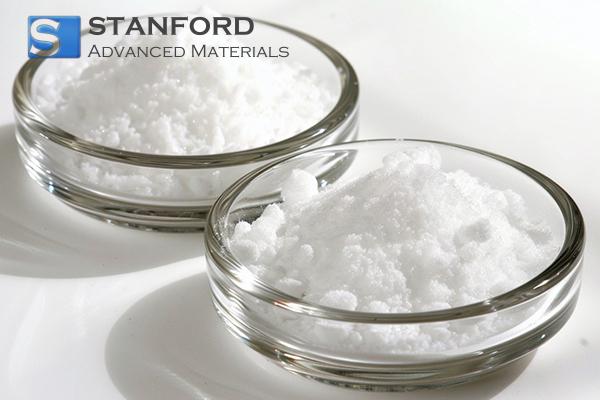
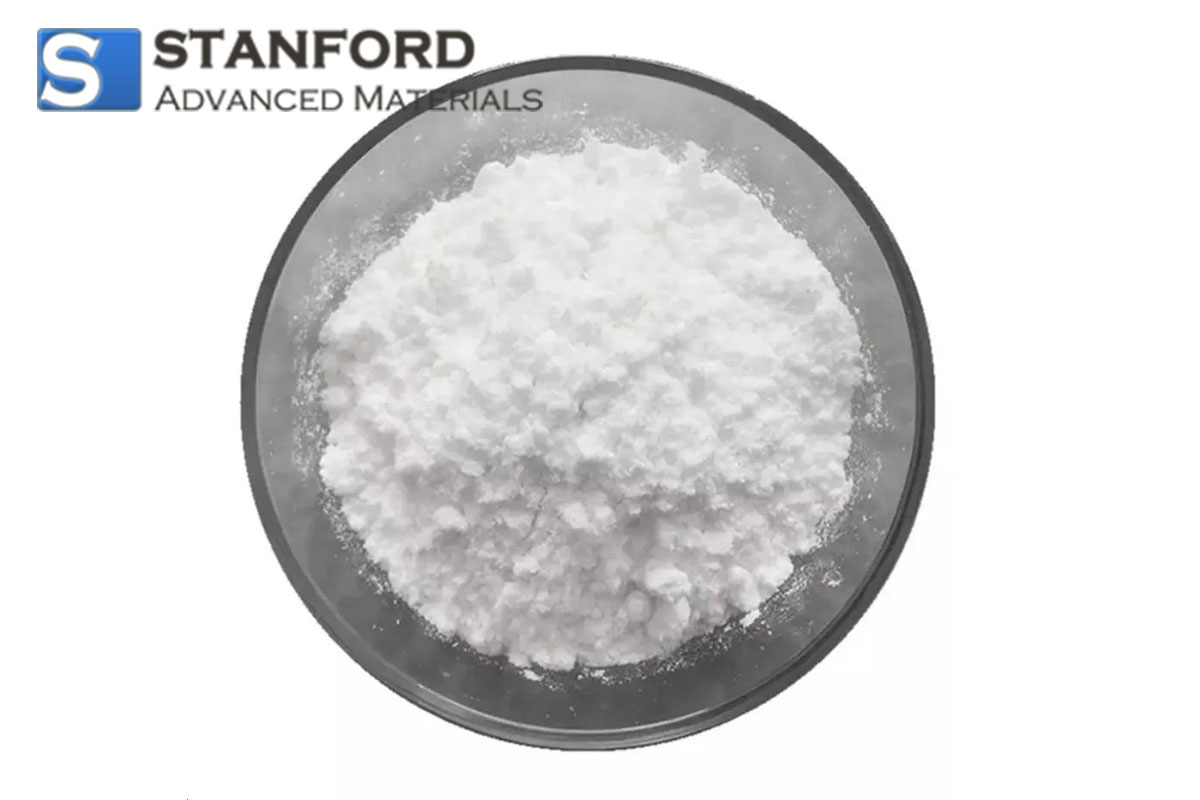
• Lithium Hydroxide (LiOH) and Carbonate (Li₂CO₃): Of key importance in recharge batteries, lubricating grease, and industrial chemical processes.
• Lithium Chloride (LiCl): Used in desiccants, air conditioners, and chemical synthesis.
For example, Tesla and other electric vehicle manufacturers employ lithium-iron phosphate (LFP) batteries in certain car fleets, where thermal stability and energy density are paramount to guarantee safety and functionality.
Common Applications
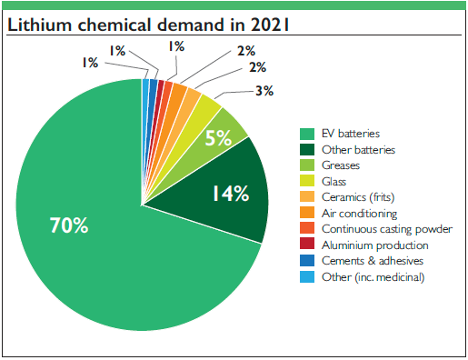
There are various applications of lithium:
1. Batteries: Lithium-ion and lithium-polymer batteries dominate the market in portable electronics, electric vehicles, and renewable energy storage systems due to their high energy density.
2. Alloys: Lithium lightens aluminum and copper alloys, improving aerospace efficiency without losing strength.
3. Medicinal Uses: Lithium carbonate stabilizes patients with bipolar disorder, showing lithium's impact beyond industry uses.
4. Heat-Resistant Glass and Ceramics: Lithium enhances thermal shock resistance and strength.
5. Lubricating Greases: Lithium greases have good performance with high temperatures and pressures, essential in manufacturing and automobile industries.
 [1]
[1]
Preparation Processes
Lithium is primarily obtained through:
1. Lithium metal is recovered from LiCl or LiF through electrolysis to yield high purity for market applications.
2. Mining of minerals: Spodumene and petalite are processed to form lithium carbonate or hydroxide to be used for battery and chemical production.
Frequently Asked Questions
What are the most frequent applications for lithium?
Primarily in rechargeable batteries, light alloys, lubricating greases, and pharmaceuticals.
How is lithium mined?
Through electrolysis of lithium salts or from spodumene mineral ores.
Is lithium reactive?
Yes, particularly with water, to form LiOH and hydrogen gas.
What are lithium-ion batteries?
They supply power to smartphones, laptops, electric vehicles, and renewable energy storage systems due to high energy density and long cycle life.
Reference:
[1] International Lithium Association (2023, October 13). Lithium 101. Retrieved July 17, 2025, from https://lithium.org/lithium-101/
 Chin Trento