Products
 Bars
Bars
 Beads & Spheres
 Bolts & Nuts
 Crucibles
 Discs
Discs
 Fibers & Fabrics
 Films
Films
 Flake
Flake
 Foams
Foams
 Foil
Foil
 Granules
 Honeycombs
 Ink
Ink
 Laminate
 Lumps
Lumps
 Meshes
 Metallised Film
 Plate
Plate
 Powders
 Rod
Rod
 Single Crystals
 Sputtering Target
 Tubes
Tubes
 Washer
 Wires
Wires
 Converters & Calculators
 Write for Us



Introduction to Pyroelectricity

Description of Pyroelectricity
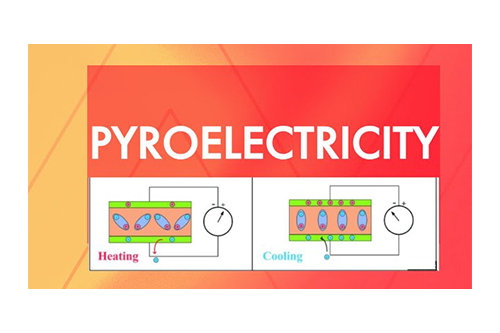
Pyroelectricity is the ability of certain materials to generate an electric charge in response to temperature changes.
Pyroelectricity refers to the property of certain crystals and ceramics which are naturally electrically polarized and, therefore, contain large electric fields. This polarization can change when the temperature of the material changes, leading to the generation of electric charge.
Piezoelectricity and Pyroelectricity
While both piezoelectricity and pyroelectricity involve the generation of electric charge, they are triggered by different stimuli. Piezoelectricity occurs when mechanical stress is applied to a material, whereas pyroelectricity is induced by temperature fluctuations. Both phenomena are crucial in various applications, including sensors and energy harvesting devices.
Applications of Pyroelectricity
Pyroelectric materials are widely used in infrared sensors, motion detectors, and energy harvesting systems. Their ability to convert thermal energy into electrical energy makes them invaluable in both consumer electronics and industrial applications.
Dielectric Materials in Pyroelectric Applications
Dielectric materials play a vital role in pyroelectric applications. These materials have high electrical resistance and can support an electrostatic field while dissipating minimal energy. The effectiveness of a dielectric material in pyroelectric devices depends on its ability to maintain polarization under varying temperatures.
Crystal Substrate in Pyroelectric Devices
A crystal substrate serves as the foundation for pyroelectric devices. The quality and orientation of the crystal substrate significantly influence the performance of the pyroelectric material. Proper alignment ensures maximum efficiency in charge generation and stability of the electric field within the device.
Pyroelectric vs. Other Thermo-Electric Effects
|
Property |
Pyroelectricity |
Thermoelectricity |
|
Trigger |
Temperature change |
Temperature gradient |
|
Material Requirements |
Non-centrosymmetric crystals or ceramics |
Conductive materials |
|
Applications |
Infrared sensors, motion detectors |
Power generation, cooling systems |
|
Charge Generation |
Spontaneous polarization changes |
Seebeck and Peltier effects |
Comparison of Pyroelectric Materials
Pyroelectricity refers to the ability of certain materials to generate an electrical charge in response to changes in temperature. Here are a few examples of pyroelectric materials and their applications:
- Triglycine sulfate (TGS): Used in infrared (IR) detectors, particularly for thermal sensing and infrared spectroscopy. It can detect changes in temperature from the surrounding environment.
- Lithium tantalate (LiTaO₃): Commonly used in pyroelectric sensors, such as those in thermal cameras, motion detectors, and gas analyzers. It has high pyroelectric coefficients, making it sensitive to temperature changes.
- Zinc oxide (ZnO): While primarily known for its piezoelectric properties, zinc oxide can also exhibit pyroelectric behavior. It is used in applications like thermally sensitive devices.
- Polyvinylidene fluoride (PVDF): A polymer that can exhibit both pyroelectric and piezoelectric properties. PVDF is used in sensors, actuators, and energy harvesting devices.
- Barium titanate (BaTiO₃): Although more widely recognized for its ferroelectric properties, it can also display pyroelectricity. It's used in applications such as temperature sensors and thermal detectors.
These materials are often used in thermal imaging systems, motion detection, and energy harvesting technologies. For more information, please check Stanford Advanced Materials (SAM).
Frequently Asked Questions
What is the main difference between piezoelectricity and pyroelectricity?
Piezoelectricity is generated by mechanical stress, while pyroelectricity is produced by temperature changes.
What types of materials exhibit pyroelectricity?
Non-centrosymmetric crystals and certain ceramics are known to exhibit pyroelectricity.
How are dielectric materials important in pyroelectric devices?
Dielectric materials support the electrostatic fields and maintain polarization, enhancing the efficiency of pyroelectric devices.
What are common applications of pyroelectric materials?
They are commonly used in infrared sensors, motion detectors, and energy harvesting systems.
What challenges exist in the development of pyroelectric technology?
Challenges include material stability, environmental sensitivity, and integration with electronic systems.
 Chin Trento