Products
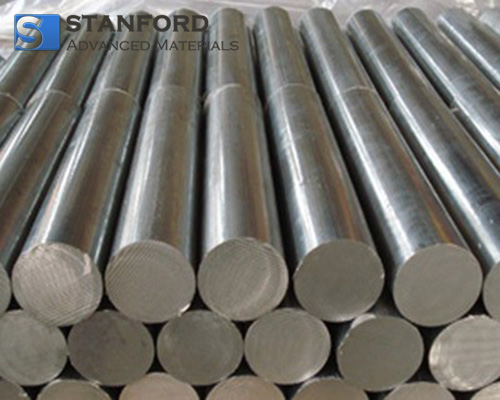
 Bars
Bars
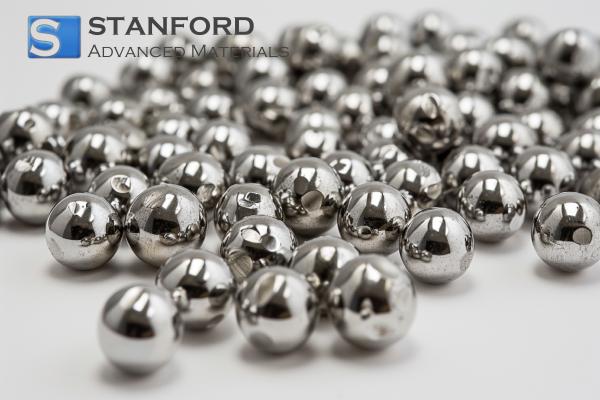
 Beads & Spheres
 Bolts & Nuts
 Crucibles
 Discs
Discs
 Fibers & Fabrics
 Films
Films
 Flake
Flake
 Foams
Foams
 Foil
Foil
 Granules
 Honeycombs
 Ink
Ink
 Laminate
 Lumps
Lumps
 Meshes
 Metallised Film
 Plate
Plate
 Powders
 Rod
Rod
 Single Crystals
 Sputtering Target
 Tubes
Tubes
 Washer
 Wires
Wires
 Converters & Calculators
 Write for Us



Friction Coefficient: Definition and Calculation

What Is the Friction Coefficient
The friction coefficient is a dimensionless value that quantifies the amount of frictional resistance between two contacting surfaces. It plays a crucial role in engineering, physics, and everyday applications by determining how surfaces interact under different conditions.
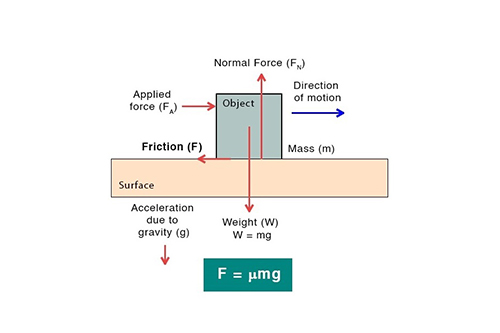
Types of Friction
Friction can be categorized into several types based on the nature of the surfaces and the motion involved:
Static Friction
Static friction is generally higher than kinetic friction because it must overcome both surface adhesion and the interlocking of microscopic surface features. Once motion begins, the actual contact area decreases, reducing frictional resistance.
Kinetic Friction
Kinetic friction comes into play once the surfaces are in motion relative to each other. It is usually lower than static friction and depends on the nature of the materials in contact and their surface roughness.
Rolling Friction
Rolling friction happens when an object rolls over a surface. It is typically much smaller than static or kinetic friction, making it important for applications like wheels and bearings.
Fluid Friction
Fluid friction occurs when objects move through a fluid, such as air or water. It depends on the object's speed, shape, and the fluid's viscosity.
Calculation of the Friction Coefficient
Calculating the friction coefficient involves understanding the forces acting between the two surfaces. The basic formula is:
μ=F/N
Where:
- μ is the friction coefficient
- F is the frictional force (N)
- N is the normal force (N)
However, real-world applications may require more complex calculations considering factors like surface roughness, temperature, and material properties.
PTFE and Its Friction Coefficient
Polytetrafluoroethylene (PTFE), commonly known as Teflon, is renowned for its low friction coefficient. This makes PTFE an ideal material for applications requiring minimal resistance, such as non-stick coatings, bearings, and seals.
Properties of PTFE
|
Property |
Description |
|
Low Friction |
PTFE has one of the lowest friction coefficients among solid materials—typically 0.04 to 0.10 against polished steel, depending on load and speed. |
|
Chemical Resistance |
Highly resistant to chemicals, making it durable in various environments. |
|
Temperature Range |
-200°C to +260°C continuous service; maintains properties across a wide temperature range |
|
Non-Stick Surface |
Prevents adhesion of other materials, useful in cookware and industrial applications. |
Applications of PTFE
- Bearings: PTFE reduces wear and energy loss in rotating machinery.
- Seals and Gaskets: Provides effective sealing with minimal friction.
- Cookware: Non-stick surfaces for easier cooking and cleaning.
- Medical Devices: Biocompatible and reduces friction in implants and instruments.
Related Products from Stanford Advanced Materials
Stanford Advanced Materials (SAM) supplies PTFE and other low-friction materials in various forms for engineering applications:
- PTFE sheets and rods: For machined seals, bearings, and custom components
- PTFE coatings: For non-stick and low-friction surface treatments
- Composite materials: PTFE-filled with glass, carbon, or bronze for enhanced wear resistance
- Other low-friction materials: PEEK, UHMW, and polyimide in sheet, rod, and machined forms
All materials are available with material certifications. [Browse our products] or [contact us] for custom specifications.
Frequently Asked Questions
What factors affect the friction coefficient?
Surface roughness, material properties, temperature, and presence of lubricants all influence the friction coefficient.
Can the friction coefficient be negative?
No, the friction coefficient is always a positive value. It represents the ratio of frictional force to normal force, both of which are positive quantities under standard conditions. Negative values would imply the friction force acts in the direction of motion, which does not occur in conventional friction.
How does lubrication affect friction?
Lubrication reduces the friction coefficient by creating a thin layer between surfaces, minimizing direct contact.
Is the friction coefficient the same for all materials?
No, different materials have unique friction coefficients based on their inherent properties and surface characteristics.
Why is PTFE preferred in low-friction applications?
PTFE's exceptionally low friction coefficient, chemical resistance, and durability make it ideal for applications requiring minimal resistance and long-term performance.
 Chin Trento