Products
 Bars
Bars
 Beads & Spheres
 Bolts & Nuts
 Crucibles
 Discs
Discs
 Fibers & Fabrics
 Films
Films
 Flake
Flake
 Foams
Foams
 Foil
Foil
 Granules
 Honeycombs
 Ink
Ink
 Laminate
 Lumps
Lumps
 Meshes
 Metallised Film
 Plate
Plate
 Powders
 Rod
Rod
 Single Crystals
 Sputtering Target
 Tubes
Tubes
 Washer
 Wires
Wires
 Converters & Calculators
 Write for Us



Dielectric Constants of Advanced Ceramic Materials

Introduction
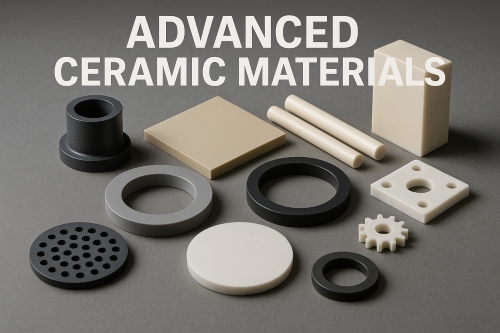
Advanced ceramic materials have been used for many years. They show strong electrical insulation. They also have a wide range of dielectric constants. They are important in devices like capacitors, sensors, and printed circuit boards. Their ability to store electrical energy makes them useful. A well-known example is barium titanate, a ceramic with a high dielectric constant. Other examples use alumina and silicon nitride. Each has its own range of performance in electrical fields.
Dielectric Constant Chart
Below is a brief outline of dielectric constant values for several advanced ceramic materials. Each dielectric constant expresses the material’s ability to store energy in an electric field. These values can vary with temperature and frequency. Understand that numbers may shift slightly with different production methods.
• Alumina (Aluminum Oxide): A common ceramic with a dielectric constant of about 9 to 10. It is used in many electrical insulation applications.
• Barium Titanate: Known as a ferroelectric ceramic. Its dielectric constant may reach 1000 or more in specific conditions. This quality makes it a popular choice in capacitors.
• Titanium Dioxide: Often used in sensors and as a pigment. It shows dielectric values around 80 to 100.
• Zirconium Dioxide: Also called zirconia. It has a dielectric constant that can reach up to 25. It is used in high-stress environments and offers good insulation.
These numbers are useful when planning an application where dielectric performance is needed. In practice, engineers pick a ceramic based on its dielectric value and other traits. Always check product data for exact values.
Ceramic Materials Properties
Advanced ceramic materials have properties that serve well in harsh environments. Their dielectric constants are just one part of a long list of benefits. These ceramics are noted for their strong mechanical performance, good thermal stability, and high electrical resistivity.
For example, alumina is known for its hardness and high thermal conductivity. It supports many designs that need both strength and electrical insulation. Barium titanate is widely used when high dielectric properties matter. Its relative permittivity reaches high levels under controlled conditions.
Most ceramic materials do not change shape or break easily under stress. That makes them ideal when steady performance is needed. These ceramics often have low dielectric loss. This means that they waste little energy when under an electric field. In high performance electronics, low loss is as important as a high dielectric constant.
In practice, ceramics are embedded in power supplies and computer chips. Their ability to stand strong under heavy loads is well recognized. Engineers often use ceramic capacitors in circuits that face quick changes in current. A solid and stable ceramic forms the backbone of equipment design in many cases, from everyday household electronics to industrial machinery.
Ceramic materials have evolved with the times. Researchers have tested many formulations to improve both dielectric constant and mechanical strength. New production methods have led to ceramics that work even better in extreme conditions. This progress ensures that older systems get the new accuracy and stability that the modern world demands.
Electrical Insulation Reference
Electrical insulation is one of the main uses of advanced ceramic materials. These ceramics prevent unwanted flow of current. Their high electrical resistivity makes them ideal insulation components.
Alumina, for instance, acts as an excellent insulator. Its structure prevents the leakage of electrical current. In circuit boards and power components, this is a key safety factor. Other ceramics like silicon nitride serve similar roles in high temperature or high power scenarios.
Many industries depend on these ceramics for safe and reliable insulation. In aerospace and automotive sectors, insulation is a must. Advanced ceramics stand up well to both high voltages and temperature extremes. Their stability is a critical factor in the design of reliable and long-lasting equipment.
When replacing older materials, engineers sometimes choose advanced ceramics for their consistency. They have low dielectric loss and high breakdown strength. That keeps energy transmission smooth and prevents premature failure in circuits.
Conclusion
Advanced ceramic materials play a vital role in modern technology. Their dielectric constants have a direct impact on performance.
Frequently Asked Questions
F: What does the dielectric constant measure?
Q: It measures how well a material can store electrical energy when exposed to
an electric field.
F: Why are advanced ceramics used in electrical insulation?
Q: They have high resistivity and low energy loss, which makes them effective
in preventing electrical leakage.
F: Do dielectric constants change with temperature?
Q: Yes, dielectric constants may vary with temperature and frequency in
different conditions.
 Chin Trento